Clearance CLR-9187 · AIR538
AIRMAE
Airspace & RegulationClearance sheet
€4.5m Aer Lingus Suit Puts Montreal Convention to the Test
A Kansas lawyer's €4.5m claim over an armed response at Dublin Airport turns on three Montreal Convention tests: boarding status, accident definition and whether PTSD counts as injury.
Read-back
- Kansas lawyer William Pierce Honnold is suing Aer Lingus for $5m (€4.5m) over a 20 September 2025 incident at Dublin Airport Terminal 2.
- About 15 armed security and police personnel surrounded the passenger after Aer Lingus staff scanned his boarding pass and his flight departed without him.
- Since 28 December 2024, strict airline liability under the Montreal Convention is capped at 151,880 Special Drawing Rights per passenger.
- The CJEU's 2022 BT v Laudamotion ruling allows pure psychological injury claims in Europe, while US and UK courts exclude them.
- The claim was reported by The Irish Times on 16 November 2026; Aer Lingus said it was unable to comment.
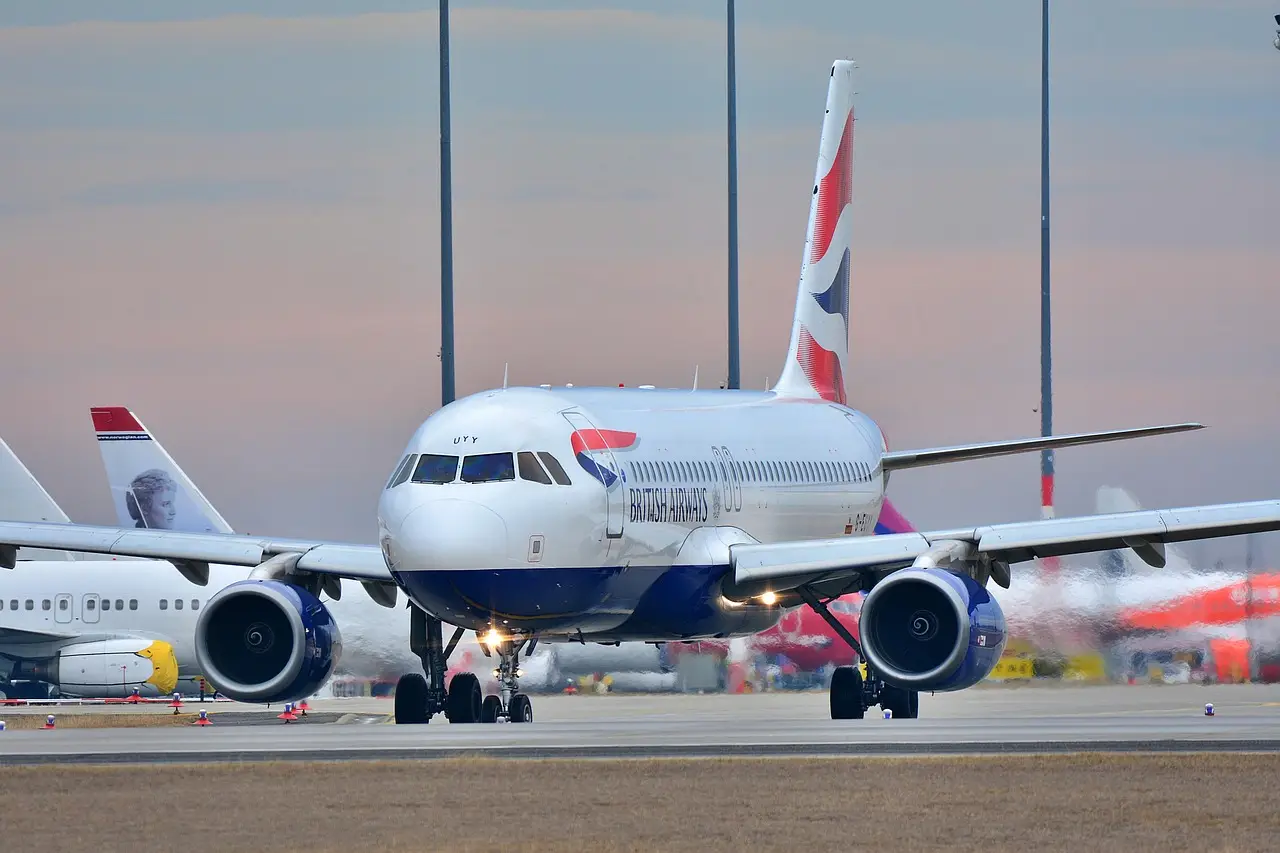
A Kansas lawyer is suing Aer Lingus for $5 million (€4.5 million) over an armed security response at a Dublin Airport gate — and the case will turn on three contested questions under the 1999 Montreal Convention that could shape how airlines handle passengers during security alerts.
William Pierce Honnold filed the claim over his treatment on 20 September 2025, when Dublin Airport's Terminal 2 was evacuated after what gardaí called "a report of an item of airline luggage of concern", The Irish Times reported on 16 November 2026. The Irish Independent first reported the case. Searches for the lawsuit jumped by 1,000% in Ireland within hours, according to Google Trends, driven by queries such as "us lawyer sues aer lingus" and "dublin airport".
The claims remain allegations in court documents and have not been tested. Aer Lingus said it was "unable to comment". daa, the operator of Dublin Airport, declined to comment.
What Happened at the Gate?
The Army's bomb disposal team was called and the luggage was later declared safe. But according to the court documents, Honnold — connecting from London onto a Dublin–New York flight — had a different experience.
The documents say Aer Lingus staff scanned his boarding pass, kept his passport and ID, and told him to wait. The aircraft then departed without him. Roughly 15 armed security and police personnel then surrounded him at the gate, weapons pointed at him. He was escorted across a passenger loading bridge to the airfield and placed in a vehicle with gardaí and an airport police officer.
Honnold reports episodes of lost consciousness, neck pain and other physical symptoms, along with post-traumatic stress disorder. The documents argue that what Aer Lingus staff did and said during boarding "initiated or materially contributed to the ensuing airport security intervention".
Why a 1999 Treaty Decides the Outcome
Whatever the facts, ordinary personal injury law will not decide this case. International air travel falls under the Montreal Convention of 1999.
Article 29 makes the convention the exclusive route for such claims: any action for damages, "however founded", can only be brought subject to its conditions and limits, and punitive damages are not recoverable.
Article 17 sets out when an airline is liable for injury. Three tests must each be met:
- The injury must be caused by an accident
- The injury must be a bodily injury
- The accident must happen on board or "in the course of any of the operations of embarking or disembarking"
Each of those tests could be contested here.
Was He Embarking?
The first question is where boarding begins. US courts often apply the test from Day v Trans World Airlines, which looks at what the passenger was doing, who was in control and where the event happened.
Ireland has its own authority. In Galvin v Aer Rianta, an Irish court held that embarkation requires the accident to relate to a specific flight and to occur while the passenger was entering or about to enter the aircraft, or at a place they were obliged to be as part of boarding.
A scanned boarding pass at the gate for a specific flight points toward embarkation. But the passenger was held back, the aircraft departed, and the security operation was run by police and the army. A court will have to decide whether boarding had begun — or had already ended.
Was It an Accident?
The second test comes from the US Supreme Court. In Air France v Saks, the Court defined an accident as "an unexpected or unusual event or happening that is external to the passenger".
Being surrounded by armed officers at a boarding gate is plainly unusual. The harder question is causation. The claim argues Aer Lingus staff set the security response in motion. A defence would likely stress that the alert concerned luggage, and that the state — not the airline — carried out the response.
Does the Injury Count?
The third test may matter most, and the answer depends on where the case is heard.
In the US, the Supreme Court held in Eastern Airlines v Floyd that the convention "does not allow recovery for purely mental injuries". According to Bird & Bird, later US cases following Floyd denied recovery for PTSD even where it produced physical symptoms.
The UK took a similar line in King v Bristow Helicopters in 2002, holding that a psychiatric condition alone was not a bodily injury, although a demonstrable physical symptom could be.
Europe has moved further. In BT v Laudamotion in October 2022, the Court of Justice of the EU held that psychological injury can be compensated without a bodily injury. The passenger must show an adverse effect on psychological integrity serious enough to affect general health and requiring medical treatment, according to Clyde & Co.
That split gives the case its real stakes. Ireland follows the European court, but The Irish Times describes the claim as being brought through US court documents. The convention allows injury claims in the passenger's country of residence, provided the airline serves it — and Aer Lingus flies to the United States.
What Is Actually Recoverable?
Even a successful claim does not guarantee €4.5 million. Since 28 December 2024, airlines face strict liability for proven injury damages up to 151,880 Special Drawing Rights per passenger — an IMF basket currency.
Above that threshold, the convention lets an airline avoid paying if it proves the damage was not caused by its own negligence, or was caused solely by a third party. Where the armed response came from gardaí and the army, that defence could become central.
Timing poses no problem for the claimant: the convention gives passengers two years to bring a claim, and the incident occurred in September 2025.
Why Airlines Will Watch
Security alerts at airports are routine, and most end with nothing found. This case asks what happens when an airline's handling of a passenger at the gate is said to have triggered an armed response.
If the claimant shows that staff actions started the chain of events, airlines may need to revisit how gate agents escalate concerns and how they record what they tell security. If the court finds the response was the state's alone, the ruling will reinforce the limits of airline liability under the convention.
The lawsuit is not really about one passenger at one gate. It tests a treaty written to give airlines predictable liability in an era when security interventions are common — and the answer may depend more on which side of the Atlantic hears the case than on what happened in Terminal 2.
via theaviationhub.co.uk (Source)
More from Nathan Brooks
Show full bio
Correspondent covering technology and product news in Commercial aviation industry coverage at Flightdeck Report.
674 articles
Same bay
- FDR470Sixteen Flights Hit by Bomb Threats Across Europe in One Day · November 5, 2026
- FDR446Aer Lingus A330 Returns to Dublin After Double Weather Radar Failure · November 10, 2026
- FDR823Europe investigates about 20 bomb threats; no explosives found · November 5, 2026
- FDR231Aviation Unions Demand Probe of Air Peace Over Alleged Safety Breach · October 19, 2026
- FDR103Libya Orders Detention of Pilots in Misrata Citation Crash · September 30, 2026