Clearance CLR-7325 · AIR372
AIRAFB
Aircraft & EnginesClearance sheet
A350F Begins Nine-Month Certification Campaign After Toulouse Maiden Flight
Airbus's first A350 freighter, MSN700, flew from Toulouse to open a nine-month certification campaign, targeting 2027 service entry ahead of 2028 ICAO emissions rules.
Read-back
- MSN700 (F-WXLD) flew from Toulouse runway 14R at 10:31 local time on a 4h maiden flight with five crew, powered by Rolls-Royce Trent XWB-97 engines.
- The A350F is the first new-build Airbus freighter to fly since the A330-200F in November 2009; Airbus plans a nine-month test campaign and service entry in 2027.
- Airbus claims 40% better fuel burn than previous-generation freighters; the main-deck cargo door, designed and built in-house near Madrid, was the programme's biggest engineering challenge.
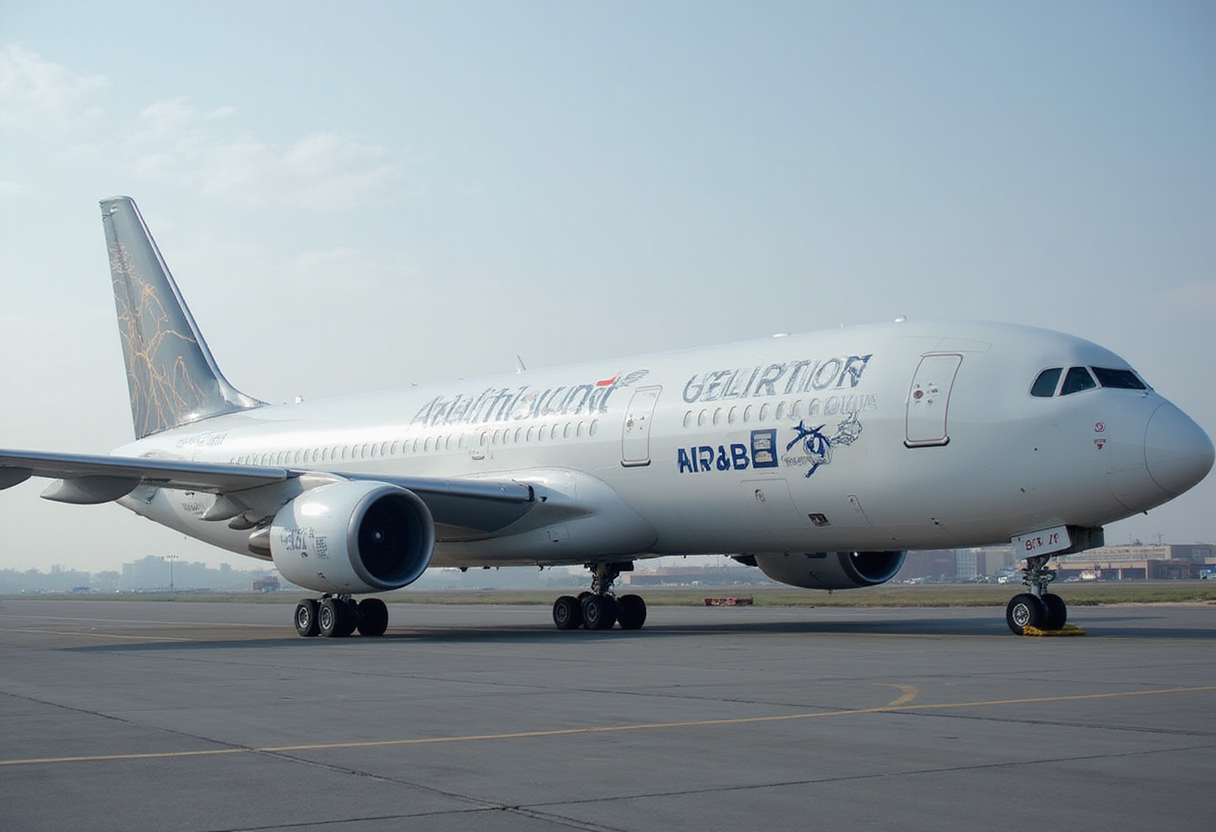
Airbus's first A350 freighter has flown, opening a planned nine-month test and certification campaign that the airframer aims to convert into service entry in 2027.
MSN700, registered F-WXLD, lifted off from runway 14R at Toulouse at 10:31 local time, preceded by a Dassault Falcon chase aircraft, and completed a 4h sortie with a crew of five. The twinjet is powered by Rolls-Royce Trent XWB-97 engines.
The flight makes the A350F the first new-build Airbus freighter to perform a maiden sortie since the A330-200F in November 2009 — a 17-year gap in the airframer's dedicated cargo output, during which the large-freighter market has been served largely by converted widebodies and Boeing production freighters.
Airbus frames the programme as a response to explicit operator demand rather than a speculative bet. "The market was sending us a very strong signal," says Sarah McLaren, Airbus head of widebody and freighter marketing. "Operators were coming to us to say they wanted choice. They didn't just want one option in terms of what they could buy for a large freighter."
Regulation also shaped the business case. Updated ICAO emissions standards enter force at the beginning of 2028, and McLaren argues that compliance effectively requires a clean-sheet generation of efficiency. "You need really new-generation efficiency," she says, pointing to the fuel-burn data Airbus has accumulated across the A350 passenger family as the foundation for the freighter's performance case.
The headline number Airbus is putting behind the A350F is a 40% fuel-burn improvement over previous-generation freighters. "We know, from having the passenger aircraft in the family, the efficiencies that we can provide when it comes to important things like fuel burn," McLaren says. "So it is significant to the operating cost of an airline – especially right now."
That claim, drawn from a family with years of in-service data behind it, is more testable than most launch-performance assertions. But it will be verified in practice only through the certification campaign now under way and, ultimately, through the operating figures of the first cargo carriers to field the type.
The engineering effort behind the aircraft centred on one component in particular. Julien Puyou, Airbus head of widebody programmes, identifies the main-deck cargo door as the programme's "biggest challenge". "We'd never built such a cargo door inside Airbus," he says. "We chose to design it ourselves and to build it close to Madrid."
The in-house decision carries industrial risk — a first-of-its-kind structure built at a new production site — but Airbus paired it with a deliberate constraint on the rest of the aircraft. Puyou says a key requirement was that the freighter pass through "the exact same industrial system" as the passenger variants.
"It gave us an engineering challenge to make sure that the freighter was adaptable to the rest of the A350 system," he says. "It gave a lot of headaches to our engineers but, in the end, I'm glad they made it – it's the recipe for our efficiency."
The logic is straightforward: commonality with the passenger line protects production rate and delivery output at a time when Airbus is still working to stabilise and raise A350 output. A freighter that shares the final assembly flow avoids the dedicated lines and separate supply chains that historically inflate freighter programme costs.
What is now certified-and-flying remains limited to one prototype. The nine-month campaign ahead must clear the type for cargo operations before the 2028 emissions deadline sharpens the economics of older freighters still in service — the window Airbus is targeting for the A350F to reach operators.
via FlightGlobal (Source)
More from Nathan Brooks
Show full bio
Correspondent covering media and advertising at Flightdeck Report.
149 articles
Same bay
- FDR684Airbus A350F Prototype Flies as Nine-Month Campaign Begins · September 30, 2026
- FDR763Airbus A350F Freighter Prototype Completes Maiden Flight From Toulouse · September 30, 2026
- FDR850Airbus A350F Freighter Lifts Off on Maiden Flight from Toulouse · September 29, 2026
- FDR324Airbus A350F Completes First Flight · September 29, 2026
- FDR794Airbus counts 14 customers for A350F as freighter takes flight · September 30, 2026