Clearance CLR-1396 · AIR635
AIRAIR
Aircraft & EnginesClearance sheet
Air Canada places largest aircraft order in Canadian history
Air Canada's 110-aircraft 787-10 commitment, with options on 90 more, marks the largest order ever placed by a Canadian carrier — a multi-billion-dollar widebody reset that runs through the 2030s.
Read-back
- Air Canada ordered 110 Boeing 787-10s with options and rights on 90 additional widebodies
- Deal announced at end of 2024, described as largest aircraft order in Canadian history
- List value exceeds US$37 billion before typical fleet discounts
- Deliveries scheduled from 2028 through the early 2030s
- 787-10 catalogue price sits near US$339 million per airframe
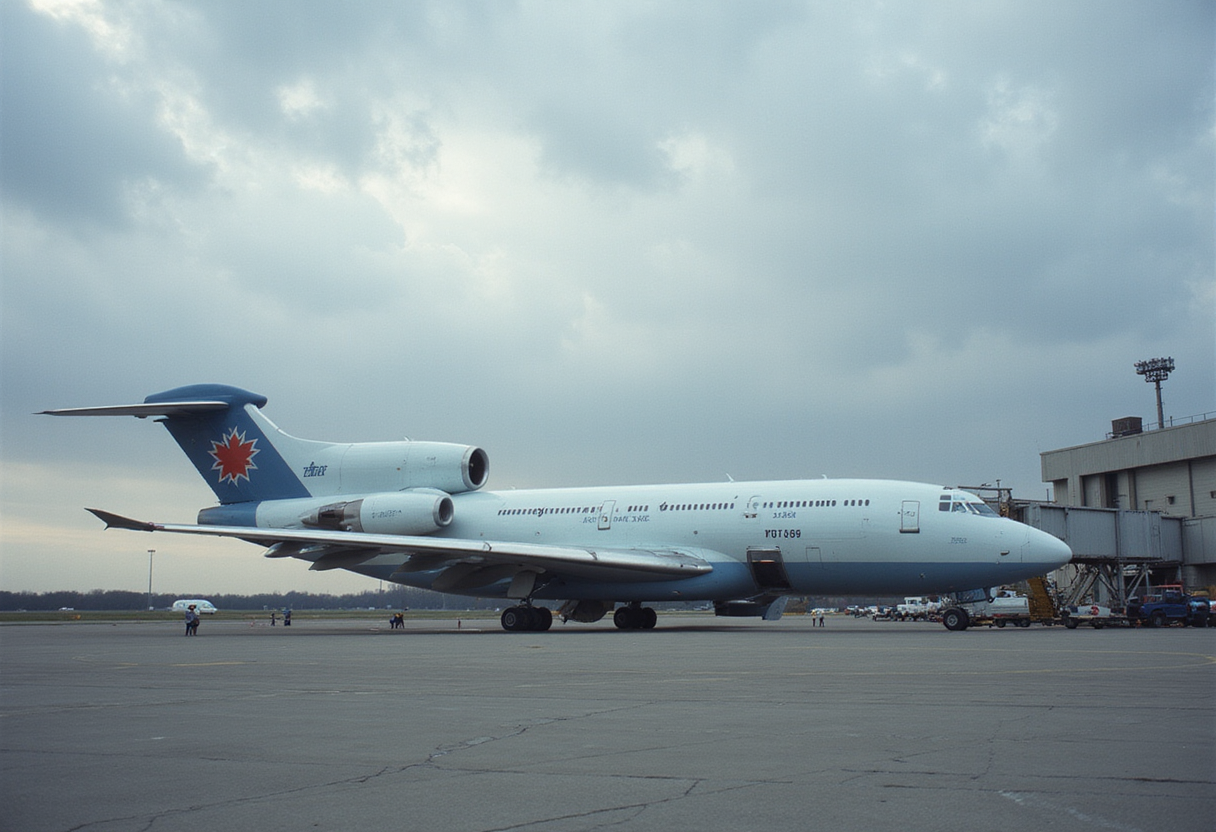
Air Canada's multi-billion-dollar Boeing 787 commitment ranks as the single largest aircraft order ever placed by a Canadian carrier, a procurement that resets the flag carrier's trans-Pacific fleet through the next decade.
The Montreal-headquartered airline disclosed a firm purchase agreement for 110 Boeing 787-10 Dreamliners with options and purchase rights on 90 additional widebodies. Announced at the end of 2024, the transaction outpaces every prior Canadian fleet commitment, including Air Canada's earlier C Series agreement with Bombardier, and overtakes WestJet's combined order book in dollar terms.
What is in the deal?
Air Canada holds 110 firm 787-10 positions plus options and purchase rights across the broader 787 family. Boeing's catalogue price for the 787-10 sits near US$339 million per airframe, which would place the firm portion above US$37 billion at list — before the wide fleet-level discounts large carriers typically extract. The carrier retains the right to convert some 787-10 positions to the smaller 787-9 variant, a flexibility that allows it to match thinner routes without losing production slots.
How does it reshape the fleet?
The order replaces a widebody backbone of Boeing 777-300ERs, 787-9s, and Airbus A330-300s — aircraft averaging roughly fifteen years of service, with the oldest 777s approaching twenty. New deliveries stretch into the early 2030s, giving the airline a decade-long window to retire aging aircraft while expanding seat capacity on trans-Pacific and European routes.
Boeing has scheduled the initial deliveries from 2028 onward, a timeline that forces Air Canada to manage a near-term gap before the first 787-10s arrive. The carrier will run its existing 777 and A330 fleet harder during the transition, a common pattern during widebody replacement cycles that typically lifts utilization but also drives maintenance spending higher on airframes due out.
What does it cost?
Boeing has not disclosed the negotiated value, and Air Canada declined to break out financing terms. Widebody fleet deals of this size routinely include sale-leaseback components, and analysts expect a portion of the 787-10s to flow through lessors such as AerCap and Avolon as deliveries ramp up. Export-Import Bank of the United States financing for the U.S.-built airframes also remains a standard consideration, though Air Canada's strong investment-grade credit reduces reliance on that channel.
Why does it matter competitively?
The order entrenches Air Canada's lead over WestJet in long-haul capacity and repositions the carrier against U.S. network rivals United, Delta and American. Air Canada has historically carried fewer seats into Asia than its southern peers from Vancouver and Toronto, and the 787-10's higher capacity — seating roughly 330 passengers in a typical configuration versus the 787-9's 296 — narrows that gap on dense routes such as Vancouver–Tokyo and Toronto–Shanghai.
The deal also hands Boeing a marquee North American widebody customer at a moment when Airbus has been pressing A350 sales at competitors. Industry tracking puts 2024 787 deliveries near 12 airframes per quarter, a pace that must hold or accelerate for Air Canada to hit its slot schedule.
What comes next?
Watch three indicators: pilot training throughput at Air Canada's Vancouver and Toronto hubs, simulator capacity for the 787 type, and Boeing's North Charleston 787 production stability. Any disruption on the production line would push Air Canada's retirement schedule back and force the carrier to extend leases on aging widebodies, an outcome that erodes the cost case for the new fleet.
Air Canada's order book now mirrors the long-duration commitments U.S. carriers placed after 2015, locking the carrier into a Boeing-dominated widebody future at a scale no Canadian airline has previously attempted.
via Google News: Aircraft orders and fleets (Source)
More from Grace Kim
Show full bio
News editor covering consumer brands and retail at Flightdeck Report.
354 articles
Same bay
- FDR315Air Canada Unveils Seven New Routes in Largest Network Expansion · September 28, 2026
- FDR159Air Canada Unveils Seven New Routes in Record Network Expansion · September 30, 2026
- FDR115Boeing, Alaska Airlines announce record order — terms undisclosed · October 10, 2026
- FDR268Turkish Airlines locks in 100 MAX 8s, with delivery window set for 2033–2037 · October 9, 2026
- FDR436Alaska Airlines Orders 110 Boeing Aircraft · September 30, 2026