Clearance CLR-5757 · AIR552
AIRAIR
Air CargoClearance sheet
Air Cargo Demand Climbed 4.4% in August, IATA Data Shows
IATA's latest monthly assessment puts August air cargo demand growth at 4.4%, a mid-single-digit expansion that keeps pressure on freighter capacity and peak-season planning.
Read-back
- Air cargo demand rose 4.4% in August, measured in cargo tonne-kilometres, according to IATA.
- The August reading sits ahead of the fourth-quarter peak season on major trade lanes.
- Growth lands in a market with constrained freighter capacity from new-build and conversion programmes.
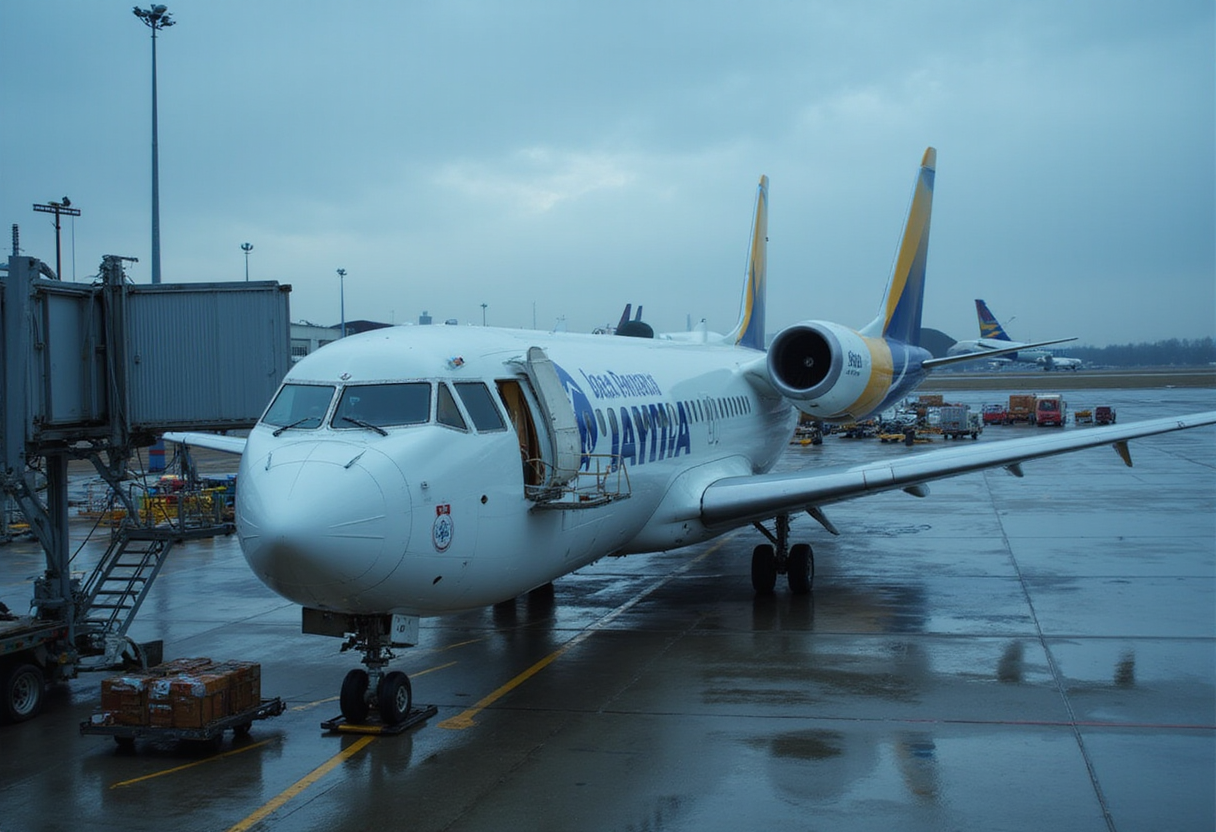
Air cargo demand rose 4.4% in August, according to the International Air Transport Association (IATA), extending a growth run that has kept freighter operators, integrators and belly-cargo managers focused on whether supply can keep pace with traffic.
The 4.4% figure is the headline number from IATA's latest monthly air freight market assessment. It measures demand in cargo tonne-kilometres, the association's standard unit for freight traffic, and covers the combined performance of IATA member and non-member airlines reporting into its statistics programme. For August, the reading points to a market still expanding at a mid-single-digit rate rather than the double-digit surges recorded during the pandemic-era freight boom or the sharp contractions that followed it.
A 4.4% growth rate carries different implications depending on where it sits relative to capacity. When demand growth outpaces available cargo capacity, load factors tighten and yields hold or rise — a dynamic airlines exploit through freighter deployments and belly-capacity pricing. When capacity grows faster, yields come under pressure and airlines compete on rate and reliability. IATA's monthly reports pair the demand figure with capacity data and a cargo load factor, and those companion metrics will determine whether August's expansion translated into revenue strength or into traffic carried at declining unit revenues.
The August timing matters for seasonal reasons. The month sits ahead of the traditional fourth-quarter peak, when e-commerce volumes, consumer electronics launches and year-end retail restocking push freight rates up on major lanes — transpacific, intra-Asia and Asia-Europe above all. Strong August demand typically signals that shippers and forwarders are building inventory early, a behaviour amplified in recent years by supply-chain diversification and tariff-driven front-loading of shipments. A mid-single-digit reading in late summer therefore sets a baseline against which peak-season performance will be judged.
For airlines, the figure lands in a fleet environment shaped by constrained freighter supply. Boeing's 767-300F and 777F production lines feed the dedicated freighter fleet alongside converted aircraft programmes from Boeing Converted Freighters, Elbe Flugzeugwerke (EFW) with its Airbus A330P2F work, and Israel Aerospace Industries with A330-200F and 767 conversions. Conversion feedstock, MRO slot availability at shops performing the modifications, and new-build delivery schedules all cap how quickly cargo capacity can grow. Demand growth of 4.4% is a rate that a constrained capacity pipeline can absorb into firmer load factors rather than into aircraft acquisitions alone — at least in the short term.
The commercial consequences run through network planning departments at cargo-heavy operators such as Qatar Airways Cargo, Emirates SkyCargo, Lufthansa Cargo, Cathay Cargo and Korean Air Cargo, and through integrator fleets at FedEx and UPS. Each network decision — adding freighter frequencies, shifting belly allocation on passenger routes, orreallocating capacity between lanes — responds to demand signals exactly like the one IATA has now published. Lessors with freighter exposure and the conversion houses that depend on steady feedstock supply read the same number for planning purposes.
IATA publishes its air cargo market analysis monthly, drawing on data reported by a broad sample of the world's scheduled airlines, and the association frames the results as the industry's benchmark read on freight traffic. The August figure consolidates a picture of steady expansion in a market that has moved past the extreme volatility of 2020-2022 and settled into what carriers would consider a more predictable growth pattern.
The next test comes with September and October data, which will show whether August's 4.4% growth carried through into the peak season or whether early shipments pulled demand forward at the expense of the months ahead.
via Google News: Air cargo (Source)
More from James Calloway
Show full bio
Staff writer covering industry trends and analytics at Flightdeck Report.
182 articles
Same bay
- FDR247IATA Data Show Air Cargo Demand Up 4.4% in August · September 30, 2026
- FDR877Air Cargo Demand Grew 4.4% in August as Load Factor Reached 46% · September 30, 2026
- FDR685IATA: Air Cargo Demand Climbs 4.4% in August as Capacity Slips · September 30, 2026
- FDR588Air Cargo Demand Rises 4.4% in August as Capacity Contracts · September 30, 2026
- FDR621Air Cargo Demand Rose 4.4% in August as Yields Rebounded · September 30, 2026