Clearance CLR-1236 · SUS379
SUSAIR
SustainabilityClearance sheet
Airbus publishes new study on sustainable aviation fuel potential
Airbus has released a new study examining the potential of sustainable aviation fuel, the European airframer confirmed, as EU and UK blending mandates tighten from 2% today toward 70% by mid-century.
Read-back
- Airbus released a study titled 'the potential of SAF' via its media channels this week, with the announcement text limited to the title.
- Global SAF output reached an estimated 1 million tonnes in 2024, against annual jet fuel demand of 95-100 million tonnes.
- EU ReFuelEU Aviation regulation sets a 2% SAF blending mandate from 2025, rising in steps to 70% by 2050; UK targets 10% by 2030.
- Airbus commercial aircraft are currently certified for blends of up to 50% SAF with Jet A-1, depending on engine and airframe combination.
- SAF carries a price premium of two to five times that of conventional jet fuel, constraining offtake by airlines including Lufthansa, IAG and Singapore Airlines.
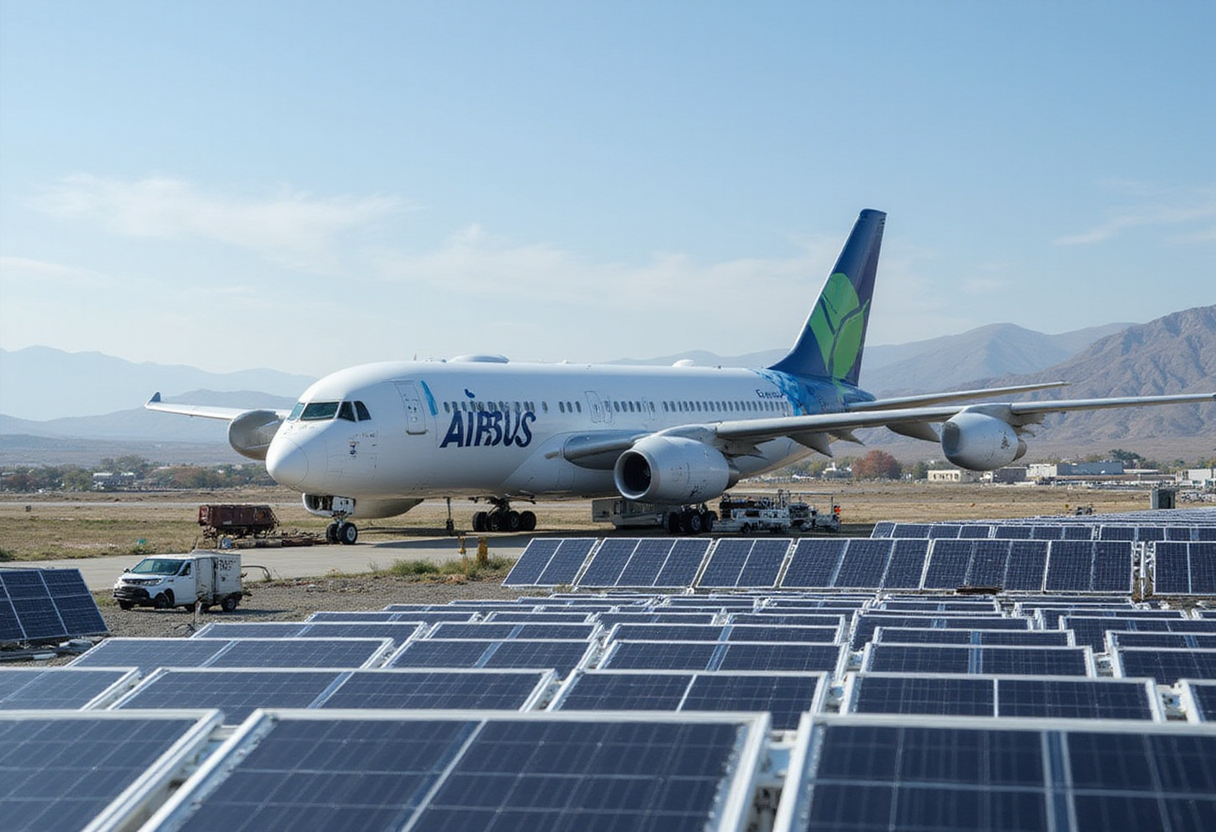
Airbus has released a new study examining the potential of sustainable aviation fuel (SAF), the European airframer confirmed this week. The publication adds to a growing body of corporate research on the fuel pathway that airlines, regulators and producers treat as the principal near-term lever for cutting commercial aviation's lifecycle carbon emissions.
The announcement, distributed through Airbus's media channels, frames the document as a study on "the potential of SAF." The text circulated to news outlets contained the title only; further detail on the report's methodology, data series and quantitative findings was not included in the public announcement.
What does the study cover?
Without access to the full report, the airframer's specific scenario modelling, cost trajectories and feedstock assessments cannot be verified from the announcement alone.
Airbus has previously signalled support for SAF scaling through industry coalitions and through certification work that has cleared its commercial types for blends of up to 50% SAF with conventional Jet A-1 fuel, depending on engine and airframe combination.
The release lands against a backdrop of expanding regulatory pressure on aviation fuel suppliers.
The European Union's ReFuelEU Aviation regulation sets a binding 2% SAF blending requirement at EU airports from 2025, rising in steps to 6% in 2030, 20% in 2035, 34% in 2040, 42% in 2045 and 70% by 2050.
Comparable mandate frameworks are in force or under consultation in the United Kingdom, where a Jet Zero strategy sets a 10% SAF mandate by 2030, and in Singapore.
Where does SAF supply stand?
Global SAF output reached an estimated 1 million tonnes in 2024, a small fraction of total jet fuel demand that airlines and refiners put at roughly 95-100 million tonnes per year.
Producers including Neste, Shell, bp, TotalEnergies, ExxonMobil and Chevron have announced capacity expansions, though feedstock availability, capital costs and a price premium that still runs two to five times that of conventional jet fuel continue to constrain output.
IATA projections place SAF as the largest contributor to the 65% emissions reduction the trade body estimates is achievable with existing and near-term technologies, on the road to a 2050 net-zero target for commercial aviation.
What changes for airlines and operators?
The immediate operational impact of Airbus's latest publication is limited.
Operators already fly with SAF blends where fuel supply permits, and Airbus narrowbodies and widebodies are certified for up to 50% blends under current type certificates.
The study's value sits more in the policy and investment debate, where projections of supply, demand and cost are routinely cited by regulators, fuel producers and airline sustainability teams.
Major airline customers of Airbus including Lufthansa, Air France-KLM, IAG, United Airlines, Delta Air Lines and Singapore Airlines have publicly committed to SAF procurement agreements, with volumes typically representing well under 5% of each carrier's annual fuel burn.
What to watch next
Airbus joins other manufacturers and research bodies that have published SAF outlook reports in recent years, including Boeing, the International Council on Clean Transportation and the World Economic Forum's Clean Skies for Tomorrow coalition. Each has produced different supply curves, reflecting varying assumptions about feedstock availability, project pipelines and policy support.
Stakeholders will look to the underlying Airbus report for the manufacturer's view on the cost-competitiveness trajectory of SAF, the scale of additional production capacity required to meet airline and regulatory demand, and the policy mechanisms Airbus considers most likely to close the gap between today's limited output and the volumes implied by 2050 net-zero pathways.
via Google News: Sustainable aviation fuel (Source)
More from Sophie Lindqvist
Show full bio
Senior reporter covering industry trends and analytics at Flightdeck Report.
382 articles
Same bay
- FDR474EASA Reports EU Sustainable Fuel Use Beat 2% Target in 2025 · September 28, 2026
- FDR618European SAF Supply Reaches 2.8% of Aviation Fuel · September 30, 2026
- FDR623SAF Pledge Meets Supply Reality as Energy Crisis Bites, WSJ Reports · October 10, 2026
- FDR165EASA Data Shows EU SAF Use Cleared 2% Mandate in 2025 · September 28, 2026
- FDR803EASA data shows SAF at 2.79% of EU aviation fuel in 2025 · September 30, 2026