Clearance CLR-4763 · AIR970
AIRAIR
AirportsClearance sheet
Airport Expansion Earthworks Hit 22,000 Truckloads With No End Date
An airport expansion has consumed 22,000 truckloads of fill material with no end in sight, per Axios, though the airport name, cost, timeline and anchor tenants remain undisclosed.
Read-back
- 22,000 truckloads of fill material moved, with the count still climbing
- Reported by Axios, with no airport, sponsor, or completion date disclosed
- Volume translates to roughly 220,000 to 330,000 cubic yards at standard truck capacities
- No airline, cargo operator, or lessor has publicly committed capacity to the project
- Earthworks phase implies an open-ended duration driven by weather, haul routes, and design scope
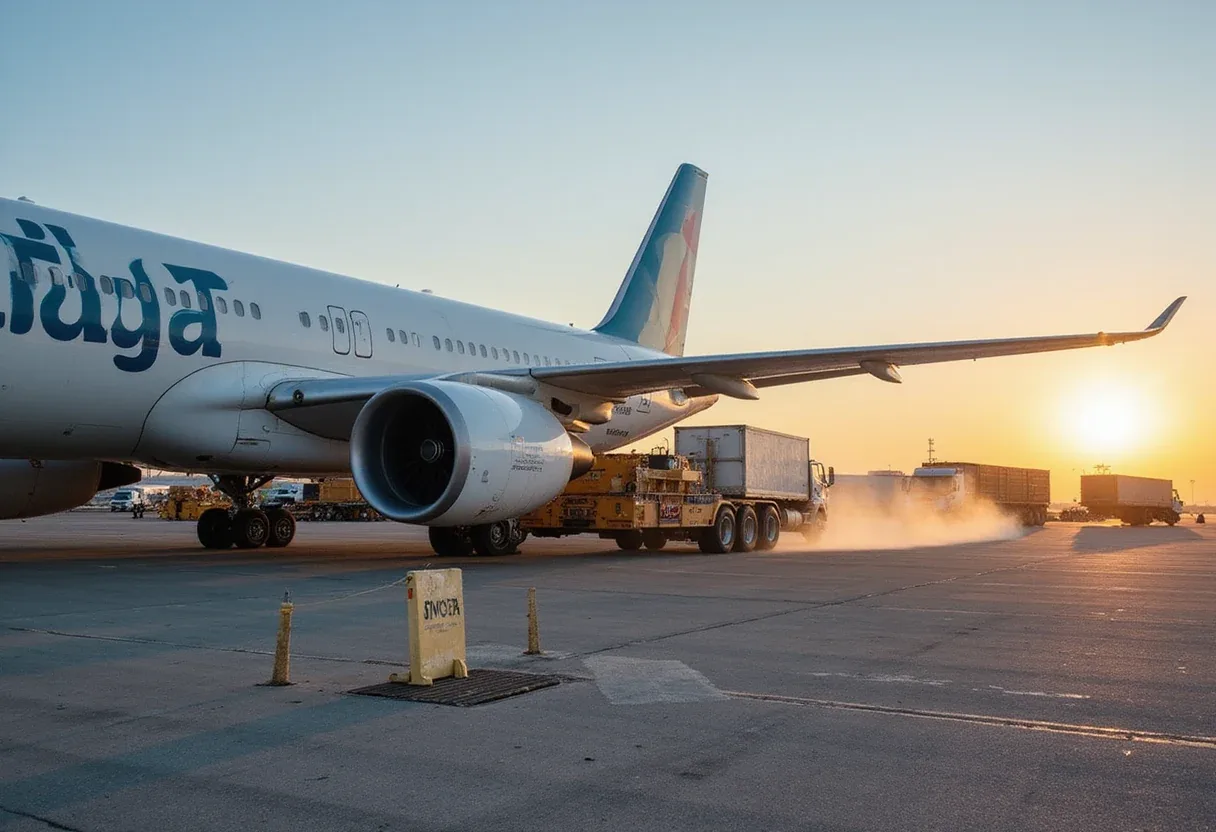
An airport expansion has consumed 22,000 truckloads of fill material, with the haulage still climbing, according to a brief Axios dispatch. The earthworks figure marks a rare concrete data point in a build phase aviation planners track closely, since dirt volumes signal runway, taxiway or terminal preparation long before any steel arrives on site.
What does the haul volume actually represent?
Twenty-two thousand truckloads at typical capacities of 10 to 15 cubic yards each translate to roughly 220,000 to 330,000 cubic yards of material moved on or off the airfield. Engineers use that range to benchmark grading progress against design grades for new pavement sections. The number itself is large enough to suggest a single new runway, a parallel taxiway, or an extended apron rather than a small terminal apron patch.
Which airport, and who is paying?
The Axios report names neither. It offers no sponsor, no public authority, and no private consortium. That silence is unusual. Airport capital programs typically draw from a mix of public bonds, passenger facility charges, aviation authority grants, carrier-funded gate leases, and infrastructure appropriations. The funding mix determines which stakeholders absorb overruns when haulage extends beyond the original earthworks plan.
When does the dirt stop moving?
The "and counting" framing implies an open-ended phase. Earthworks contractors price such work by the cubic yard, with duration driven by weather windows, haul-route capacity, groundwater conditions, and the project's design footprint. No end date has been disclosed. That gap leaves planners guessing whether to book aircraft deliveries against an opening gate or to write the project off as distant.
What does this change for passengers?
Nothing immediately. Earthworks sit beneath the critical path that ends in operational capacity, and operational capacity is what gates, travelers and airlines actually feel. Until the first pavement is poured, no airline adds a frequency, no gate opens, and no slot becomes available for sale.
What does this change for airlines and lessors?
Again, nothing yet. Fleet planners and lessors monitor airport capacity announcements to time aircraft deliveries and lease returns. A 22,000-truckload earthworks number is a leading indicator, not a delivery trigger. Until a runway designation or gate count is published, lessors cannot model the project into residual-value assumptions on aircraft tied to that field.
What is not said in the report?
Three anchors are missing. The airport is not named. The certified runway or gate count after completion is not stated. No airline, cargo operator, or lessor has publicly committed capacity. Skeptics should treat the figure as a measure of construction throughput, not a measure of future flight operations.
Aviation infrastructure news typically surfaces through environmental assessments, civil aviation authority certifications, or carrier press releases tied to new gates. A bare haul-count figure without those anchors leaves the analyst community to interpolate, and that interpolation is where project risk lives. Construction throughput can accelerate ahead of demand just as easily as it can lag behind it.
What does this signal for the next 12 months?
Watch for the next concrete disclosure. A capital cost figure, a runway designation, a carrier memorandum of understanding, or an airspace study would each convert dirt into capacity. Until one appears, 22,000 truckloads remains a measurement of contractor productivity, not a forecast of new flights.
via Google News: Airport expansion (Source)
More from James Calloway
Show full bio
Staff writer covering people, launches and day-to-day practice in Commercial aviation industry coverage at Flightdeck Report.
495 articles
Same bay
- FDR522Steel in the Ground: Traverse City's $120M Airport Build Advances · October 13, 2026
- FDR512Austin-Bergstrom $1bn+ expansion lands on Construction Review outlook · October 10, 2026
- FDR808Cleveland Hopkins Breaks Ground on $1.6bn Expansion · October 12, 2026
- FDR625US Airport Expansion Programs Target Capacity Constraints · September 26, 2026
- FDR547ACI World Calls on Governments to Plan Airport Capacity Now · September 30, 2026