Clearance CLR-3140 · AIR877
AIRAIR
AirportsClearance sheet
Airservices Australia puts five noise options out for Brisbane consultation
Five Airservices options could give 482,000 Brisbane residents noise respite, with 139,000 more helped by higher, smoother arrival profiles. Consultation closes 13 December.
Read-back
- Five noise options are open for public comment until 13 December.
- Airservices says 482,000 residents would get respite periods and 139,000 reduced noise from improved arrival profiles.
- July Noise Action Plan measures cut overflown populations by ~59,000, ~35,000 and ~44,500 across three flightpath changes.
- Trax International reviewed the options before consultation opened.
- Arrival path changes enable Independent Parallel Runway Operations at Brisbane's parallel runways.
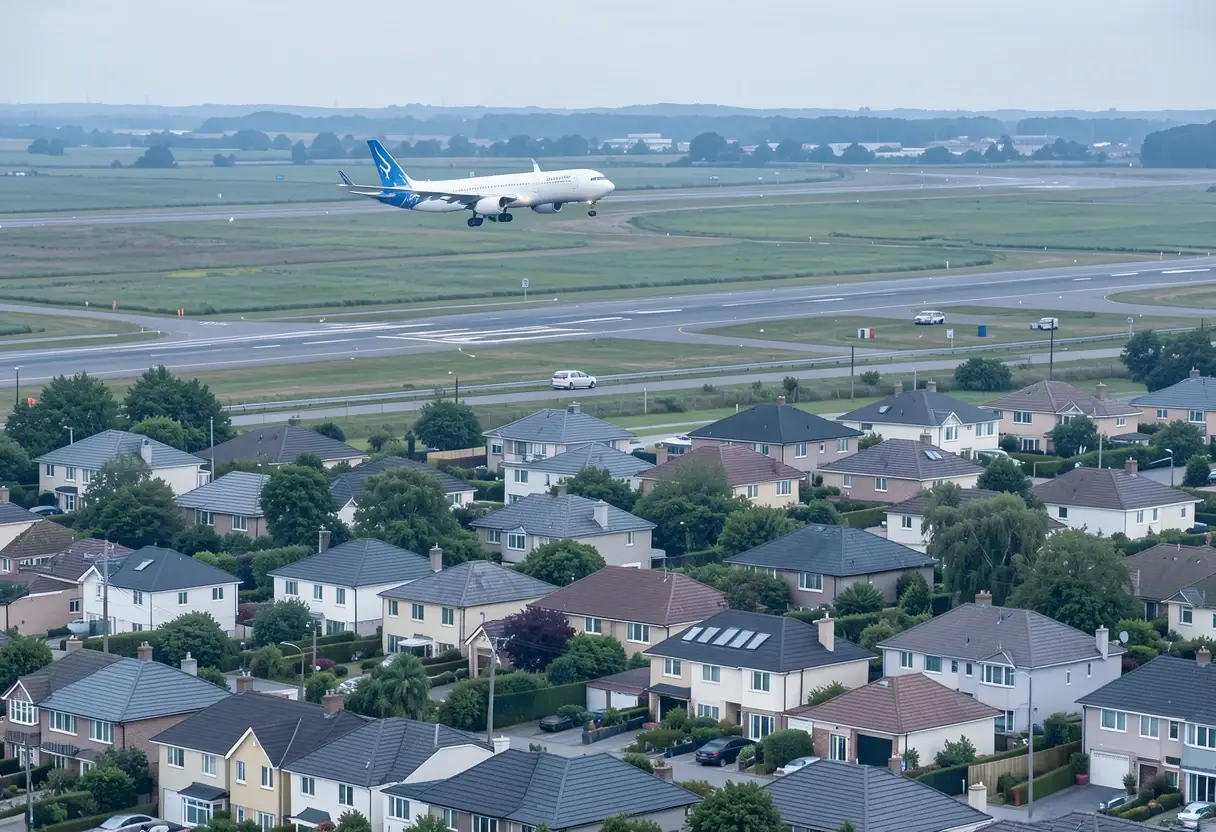
Airservices Australia has published five options for cutting aircraft noise around Brisbane Airport, and says the package could deliver periods of respite to 482,000 residents while reducing noise over the homes of another 139,000 through improved arrival profiles. The air navigation services provider opened public consultation on the options after a review by air traffic management consultants Trax International. Comments close on Sunday, 13 December.
The consultation builds on the Brisbane Noise Action Plan released earlier this year, which the provider says would ease noise impacts for around 140,000 people. What does this change for the communities under the flightpaths? The answer depends on where a household sits relative to the airport's two runways and which options survive the consultation.
What do the five options actually do?
Two mechanisms dominate the package. One option would remove daytime altitude restrictions on night-time flightpaths, which Airservices says would decrease the impact of arrival operations from the north and west over water, and from the south and east over land. Another would permanently increase aircraft altitude on flightpaths from the north and west to the southern runway ends.
Higher altitudes and smoother descent profiles (a continuous, stepped-down approach rather than level segments close to the ground) mean less noise energy reaching the ground per overflight. Respite, by contrast, means scheduling: communities get predictable quiet windows rather than permanently quieter paths.
Donna Marshall, head of Noise Action Plan for Brisbane Program Delivery at Airservices Australia, framed the options as targeted at the most-engaged communities. "The options we are presenting provide a real opportunity for noise improvements for some of the communities we have most frequently engaged with throughout the Noise Action Plan for Brisbane," she said.
Who benefits, and how
Marshall set out two broad groups of winners:
- Runway-aligned communities, exposed to both arrivals and departures, could receive respite from arrivals between peak traffic periods, on an alternating basis with legacy runway communities.
- Communities north and west of the airport, overflown by aircraft arriving to the new runway, could see lower noise levels from increased flightpath altitudes and smoother descent profiles. Some of these communities could also access respite options.
The distinction between the new runway and the legacy runway matters here. Brisbane's parallel runway system creates overlapping noise contours, and the plan attempts to share the burden through alternating respite rather than pushing noise from one suburb to another.
Brisbane Airport has backed the process and urged residents to participate. "Brisbane Airport supports the Noise Action Plan for Brisbane and the work underway by Airservices Australia to identify ways to reduce aircraft noise impacts," a spokesperson said. "We encourage residents to have their say on the options now being considered through the community consultation process."
Changes already locked in
Separately from the new consultation, measures announced in the July Noise Action Plan are already in motion, each with a quantified population effect:
- Arrival flightpaths to the northern end of the new runway will shift north, reducing the population overflown by around 59,000, with new short-approach connections created for non-jet aircraft.
- Arrival flightpaths to the southern end of the runways will change to enable Independent Parallel Runway Operations (IPRO), simultaneous paired approaches that raise runway throughput, reducing the population overflown by around 35,000.
- Departure flightpaths to the south-east from the legacy runway will shift further east, reducing the population overflown by around 44,500.
The IPRO element is the one with direct operational value for the airport: separating arrival streams onto independent approaches protects capacity at peak times while the path shifts remove roughly 35,000 people from the overflown footprint. That pairing of a capacity measure with a noise benefit is the plan's core design logic.
What remains undecided is which of the five new options proceed. The Trax review has shaped them; the consultation will test them. Airservices will need to weigh respite scheduling against runway capacity, and alternating respite against the operational cost of managing arrival banks around quiet windows, before the December 13 deadline closes the comment period.
via australianaviation.com.au (Source)
More from Sophie Lindqvist
Show full bio
Senior reporter covering people, launches and day-to-day practice in Commercial aviation industry coverage at Flightdeck Report.
616 articles
Same bay
- FDR746CASA Part 21 amendments ease rules for specialised operations · October 13, 2026
- FDR664Hillingdon Council warns airport expansion ignores local drawbacks · September 27, 2026
- FDR975Virgin Australia adds 100 seats to Brisbane lounge and reopens Perth Beyond · November 8, 2026
- FDR136CASA consults on broad-area BVLOS guidance for Australian drones · November 9, 2026
- FDR797Birmingham Airport expansion plan draws mixed reaction · October 9, 2026