Clearance CLR-6458 · AIR551
AIRALA
Airlines & NetworksClearance sheet
Alaska Airlines Bets a 737 MAX 8 on Anchorage–Tokyo
Alaska Airlines will fly Anchorage–Tokyo Narita daily with a 737 MAX 8 from May 13, reviving a market last served by a US carrier in 1993 and betting on Japanese leisure demand.
Read-back
- Daily Anchorage–Tokyo Narita service runs May 13–September 7, then 3x weekly from January
- The 3,433-mile route is flown by a 737 MAX 8 with ETOPS 180 approval
- Tokyo–Anchorage demand averaged about 15 passengers per day each way last summer (Cirium data)
- The last regular US carrier service in the market was Delta's, ending in 1993
- China Airlines was the last holdout, flying Taipei–Anchorage 747-400s until 2011
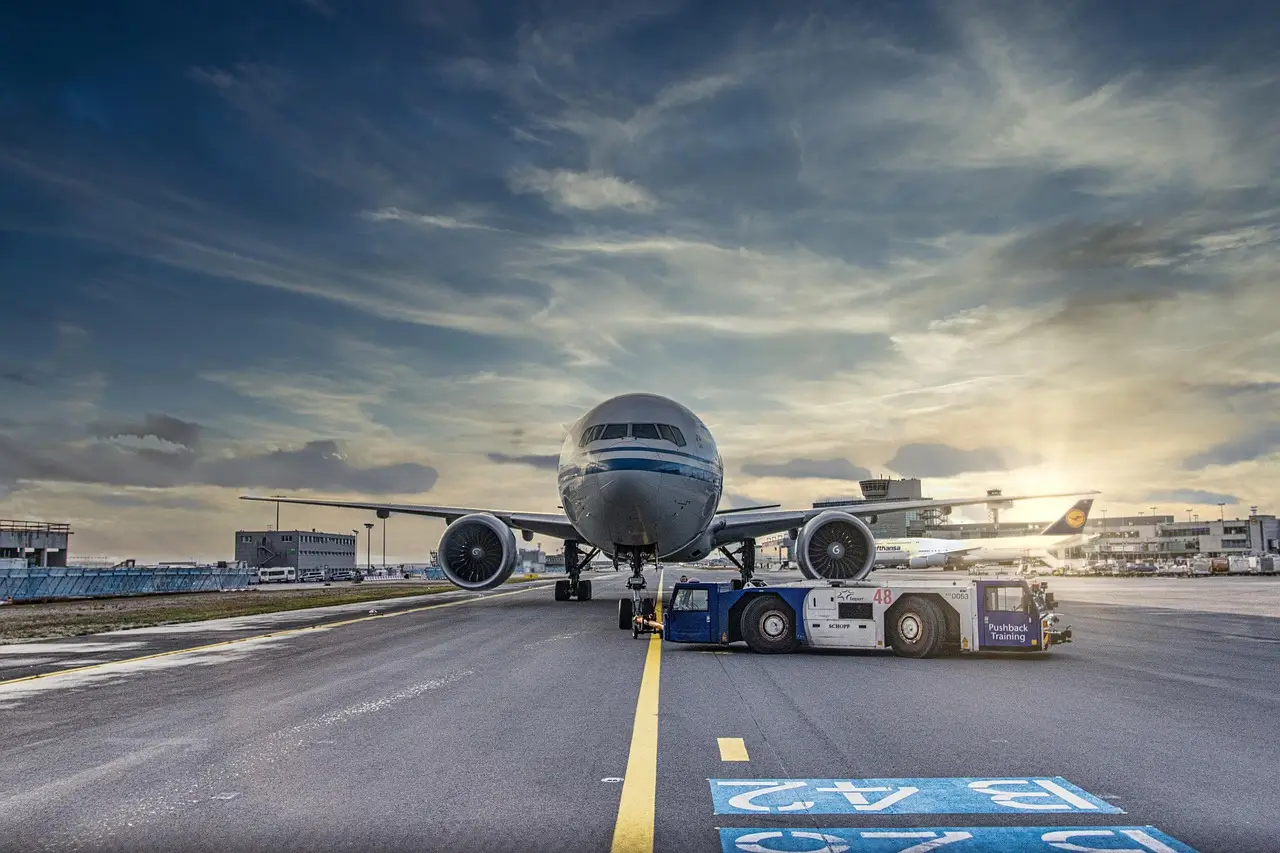
Alaska Airlines will fly a Boeing 737 MAX 8 between Anchorage and Tokyo Narita daily from May 13 through September 7, then return with three weekly flights from January. No US airline has regularly served this market since 1993, and no carrier has ever attempted it with an aircraft this small.
The 3,433-mile route is shorter than Alaska's longest existing MAX 8 sector, Seattle–Reykjavík at 3,622 miles. But distance is not the whole story. Alaska's MAX 8s carry ETOPS 180 approval (permission to fly up to 180 minutes from the nearest diversion airport on one engine), and the Anchorage–Tokyo track stays within those limits. The complication is geography: most of the flight skirts Russian airspace, and Alaska will not plan on diverting there. Practical alternates sit in northern Japan or the Aleutians, where weather can turn severe.
What does this route actually change?
The flight times rule out any hub-and-spoke play at Anchorage. The Tokyo departure leaves Anchorage at 2:10pm and the return arrives at noon — a pattern that fits neither the late-evening arrivals nor the redeye departures typical of continental US banks. Three new Saturday-only routes from Austin, Dallas/Fort Worth and Nashville were announced alongside, but they do not connect westbound and force long layovers eastbound. In July 2026, of 16 lower-48 cities served from Anchorage, only San Diego, San Francisco and Seattle had departures within four hours of the noon arrival; extending to six hours adds only Portland and Boise.
The timing does, however, feed Alaska itself. Within four hours of the noon arrival, passengers can connect to Adak, Cordova, Dillingham, Fairbanks, King Salmon, Nome, Prudhoe Bay and Utqiagvik. Anyone bound for interior or western Alaska currently routes through Seattle, and the nonstop saves hours.
A small market, deliberately stimulated
Cirium ARC/BSP data shows roughly 15 passengers per day each way between Tokyo and Anchorage from June through August, and about 25 per day between all of Japan and Alaska. The market barely shrinks in winter — January and February average about 18.5 per day each way — though it skews more heavily toward Japan-origin traffic in those months.
Today most of that traffic connects through Seattle, with smaller flows via Honolulu, San Francisco and Vancouver. Alaska carries less than half of it; Delta carries roughly twice Alaska's volume. The new route is therefore a stimulation play aimed at Japan: making an Alaska vacation easy enough that Japanese travelers consider it in numbers they currently do not. Alaska-origin traffic already exists and simply takes the long way around.
Range and history
The MAX 8's published range is 3,500nm against roughly 3,000nm required here. Real-world conditions — overwater fuel reserves and vicious winter headwinds westbound — erode published figures daily. Alaska's expectation that the aircraft works reliably in January is the demanding part.
Anchorage once functioned as a mandatory fuel stop between Asia or Europe and the lower 48, until longer-legged aircraft made it unnecessary. T-100 data shows Delta's Anchorage–Hong Kong service, ended in 1993 shortly after the MD-11 replaced the L-1011 and enabled nonstop Hong Kong–Los Angeles flights, was the last regular US carrier presence — and it never targeted Alaska-local traffic. On the Asian side, Asiana and Korean served the market until 2005, and China Airlines flew 747-400s between Taipei and Anchorage until 2011. Those were larger aircraft on different missions.
The route's viability hinges on Japanese travel agencies such as JTB, which can fill leisure capacity at scale. Alaska acquired those decades-old relationships through the Hawaiian Airlines merger, and this is precisely the kind of route the combined carrier makes possible — an experiment whose odds are unproven, but whose cost of trying is a single narrowbody.
via news.alaskaair.com (Original)
More from Sophie Lindqvist
Show full bio
Senior reporter covering people, launches and day-to-day practice in Commercial aviation industry coverage at Flightdeck Report.
608 articles
Same bay
- FDR850Alaska Airlines to Fly Single-Aisle 737 MAX 8 Between Anchorage and Tokyo · October 28, 2026
- FDR853Alaska Airlines Adds Seven Routes from Anchorage and Portland Hubs · September 30, 2026
- FDR295Alaska Airlines Adds Four New Routes in Domestic Network Push · October 17, 2026
- FDR526Alaska Airlines Targets Eight More Long-Haul Routes, Two Joint Ventures · September 30, 2026
- FDR303FAA Opens Public Comment on Anchorage Airspace Redesign · October 12, 2026