Clearance CLR-7803 · AIR254
AIRALA
Airlines & NetworksClearance sheet
Alaska Airlines Places Largest Aircraft Order in Its History
Alaska Airlines has placed the largest aircraft order in its history, breaking with its pattern of incremental fleet deals and securing delivery positions amid constrained output.
Read-back
- Alaska Airlines has placed the largest aircraft order in its history
- The order breaks with Alaska's tradition of incremental fleet top-ups and secondhand acquisitions
- Exact aircraft count, type mix, and delivery timeline were not disclosed
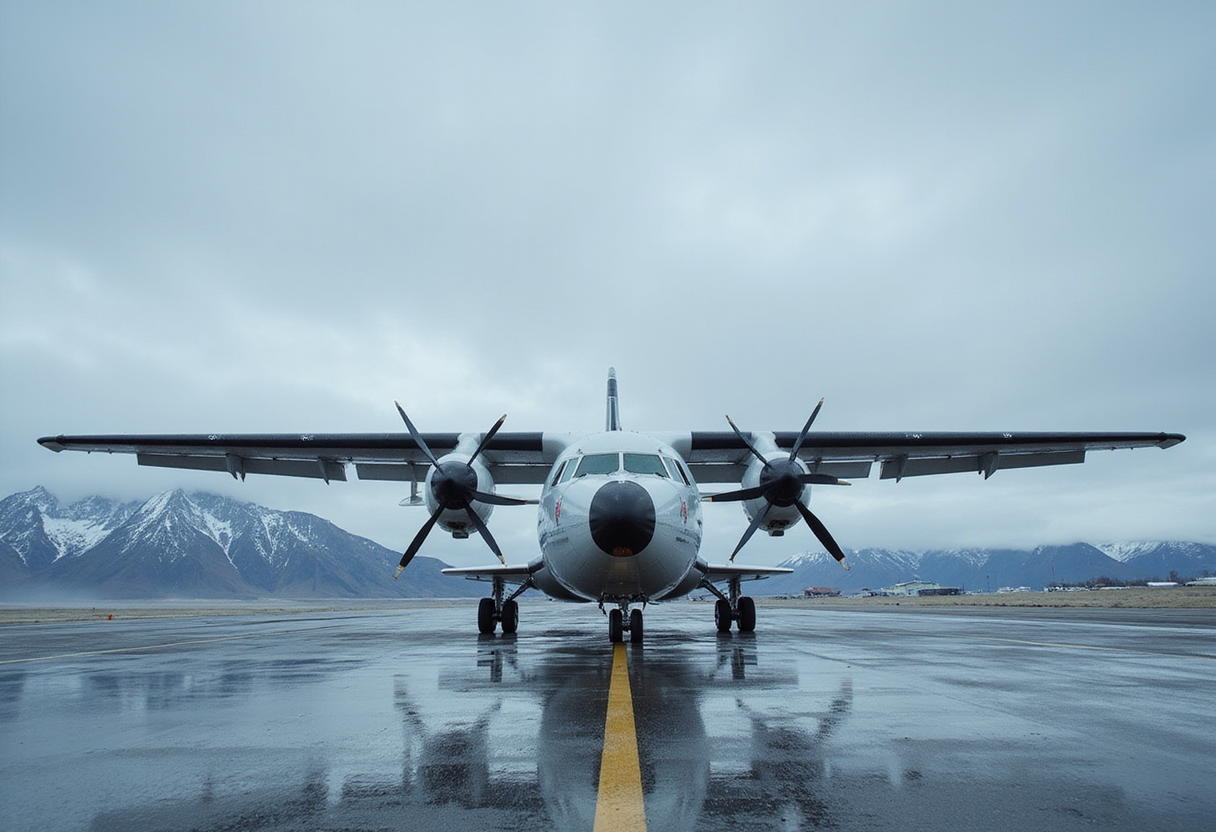
Alaska Airlines has placed the largest aircraft order in the carrier's history, a commitment that sets a new benchmark for a company whose fleet planning has historically favored incremental, opportunistic deals over headline-scale commitments.
The order, reported by AirlineGeeks, marks a departure from Alaska's established pattern. The Seattle-based operator has typically built its fleet through measured top-ups, opportunistic purchases of near-new secondhand aircraft, and small supplemental orders rather than through the block placements common at larger network rivals. A single order large enough to become the airline's biggest ever represents a deliberate strategic choice about capacity, network planning, and capital allocation over the next decade.
The scale of the commitment matters for three reasons.
First, fleet count drives network capacity. Alaska's route map centers on Seattle and Portland, with a growing West Coast presence and, following its acquisition of Hawaiian Airlines, a mid-Pacific and Hawaii network that adds widebody flying to what was previously a single-aisle operation. An order of record size gives the airline flexibility to replace aging aircraft, support Hawaii-route integration, and pursue new long-haul opportunities from Seattle — potentially including destinations that its current fleet economics cannot support profitably.
Second, delivery slots are a scarce commodity. Boeing and Airbus hold backlogs stretching years ahead, and the largest allocations go to customers that commit early and in volume. By moving now, Alaska secures production positions at a time when narrowbody output from both manufacturers remains constrained by supply chain bottlenecks. Carriers that waited through the post-pandemic recovery have faced delivery deferrals that complicated fleet planning. Locking in positions protects Alaska's capacity trajectory through the second half of the decade.
Third, the order signals confidence in unit-cost economics. New-generation aircraft burn meaningfully less fuel per seat than the types they replace, and Alaska has built its business model on maintaining a cost base low enough to compete against larger rivals. A record order implies the airline's management sees a sustained case for fleet investment — a judgment that rests on demand durability, labor cost stability following its consolidated pilot and flight attendant contracts, and the revenue synergies expected from the Hawaiian integration.
The historical context sharpens the significance. Alaska's previous fleet decisions include the 2016 Virgin America acquisition, which brought Airbus A320-family aircraft into an otherwise all-Boeing 737 mainline fleet and forced a two-type operating structure the carrier has since worked to unwind. It also inherited Hawaiian's Airbus A330 and Boeing 787 widebodies and the A321neo. Any record-size order therefore carries fleet-simplification implications: whether it consolidates the combined group around fewer types, or whether it entrenches a mixed manufacturer strategy, will shape maintenance costs, pilot training pipelines, and spare-parts economics for years.
For manufacturers, the order is a competitive data point. Alaska Group straddles both major OEMs — 737s at Alaska Airlines, Airbus types and 787s at Hawaiian — giving it genuine leverage in negotiations. The winner of a record allocation from a customer with that dual exposure gains not just volume but a reference account in the contested West Coast market.
Investors will look past the headline number to the delivery schedule. Aircraft orders convert into capital expenditure gradually, and the financial impact depends on timing, pricing, and how many airframes replace existing jets versus adding net new capacity. Alaska has historically managed balance-sheet discipline carefully, and a commitment of this size will test that discipline against fleet growth ambitions.
Details including the exact aircraft count, type mix, engine selection, and delivery timeline frame the true scope of the deal. What is already clear is the direction: Alaska has moved from incremental fleet management to a decade-defining commitment, and the order will anchor the airline's capacity, network, and cost strategy well into the 2030s.
via Google News: Aircraft orders and fleets (Source)
More from Sophie Lindqvist
Show full bio
Senior reporter covering industry trends and analytics at Flightdeck Report.
161 articles
Same bay
- FDR269Alaska Airlines Places Largest-Ever Aircraft Order · September 30, 2026
- FDR768Alaska Orders 105 737-10s and Five 787s in Largest-Ever Fleet Deal · September 30, 2026
- FDR470Alaska Airlines Places Largest Aircraft Order in Its History · September 30, 2026
- FDR447Alaska Airlines places largest-ever aircraft order with Boeing · September 30, 2026
- FDR436Alaska Airlines Orders 110 Boeing Aircraft · September 30, 2026