Clearance CLR-4986 · AIR987
AIRBOE
Airspace & RegulationClearance sheet
Boeing and Cranfield Train 24 West African Regulators in Praia
Boeing and Cranfield University are training 24 West African aviation professionals in Praia as projections point to Africa's commercial fleet more than doubling within 20 years.
Read-back
- 24 professionals from West African civil aviation authorities and airlines are attending a five-day workshop in Praia, Cabo Verde.
- Partners include Boeing, Cranfield University, BAGASOO and the Civil Aviation Agency of Cabo Verde.
- Africa's commercial aircraft fleet is projected to more than double over the next 20 years.
- Training covers regulatory standards, safety management systems, accident investigation, emergency response and disruption management.
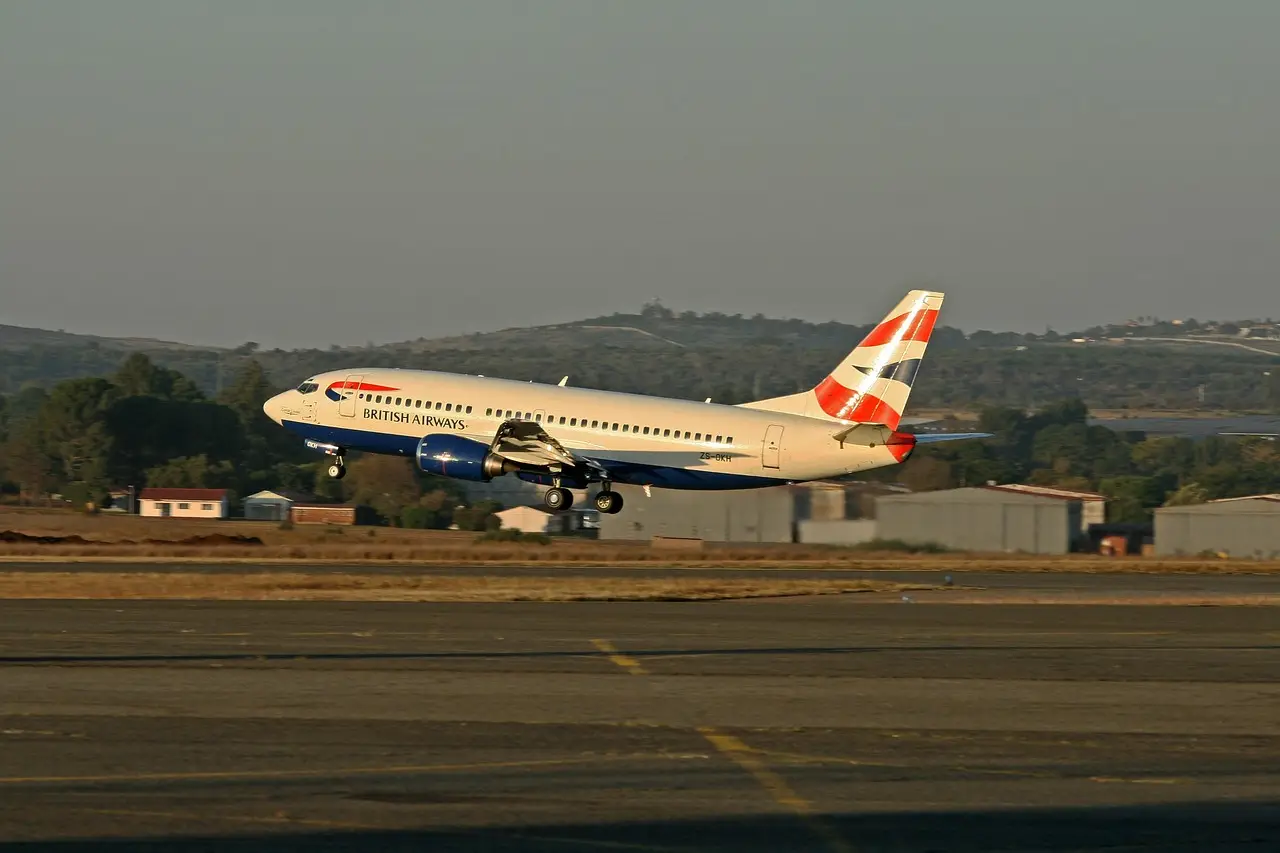
Twenty-four aviation professionals from West African civil aviation authorities and airlines began a five-day regulatory workshop in Praia, Cabo Verde, this week, funded and staffed by Boeing and Cranfield University. The programme also counts two regulators as partners: the Banjul Accord Group Aviation Safety and Security Oversight Organisation (BAGASOO) and the Civil Aviation Agency of Cabo Verde (AAC).
The timing is not incidental. Industry projections cited by the organisers hold that Africa's commercial aircraft fleet will more than double over the next 20 years. That is a growth rate with consequences: more airframes, more certified personnel and more oversight workload for institutions that, in parts of the region, remain thinly resourced. A fleet that doubles in two decades implies the region's regulators must roughly double their supervisory capacity simply to stand still.
What does the workshop actually cover?
The curriculum is practical rather than declaratory. Boeing and Cranfield subject-matter experts are delivering training across five areas:
- regulatory standards
- safety management systems
- aircraft accident investigation
- emergency response
- disruption management
Those five topics map directly onto the capabilities a regulator must hold before a fleet expansion arrives, not after. Accident investigation and emergency response, in particular, are functions that reveal their weaknesses only when used.
Who said what?
Boeing's Safety and Regulatory Partnerships Director for Africa, the Middle East, Türkiye, Central Asia and Europe, Kayode Ariwodola, framed the workshop as a mechanism for cross-border regulatory convergence. "This workshop demonstrates how open dialogue can strengthen regulatory capabilities across borders and support a more harmonised aviation ecosystem in West Africa," he said in a statement.
Ariwodola extended the point to the industry-government interface. "The collaboration between industry stakeholders and government agencies is essential to ensuring safe and efficient growth in air traffic," he said.
BAGASOO's Executive Director, Jailza Soraya Rodrigues Silva, put the institutional case more bluntly. Aviation authorities, she said, need to continuously improve their institutional capacity and share knowledge to keep pace with technological and operational change in the industry. The workshop, in her telling, translates those priorities into practical learning opportunities for BAGASOO member states.
Why BAGASOO matters here
BAGASOO exists precisely because small national regulators struggle to fund standalone technical expertise. The Banjul Accord Group pools safety and security oversight across its member states, and a workshop of this kind effectively upgrades the pool rather than any single authority. Training 24 professionals at once, drawn from multiple countries, multiplies the return in a way 24 separate national courses would not.
The involvement of Cranfield University adds an academic dimension. The university supplies subject-matter experts alongside Boeing's own, which places the programme somewhere between vendor training and formal regulatory education. For a region anticipating a doubled fleet, both channels matter.
The measure of success
The stated aims are threefold: knowledge sharing, harmonised regulatory practices, and improved capacity to address emerging safety challenges. None of these lends itself to a quarterly metric. The observable test will come later — in audit results, in the pace at which BAGASOO member states certify new operators, and in whether the projected fleet expansion is matched by oversight that grows at the same rate.
Boeing, for its part, has an obvious commercial stake in African fleet growth; the manufacturer's own market outlooks have long flagged the continent as a growth region. A five-day workshop for 24 professionals is a modest instrument against a two-decade doubling. It is, however, a concrete one, and it has started.
via Google News: Aviation safety (Source)
More from Grace Kim
Show full bio
News editor covering companies, deals and strategy in Commercial aviation industry coverage at Flightdeck Report.
555 articles
Same bay
- FDR350SACAA readies oversight for airfreight growth and tech risk · October 13, 2026
- FDR737South Africa Holds Africa's Top Aviation Safety Ranking · October 14, 2026
- FDR506Caribbean States Draft 2035 CASSOS Roadmap at Guyana Symposium · October 10, 2026
- FDR988South Africa Ranks Seventh Globally in Aviation Safety Oversight · October 14, 2026
- FDR773South Africa Ranked Seventh Globally for Aviation Safety · October 14, 2026