Clearance CLR-5114 · AIR989
AIRBUR
AirportsClearance sheet
Burnham Withholds Support for Heathrow Expansion
Greater Manchester mayor Andy Burnham has refused to back Heathrow expansion, narrowing the political coalition behind the airport's capacity plans and exposing regional fault lines in UK aviation policy.
Read-back
- Andy Burnham, mayor of Greater Manchester, has refused to back Heathrow Airport expansion
- The refusal narrows political support for the project from within territory normally sympathetic to government policy
- Burnham's position reflects longstanding regional concern that southeast hub growth draws traffic from airports outside London
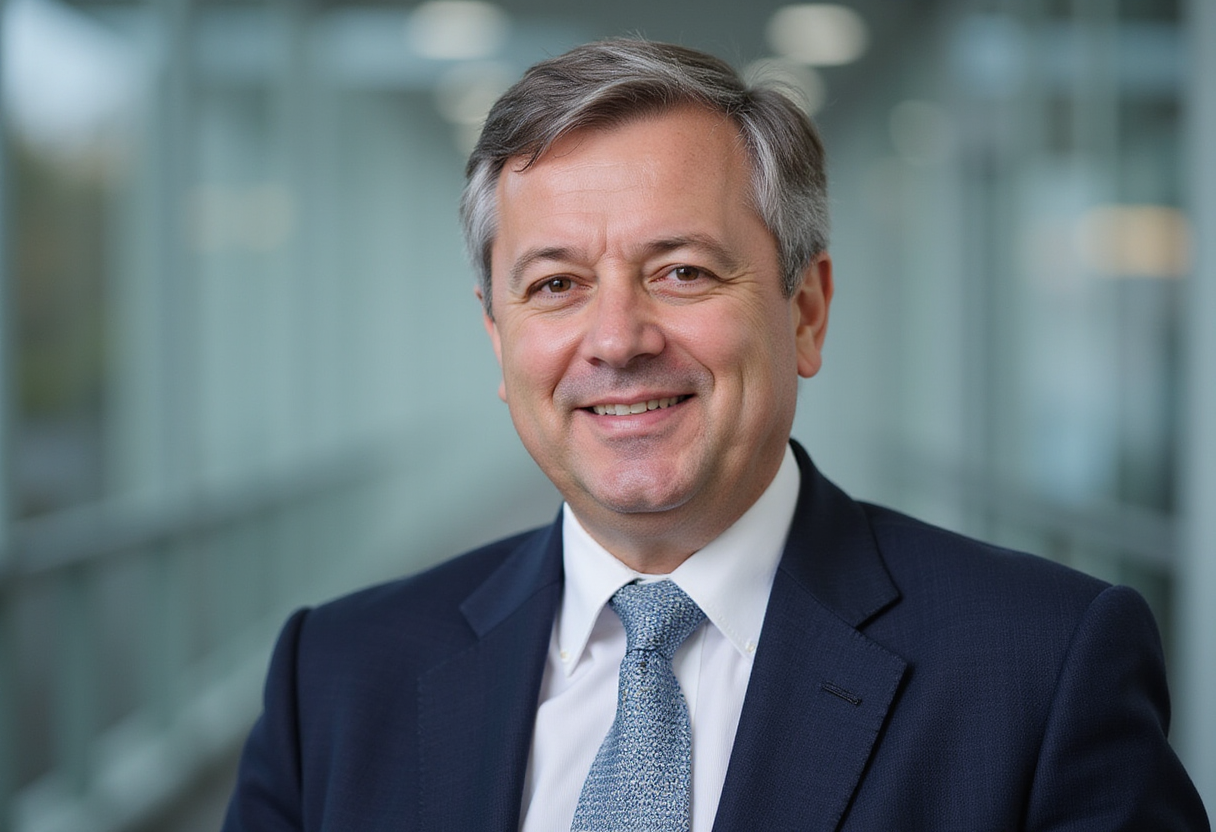
Andy Burnham, the mayor of Greater Manchester, has refused to back the expansion of Heathrow Airport, withholding his endorsement from what remains the UK's most consequential airport-capacity decision in a generation.
His position matters well beyond the boundaries of his own region. Burnham leads one of the largest combined authorities in England and speaks for a conurbation whose airport, Manchester, competes directly with the London hubs for long-haul traffic, airline base decisions and route development. When a figure of that standing declines to support Heathrow's growth plans, the political coalition behind the project narrows at precisely the moment the airport needs it to hold.
The refusal also signals a broader regional fault line in UK aviation policy. Government and industry arguments for Heathrow expansion rest on the claim that additional hub capacity generates national economic benefits — more long-haul routes, more transfer traffic, more connectivity to growth markets. Regional political leaders have long countered that concentration of capacity in the southeast pulls traffic, investment and airline commitment away from airports outside London. Burnham's refusal to endorse the project places him squarely in that second camp.
For airlines and alliance partners, the calculation is concrete. Carriers banking on additional departure and arrival slots at an expanded Heathrow must weigh political risk against network planning horizons that stretch a decade or more. A third runway — or any expansion scheme — only delivers capacity if it survives review, financing and construction. Each prominent political figure who withholds support extends the period of uncertainty around that timeline.
The airport's capacity problem is not in dispute. Heathrow operates effectively full, with slot scarcity constraining new entrants and limiting the addition of long-haul destinations. That constraint is the entire commercial logic of expansion. But commercial logic does not by itself clear the political and environmental hurdles, and the project's fate depends on sustaining cross-party and cross-regional backing through each decision gate.
Burnham's stance carries weight because it comes from within the governing party's own political territory rather than from predictable opposition benches. Refusals from within the broad constituency a government must hold together are harder to discount than those from declared opponents. It forces ministers weighing formal support for expansion to account for regional political costs alongside the capacity benefits.
For Manchester Airport itself, the mayor's position cuts both ways. Opposition to Heathrow growth can be read as advocacy for the regions' airports to carry a larger share of UK aviation growth. Airlines evaluating base allocations watch these political signals: a region whose leadership resists southeast concentration is a region positioning itself as an alternative for new capacity, route development and fleet deployment.
The immediate consequence of Burnham's refusal is political rather than operational. No runway timeline shifts this week, and no slot allocation changes. What shifts is the balance of opinion ministers will weigh when the expansion decision formally returns to the agenda — and on that ledger, the airport has now lost a voice it would have preferred to count as supportive.
Burnham has not ruled the matter closed. His refusal to back expansion today leaves open the question of what conditions, if any, could change his position — whether on regional connectivity guarantees, airport competition safeguards or the distribution of aviation growth across the UK. Until those questions are answered, Heathrow's expansion case advances with one fewer ally and one more obstacle between it and final approval.
via Google News: Airport expansion (Source)
More from Nathan Brooks
Show full bio
Correspondent covering media and advertising at Flightdeck Report.
149 articles
Same bay
- FDR536Burnham Refuses to Back Heathrow Expansion · September 28, 2026
- FDR861Burnham cools on Heathrow third runway, floats Manchester alternative · September 30, 2026
- FDR664Hillingdon Council warns airport expansion ignores local drawbacks · September 27, 2026
- FDR991UK Prime Minister Declines to Back Heathrow Third Runway · September 28, 2026
- FDR142Heathrow Expansion Runs Against UK Climate Targets, Report Finds · September 26, 2026