Clearance CLR-1091 · AIR672
AIRCHA
AirportsClearance sheet
Charlotte Douglas Proposes Major Expansion Under New Airline Agreement
Charlotte Douglas International has proposed a major expansion under a new agreement with airline partners, signaling capacity growth at American's key connecting hub.
Read-back
- Charlotte Douglas International Airport has proposed a major expansion project
- The proposal is structured under a new agreement with the airport's airline partners
- The initial report does not specify the project's cost, scope, or construction timeline
- Aviation Pros reported the proposal
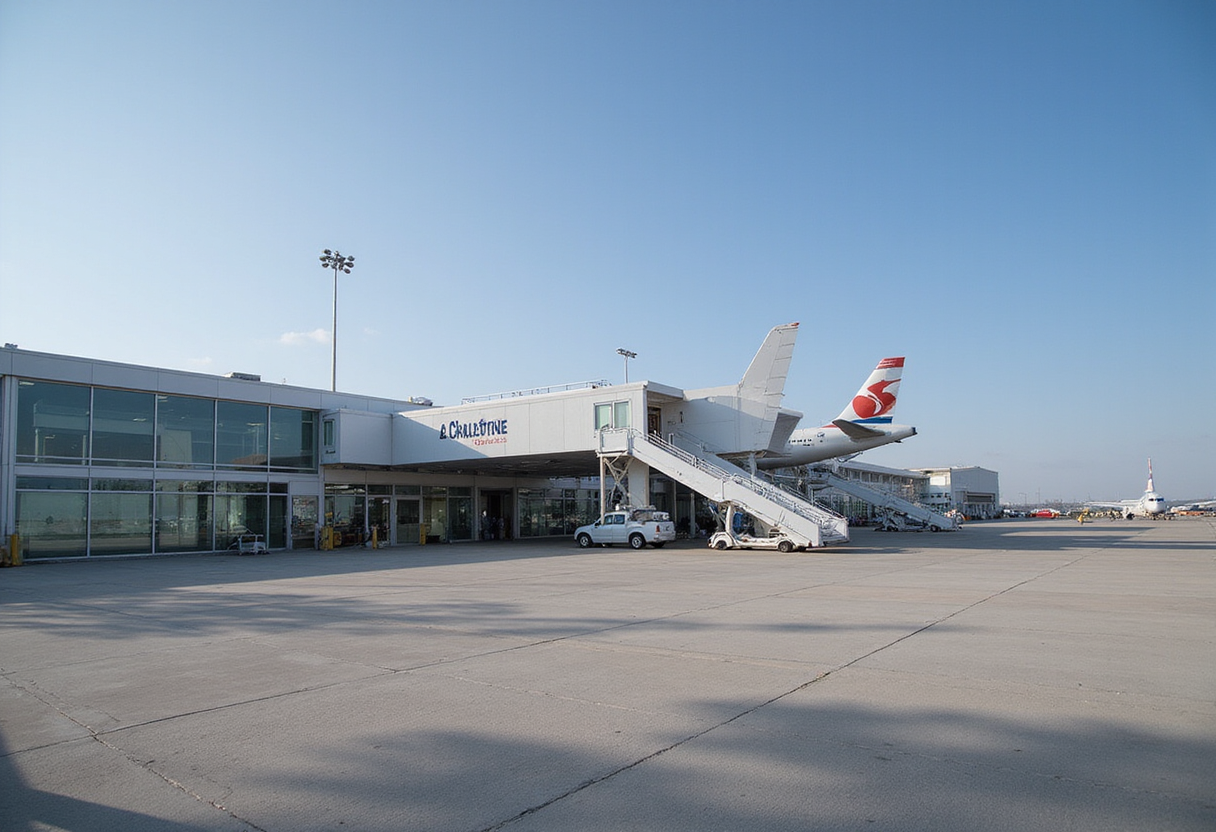
Charlotte Douglas International Airport has put forward a major expansion proposal, structured around a new agreement with its airline partners, according to a report by Aviation Pros.
The announcement positions one of the busiest airports in the United States for a new phase of capital development. Details released so far identify the project as significant in scale, but the public reporting does not yet specify the full scope, cost, or construction timeline of the works.
Charlotte Douglas operates as the principal hub for American Airlines, which routes a large share of its domestic connecting traffic through the North Carolina facility. Any expansion of gates, concourses, or airfield capacity at the airport therefore carries direct network consequences for American's route planning, and competitive implications for other carriers serving the market.
What does the airline agreement cover?
Airport expansion projects in the United States are typically governed by agreements between the airport operator and the airlines that serve it. These agreements define how carriers share the cost of capital programs and what capacity commitments they make in return.
The new agreement at Charlotte Douglas, as reported by Aviation Pros, links the proposed expansion to the participation of the airport's airline partners. This structure matters because it signals that carriers have indicated enough demand — or enough intent — to justify new infrastructure investment.
For hub airports, that signal is the critical variable. Gate and concourse capacity only pays for itself when aircraft utilization and seat deployment grow into it. An airline-backed expansion proposal is effectively a statement by the carriers that they expect to operate more flights, or larger aircraft, from Charlotte in the coming years.
The specific carriers party to the agreement, and the financial terms of their commitments, were not detailed in the initial report.
Why does Charlotte need the capacity?
Charlotte Douglas has ranked among the world's busiest airports by aircraft movements in recent years, a function of its role as a high-frequency connecting hub. That operating model consumes gates and ramp space faster than origin-and-destination traffic at comparable facilities.
A major expansion proposal speaks to pressure points familiar to hub airports:
- Congestion during peak departure and arrival banks, when connecting waves concentrate aircraft on stands and taxiways
- Terminal and gate limits that constrain a carrier's ability to add frequencies or upgauge aircraft
- Ground infrastructure — curb, parking, baggage — sized for passenger volumes that have grown with the hub's expansion
The report does not break down which of these elements the proposal addresses, and that breakdown will determine how the investment translates into added capacity for airlines and passengers.
What are the cost and network consequences?
Large airport capital programs in the United States routinely run into the billions of dollars, funded through a combination of airport-generated revenue, airline cost-sharing under use agreements, bonds, and federal airport improvement grants. The financial structure of the Charlotte agreement will determine how those costs flow through to airline unit costs over time.
For American, the hub's dominant operator, added capacity at Charlotte would preserve the connecting economics that make the facility central to its network. For other carriers, expanded infrastructure could open room for growth in a market where gate access has historically been constrained by hub operations.
Passengers in the Charlotte catchment area stand to gain from added capacity only insofar as the expansion keeps pace with demand rather than trailing it — the difference between competitive fares and capacity-constrained pricing.
The Aviation Pros report does not yet state whether the proposal includes a new concourse, additional gates, airfield works such as runway or taxiway projects, or landside expansion such as parking and terminal roadways.
What happens next?
Airport expansion proposals of this kind move through a sequence of approvals before construction begins: airline sign-off, airport authority governing-board authorization, and, for projects with federal funding or airspace implications, review by the Federal Aviation Administration. Environmental review timelines can extend project schedules substantially depending on scope.
The proposal's next formal milestone will be its consideration by the airport's governing authority, followed by publication of the program's budget and schedule. Those documents will establish whether the expansion is a near-term construction commitment or the opening position in a multi-year negotiation with airline partners.
Until the airport releases the program's cost, scope, and delivery dates, the proposal stands as a statement of intent: Charlotte Douglas and its airlines believe the hub's growth trajectory justifies major new infrastructure, and they have begun the process of building it.
via Google News: Airport expansion (Source)
More from Sophie Lindqvist
Show full bio
Senior reporter covering industry trends and analytics at Flightdeck Report.
214 articles
Same bay
- FDR320Charlotte Douglas Pitched CLT Beyond Expansion in New Airline Lease Deal · October 9, 2026
- FDR625US Airport Expansion Programs Target Capacity Constraints · September 26, 2026
- FDR285Connecticut Airport Gains $12M Expansion Project Aimed at New Routes · September 30, 2026
- FDR730Chicago's Aviation Commissioner Maps Out O'Hare Expansion Agenda · September 30, 2026
- FDR639United Targets 1,000 Daily Flights at O'Hare, Kirby Says · September 30, 2026