Clearance CLR-7100 · AIR451
AIRDAT
Air CargoClearance sheet
Data-centre boom drives air cargo growth – and widens imbalances
AI data-centre construction is lifting air cargo volumes on servers, semiconductors and cooling equipment while widening directional imbalances across major trade lanes.
Read-back
- Data-centre construction is driving air cargo demand for servers, semiconductors and cooling equipment.
- The boom is widening directional imbalances across air cargo trade lanes.
- Freighter capacity, not belly capacity, is the binding constraint for data-centre project cargo.
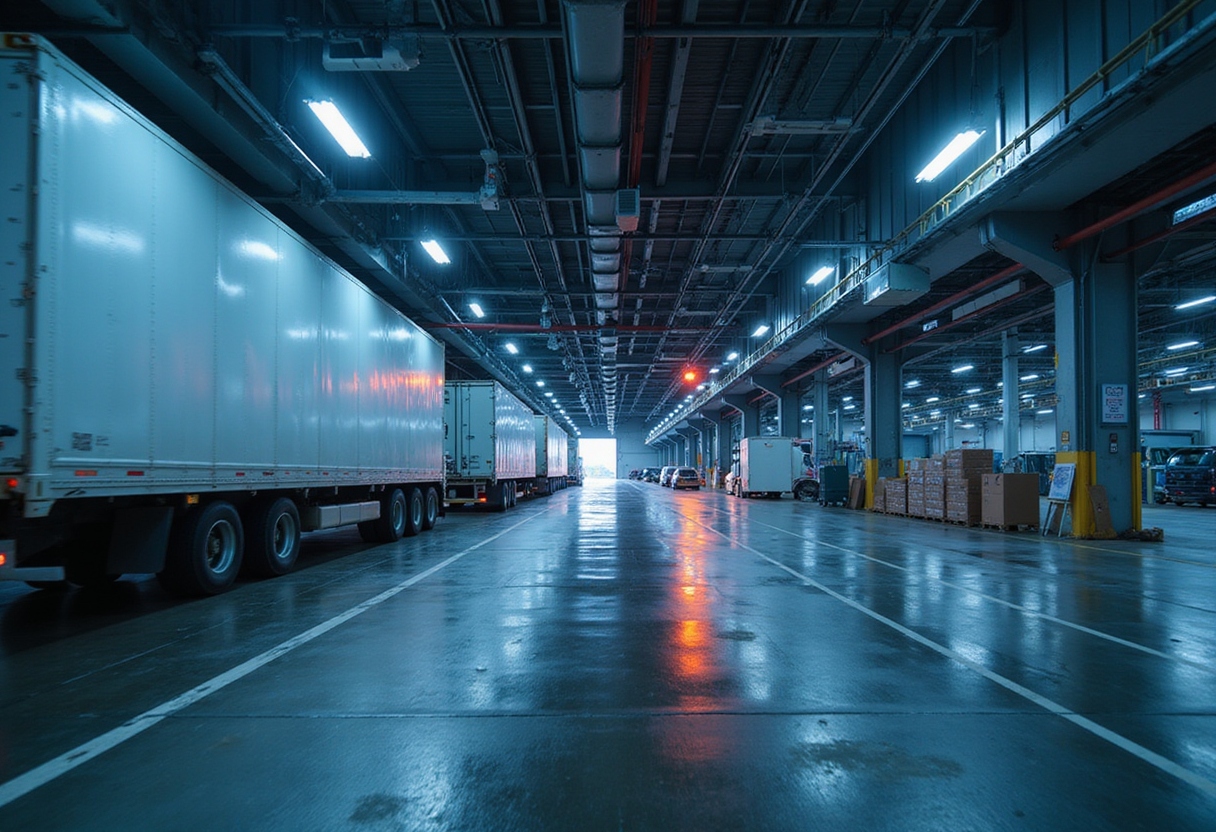
The rapid build-out of data-centre capacity has become a growth engine for air cargo — and, at the same time, a source of widening structural imbalances in the market, according to reporting by The Loadstar.
The connection between artificial-intelligence infrastructure spending and freighter traffic is direct. Data-centre construction depends on servers, high-value networking equipment, precision cooling hardware and the semiconductor supply chain that feeds it. These are goods with high value-to-weight ratios, tight delivery windows and low tolerance for delay. They move by air.
That demand profile has supported air cargo volumes at a time when other segments of the market have been uneven. Capacity constraints on ocean shipping and sustained e-commerce flows out of Asia have already tightened the belly-hold and freighter market; data-centre-related shipments add another layer of demand on the same lanes, particularly out of Asian manufacturing and export hubs.
But the growth is not evenly distributed. Air cargo has always run on directional imbalances — head-haul lanes full, backhaul lanes light — and the data-centre boom appears to be amplifying that pattern. Equipment flows concentrate on specific origin–destination pairs, driven by where hyperscalers and colocation operators are building facilities. The result is stronger demand on some lanes and surplus capacity on others, with consequences for rates, equipment positioning and airline network planning.
For carriers and freight forwarders, directional imbalance is a cost problem. An aircraft that flies full in one direction and empty in the other still burns fuel, crew time and slots. When imbalances widen, carriers either absorb repositioning costs, restructure rotations, or price backhaul aggressively to stimulate flow. Shippers on the long side of the imbalance gain leverage; shippers on the short side lose it.
The imbalance dynamic also interacts with capacity. Widebody belly capacity has recovered as passenger networks have rebuilt, but freighter capacity remains the binding constraint on outsize, high-density industrial cargo of the kind data-centre construction generates. Project cargo and charter demand for infrastructure equipment competes with scheduled e-commerce and semiconductor traffic for the same freighter fleet.
The trend has implications beyond airlines. Lessors and freighter conversion programs watch demand signals of this kind closely, because sustained structural growth on specific lanes justifies allocating converted narrowbody and widebody freighters to those markets. Airport cargo hubs on the winning side of the imbalance — those closest to semiconductor fabrication, electronics assembly and data-centre construction clusters — gain throughput and investment. Hubs on the losing side face the harder task of filling returning capacity.
For shippers and forwarders, the practical question is whether the current strength is cyclical or structural. Data-centre construction schedules are published years ahead by the major cloud and AI operators, which suggests the associated air freight demand is plannable — provided the industry can see it coming and positions capacity accordingly. The risk, as The Loadstar's reporting implies, is that the boom rewards lanes and players positioned on the demand side while leaving others with mounting repositioning costs and soft backhaul rates.
The industry's near-term challenge will be to match freighter deployment and hub capacity to where the data-centre build-out is actually happening — before the imbalances it creates harden into structural inefficiency across the major trade lanes.
via Google News: Air cargo (Source)
More from Sophie Lindqvist
Show full bio
Senior reporter covering industry trends and analytics at Flightdeck Report.
161 articles
Same bay
- FDR384Hi-tech cargo hits 3m tonnes, outpacing Chinese ecommerce · September 30, 2026
- FDR498APAC-Europe Air Cargo Volumes Fall 15% Year on Year · September 26, 2026
- FDR877Air Cargo Demand Grew 4.4% in August as Load Factor Reached 46% · September 30, 2026
- FDR896Transpacific Rates Stay Elevated as Peak Season Nears · September 27, 2026
- FDR296Air Cargo Tonnages Rebound Ahead of Chinese Holiday, WorldACD Data Shows · September 27, 2026