Clearance CLR-2709 · AIR220
AIRDRO
AirportsClearance sheet
Drone Scares Force Amritsar Airspace Closure, Two Diversions
Amritsar airport shut its airspace after a drone scare, diverting two flights to Delhi and Chandigarh and adding to India's drone-incursion disruptions.
Read-back
- Amritsar airport closed its airspace following a drone scare.
- Two flights were diverted: one to Delhi, one to Chandigarh.
- The incident was reported by The Times of India.
- Drone incursions have repeatedly forced closures at Indian airports in recent years.
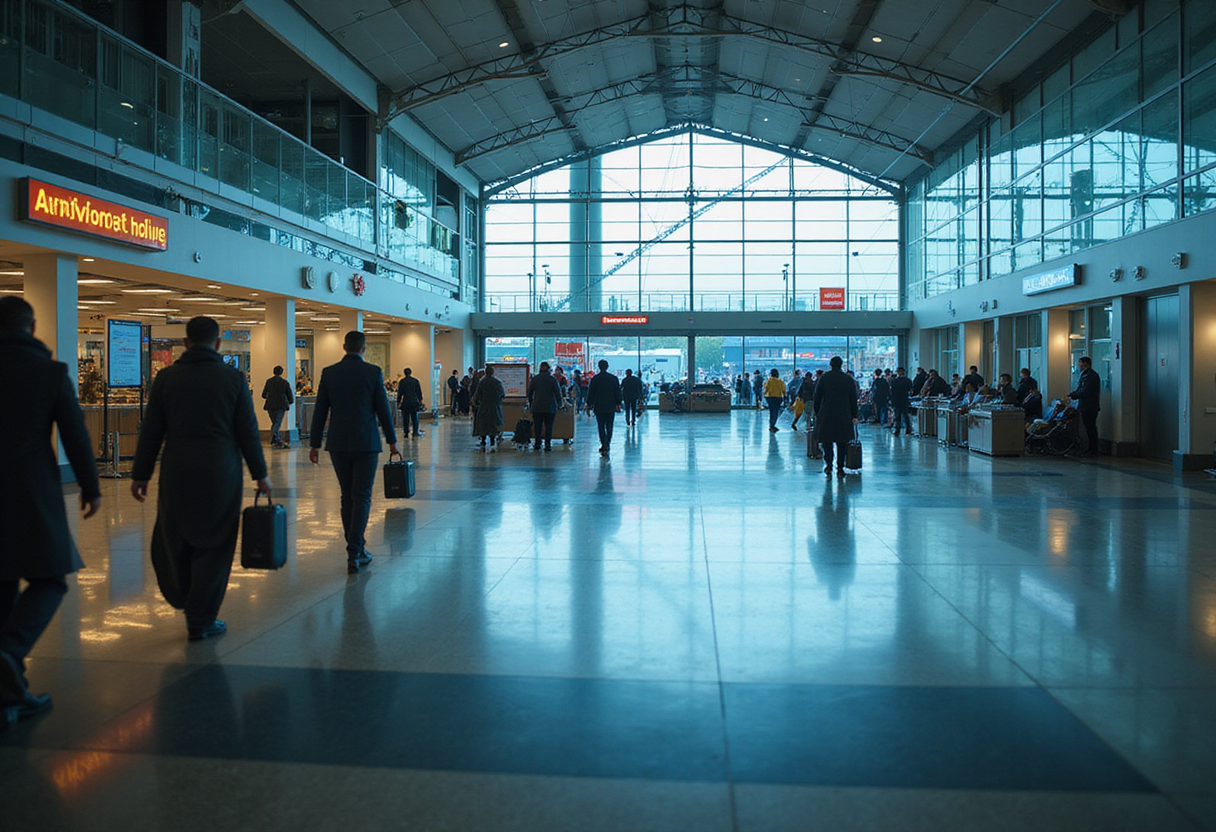
Amritsar's Sri Guru Ram Dass Jee International Airport closed its airspace after a drone scare, forcing two commercial flights to divert to Delhi and Chandigarh, The Times of India reported.
The diversion of two aircraft in a single incident puts a hard number on a threat Indian aviation authorities have been tracking with growing urgency: uncrewed aircraft operating near civilian runways. An airspace closure at a airport the size of Amritsar is not a routine precaution. It halts arrivals and departures indefinitely, ripples through aircraft rotations across the network, and strands passengers on the ground or in the air far from their destinations.
For the two diverted flights, the immediate consequence was landing at alternate airports roughly 230 km (Chandigarh) and 400 km (Delhi) from the passengers' intended destination. That translates into added fuel burn, crew-time complications, and ground-transport costs for the airlines involved — the measurable price of a single unverified aerial contact.
What does a drone-triggered closure actually cost?
Airspace shutdowns are binary decisions. When air traffic control or airport security reports an unidentified drone in the approach or departure corridor, the standard response is suspension of operations until the contact is confirmed clear. There is no partial closure.
The economics are unforgiving:
- Each diverted flight burns additional fuel for the leg to its alternate and, eventually, the return leg to the original destination.
- Aircraft parked at the wrong airport cascade delays into subsequent rotations.
- Passengers require reaccommodation, and in some cases compensation, depending on the operating carrier's rules and Indian regulatory requirements.
A single drone report at one airport can therefore generate disruption measurable in lakhs of rupees per flight, before any security-response costs are counted.
Why drone incursions keep shutting Indian airports
India has recorded repeated drone-related airport closures in recent years, and Amritsar now joins that list. The pattern reflects both the proliferation of consumer drones and the severity of the security assessment that governs them. In India's regulatory framework, an unidentified unmanned aircraft near a civil airport is treated as a potential security threat, not a nuisance — a posture that makes shutdowns the default rather than the exception.
The rules give operators little discretion. Once a credible drone sighting is logged, operations suspend. Airlines have no mechanism to challenge the closure in real time, and none should expect one: the risk calculus behind a shutdown weighs a hypothetical collision or hostile act against hours of delay, and the delay loses every time.
What happens next
The Times of India's report indicates the two diverted flights were routed to Delhi and Chandigarh while the airspace remained closed. Normal operations at Amritsar will resume once security agencies confirm the airspace is clear, and the incident will feed into the growing body of cases Indian regulators are examining as they weigh counter-drone detection and interdiction systems for major airports.
Expect the frequency of such closures, and the pressure to deploy detection technology at India's largest gateways, to remain in tension for the foreseeable future.
via Google News: Air traffic control and airspace (Source)
More from James Calloway
Show full bio
Staff writer covering industry trends and analytics at Flightdeck Report.
413 articles
Same bay
- FDR525Moldova closes partial airspace after drone incursion · September 30, 2026
- FDR261Moldova Reports Airspace Incursion, Finds Drone Debris · September 27, 2026
- FDR354UK Imposes Temporary Airspace Closure Over US Air Base After Attack Attempt · September 28, 2026
- FDR175Pakistan Airspace Shut as Indian Carriers Weigh China Routes · September 30, 2026
- FDR215India Opens Talks With Beijing on Alternate Air Route · September 29, 2026