Finance & DealsClearance sheet
Duckworth Refuses 'Blank Check' for FAA's $50 Billion Modernization Ask
Sen. Tammy Duckworth refuses to approve the DOT's $50 billion air traffic request without a master schedule, as the FAA's L3Harris router failure remains unexplained and only $1 billion of last year's $12.5 billion is spent.
Read-back
- Duckworth refuses to approve the $50 billion FAA request without a life-cycle cost estimate and master schedule
- Friday's nationwide ground stop was triggered by an L3Harris router installed in Arkansas
- Only $1 billion of the $12.5 billion Congress approved last year has been spent, with $4.3 billion obligated
- The administration raised its request from $30 billion to $50 billion after the ground stop
- Sen. Ted Cruz said 'I don't think the full $50 billion will be funded'
US Senator Tammy Duckworth said Wednesday she will not authorize the Department of Transportation's $50 billion air traffic system request until the administration produces a life-cycle cost estimate, a detailed master schedule and a spending plan. The Illinois Democrat, ranking member of the Senate's Aviation subcommittee, told reporters that the FAA and DOT have "not given us any details on how this funding would be spent going up to the $50 billion."
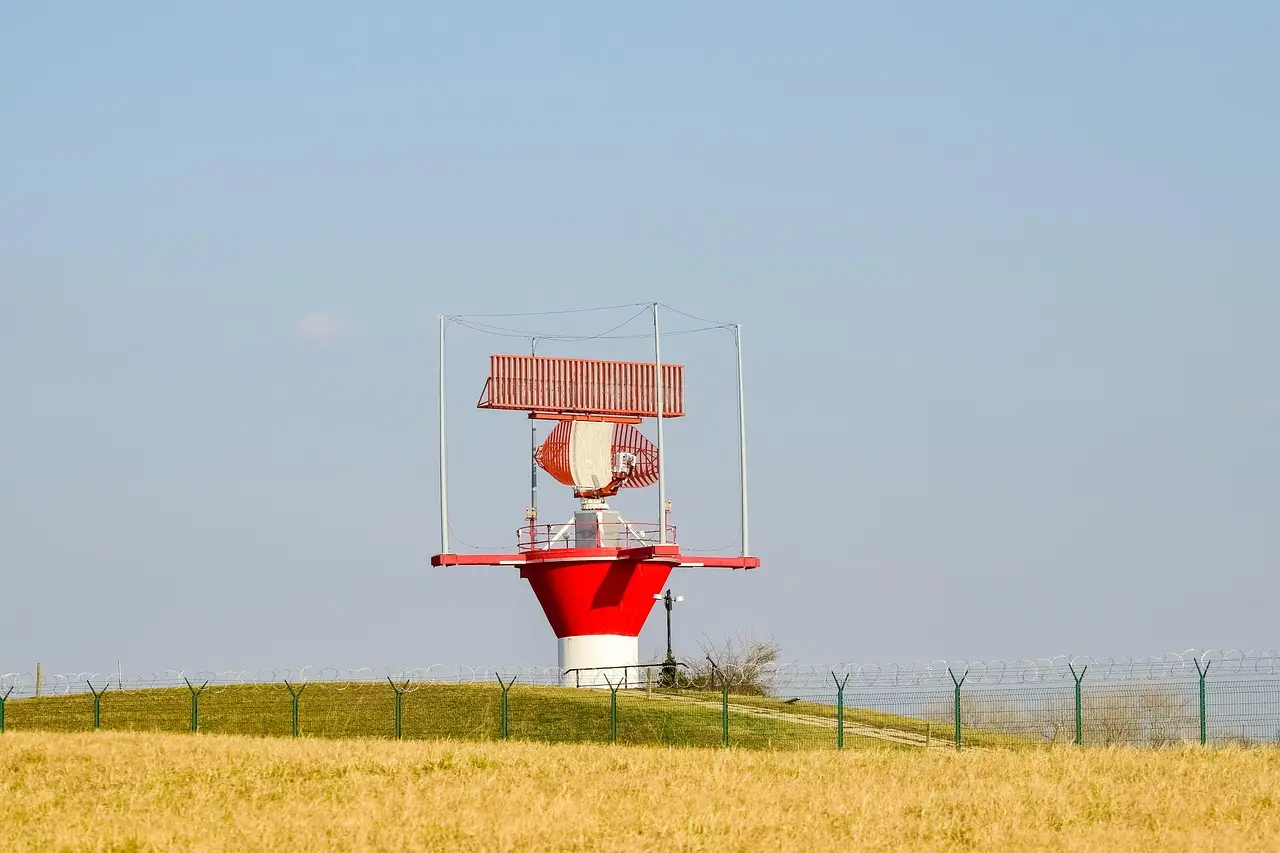
The demand follows a Friday ground stop, triggered by a router installed by government contractor L3Harris in Arkansas, which disrupted communications and radar feeds across the air traffic system. The halt lasted several hours and produced residual delays and cancellations into the weekend. Duckworth said federal officials owe aviation workers, the public and Congress "a complete and honest accounting" of the failure.
What does the funding request actually contain?
Transportation Secretary Sean Duffy's $50 billion proposal covers telecommunications systems, upgrades to air traffic safety tools, construction and improvement of air traffic control towers, and billions more for airport terminals and infrastructure. The figure is not static. The administration initially requested $30 billion and raised the ask to $50 billion only after the ground stop, according to Duckworth.
Her aides said she accepts that the true modernization bill could land near $48 billion in total. The gap between that estimate and the request is not the obstacle. The absence of documentation is. "But again, no details on how funding would be spent, no life cycle cost estimate, no detailed master schedule. I am not gonna sign a blank check for $50 billion, or $10 billion," Duckworth said. She added that she wanted "to see a plan" and "to know how the plan will prioritize safety, in detail." Only then, she said, "can we talk about what that top-line number is. I expect it will be a big one."
How much of the earlier money has been spent?
Congress approved $12.5 billion for air traffic modernization last year with, in Duckworth's words, "not a lot of restrictions." The record since is thin. Two Democratic members of the House Transportation and Infrastructure Committee said in a statement last week that $4.3 billion has been obligated and only $1 billion actually spent. The Transportation Department, which says the money has funded modernization efforts at air traffic facilities and airports, maintains all of it has been allocated and is "on track to be fully implemented" by the end of 2028.
A spend rate of roughly $1 billion per year against a $12.5 billion appropriation does not obviously support an urgent case for doubling the ask. Duckworth appears to have reached a similar conclusion.
Is the resistance bipartisan?
Yes, at least partially. Senator Ted Cruz, the Texas Republican who chairs the Senate Committee on Commerce, Science and Transportation, told reporters Tuesday: "I don't think the full $50 billion will be funded. Some of that is not safety related." The Associated Press reported his remarks.
Duffy, for his part, framed the request as maximal rather than prescriptive. "I wanted to put everything on the table," he said at a news conference this week, adding that Congress will "make a determination and a decision on what they see as their priorities." In a Tuesday letter to Congressional appropriators, Duffy and FAA Administrator Bryan Bedford wrote that the "urgent need" for funding "became undeniable when outdated, legacy equipment disrupted aircraft communications and radar feeds."
What caused the ground stop?
Duffy said a new router installed by L3Harris in Arkansas caused the communications and radar problems. The FAA has halted installations of that router type, and the units implicated in the incident are now being tested in a laboratory, according to the Associated Press. Duckworth acknowledged the router is under analysis, but the technical questions remain open. "We need to figure out what exactly failed and how it failed," she said. She also asked: "I need to know, why is there not redundancy in the system?"
Duckworth spoke with Bedford on Tuesday and said she was "still not satisfied with many of his answers." Until the department supplies a schedule, a cost estimate and a failure analysis, the $50 billion request sits in appropriations limbo — with both the ranking Democrat and the Commerce chair signaling that a haircut, not a blank check, is the likely outcome.
via chicagotribune.com (Original)
More from Grace Kim
Show full bio
News editor covering companies, deals and strategy in Commercial aviation industry coverage at Flightdeck Report.
706 articles
Same bay
- Transportation secretary puts $30 billion price tag on ATC modernization · October 10, 2026
- Duffy, Airlines Urge Congress to Quickly Approve $30 Billion for Aviation Reforms · September 28, 2026
- Duffy Pitches $30 Billion Air Traffic Control Overhaul · October 15, 2026
- $50 Billion FAA Funding Fight Lands in Lame-Duck Congress · November 17, 2026
- Duffy Seeks $30 Billion More to Rebuild US Air Traffic Control · September 30, 2026