Clearance CLR-7867 · AIR718
AIRDUF
Airspace & RegulationClearance sheet
Duffy, Airlines Press Congress for $30 Billion Aviation Package
Transportation Secretary Sean Duffy and US airlines are pressing Congress to approve a $30 billion aviation reform package quickly, framing delay itself as an operational cost.
Read-back
- Transportation Secretary Sean Duffy and airlines jointly urged Congress to approve $30 billion
- The request ties funding to aviation system reforms rather than standalone spending
- Speed of congressional approval is framed as critical to the package's value
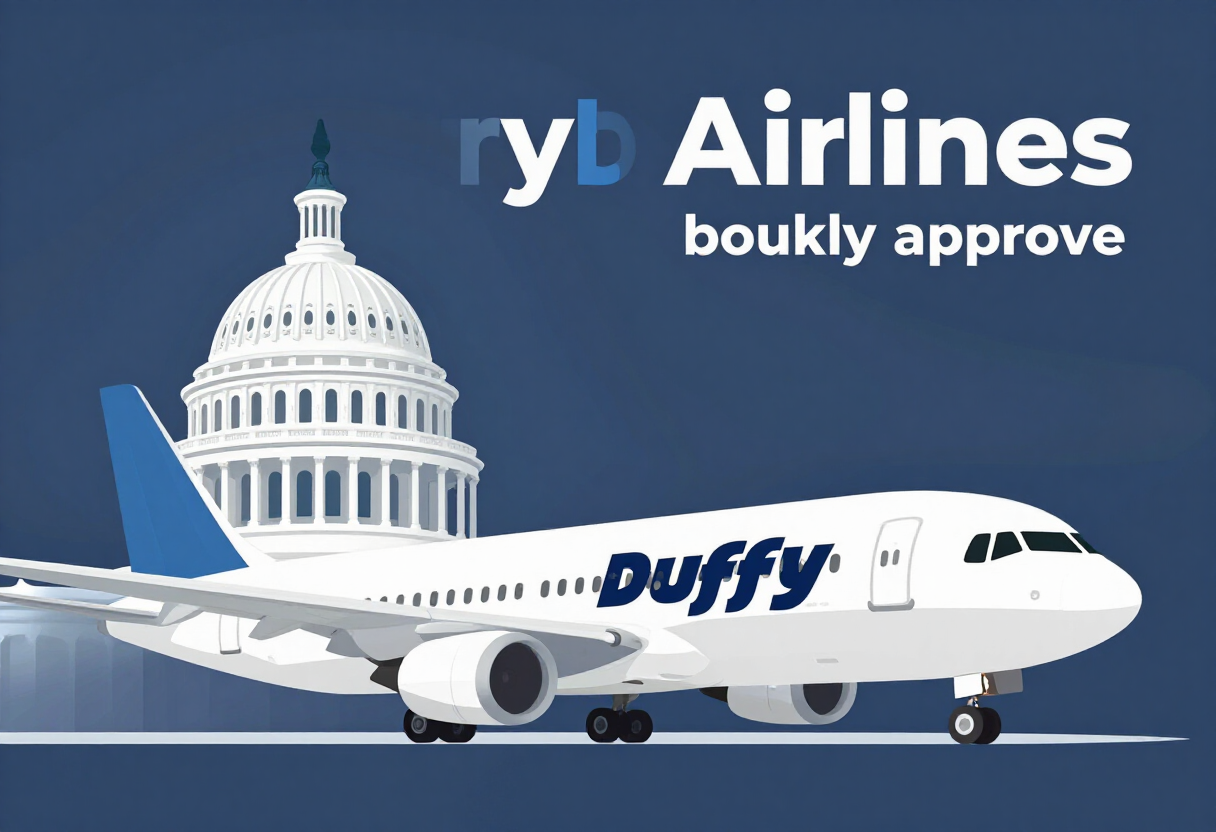
Transportation Secretary Sean Duffy and US airlines are urging Congress to approve a $30 billion aviation reform package, pressing lawmakers to act quickly rather than let the funding stall in a divided legislature.
The $30 billion figure anchors the request. Duffy and airline executives want the money directed at reforms across the national aviation system, and they have framed speed of approval — not just the sum — as the critical variable. The coalition of the Department of Transportation and carriers argues that congressional delay carries operational costs of its own.
For airlines, the ask is straightforward: a predictable federal commitment that lets them plan capacity, staffing and network decisions against a known funding baseline. Carriers have long complained that stopgap budgeting and last-minute appropriations make infrastructure and system planning harder, and the joint appeal with Duffy is designed to convert that frustration into legislative momentum.
Duffy's involvement gives the request administration weight. A transportation secretary lobbying Congress directly, alongside the industry he regulates, signals that the executive branch considers the package a priority item rather than a routine line in a broader spending bill. The joint approach also aligns the regulator and the regulated around a single number, reducing the risk that airlines and DOT advance competing proposals that split congressional support.
The challenge now sits with Congress. Any $30 billion appropriation must clear committees in both chambers and survive negotiation with other spending priorities. Lawmakers have shown little recent appetite for large, fast-tracked infrastructure packages, and aviation funding has previously been tangled in broader fiscal fights. Duffy and the airlines are betting that public pressure — and the argument that aviation system deficiencies have direct operational consequences — can overcome that inertia.
The request's fate will turn on whether congressional leaders treat the $30 billion as must-pass legislation or as one claim among many on a constrained budget. Duffy and the carriers have made their position clear: they want the money approved quickly, and they want it attached to reform rather than a blank check.
What comes next is a congressional response — committee action, a markup or a funding vehicle — that will show whether the Duffy-airline coalition has the votes to move $30 billion on the timeline it is demanding.
via Google News: Air traffic control and airspace (Source)
More from Sophie Lindqvist
Show full bio
Senior reporter covering industry trends and analytics at Flightdeck Report.
161 articles
Same bay
- FDR516Duffy, Airlines Urge Congress to Quickly Approve $30 Billion for Aviation Reforms · September 28, 2026
- FDR251Duffy and US carriers press Congress for $30 billion aviation package · September 28, 2026
- FDR838Duffy and Airlines Press Congress for $30 Billion Aviation Package · September 28, 2026
- FDR279Duffy, Airlines Press Congress for Quick $30 Billion Aviation Approval · September 28, 2026
- FDR567Duffy, airline CEOs press Congress for $30 billion ATC overhaul · September 30, 2026