Clearance CLR-9450 · AIR311
AIRDUF
Airspace & RegulationClearance sheet
Duffy and Airlines Press Congress for $30 Billion ATC Funding
Transportation Secretary Duffy and US airlines jointly urge Congress to approve $30 billion to modernize air traffic control, citing aging equipment and capacity limits.
Read-back
- Transportation Secretary Sean Duffy and airlines are jointly requesting $30 billion from Congress
- Funding targets air traffic control system modernization including equipment and facilities
- The request follows recurring delays and capacity constraints in the US aviation network
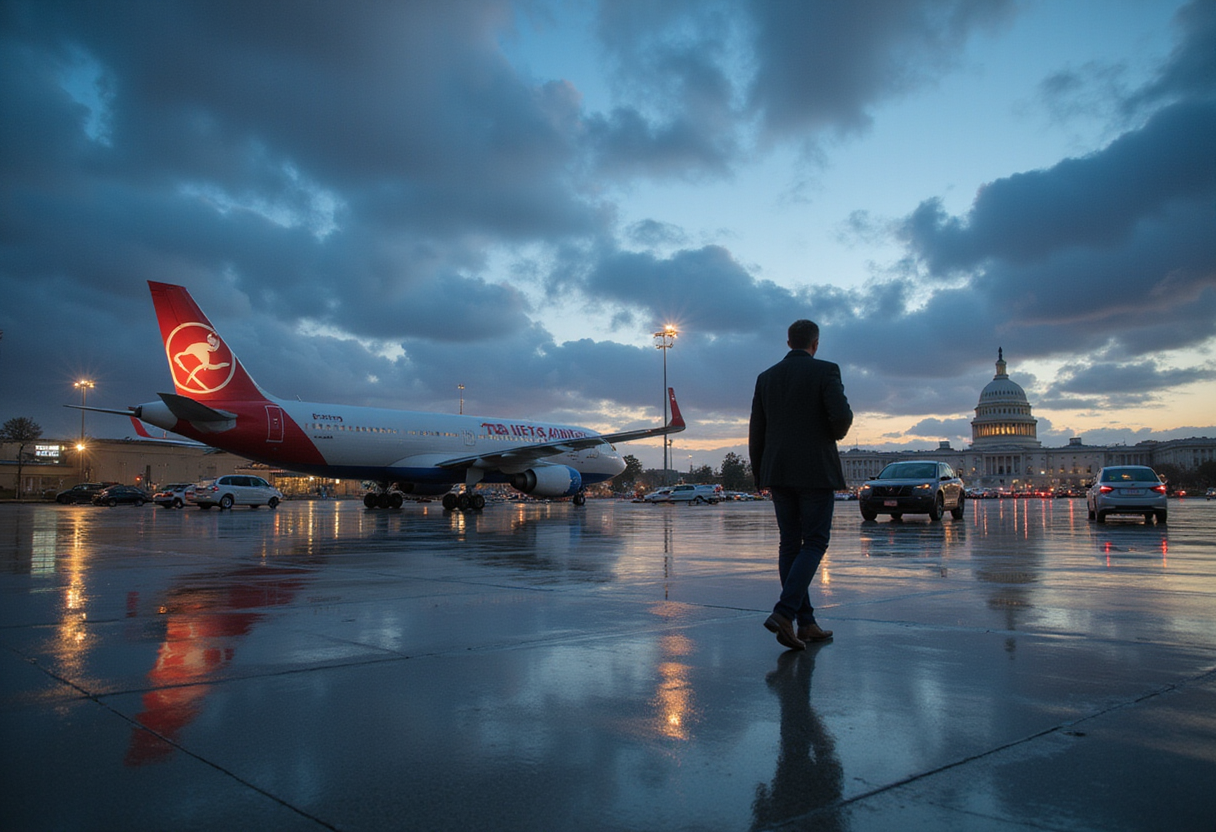
Transportation Secretary Sean Duffy and major US airlines are pressing Congress to approve $30 billion in funding to modernize the nation's air traffic control system, a push that comes as the network struggles with aging infrastructure and recurring capacity constraints.
Duffy has aligned with carriers on the funding request, an unusual show of unity between the regulator and the industry it oversees. The $30 billion would go toward replacing outdated equipment, upgrading facilities and addressing controller staffing shortfalls that have contributed to flight delays and capacity limits across the US network.
The appeal to Congress marks a critical test for the modernization effort. Air traffic control investment requires multi-year appropriations, and industry officials have warned that piecemeal funding cycles slow equipment replacement and complicate long-term planning for both the Federal Aviation Administration and the airlines that depend on the system.
For airlines, the stakes are operational and financial. Air traffic control failures and controller shortages force carriers to cut schedules during peak periods, stranding aircraft and crews and eroding the reliability metrics that drive bookings. Carriers have repeatedly cited ATC-driven delays as a cost they cannot control, unlike weather, and have pressed Washington for sustained investment rather than year-to-year fixes.
Duffy's advocacy signals that the administration views the air traffic control system's condition as a constraint on the broader aviation network. The $30 billion figure frames the scale of the problem: the system still relies on equipment and facilities that in some cases date back decades, and replacement programs have lagged behind the growth in flight volumes.
Congress must now decide whether to authorize the full amount, a partial sum, or spread the funding over multiple appropriations cycles. Airline executives and the Transportation Department have argued that delayed investment compounds costs, as older equipment fails more frequently and forces reactive repairs rather than systematic replacement.
The outcome will shape US network capacity for years. A full appropriation would give the FAA a defined budget envelope for facility and equipment modernization; a fragmented approach would leave carriers and the agency planning around the same constraints that have limited throughput during busy travel periods.
Duffy and the airlines have made their position clear. The decision now sits with lawmakers, whose action on the $30 billion request will determine whether the modernization program proceeds on the timeline the industry says the system requires.
via Google News: Air traffic control and airspace (Source)
More from Sophie Lindqvist
Show full bio
Senior reporter covering industry trends and analytics at Flightdeck Report.
161 articles
Same bay
- FDR415Duffy and US Airlines Press Congress for $30 Billion Aviation Package · September 30, 2026
- FDR279Duffy, Airlines Press Congress for Quick $30 Billion Aviation Approval · September 28, 2026
- FDR498Duffy, Airlines Press Congress for $30B ATC Modernization · September 29, 2026
- FDR567Duffy, airline CEOs press Congress for $30 billion ATC overhaul · September 30, 2026
- FDR945Duffy Asks Congress for $30 Billion Air Traffic Control Overhaul · September 28, 2026