Clearance CLR-9699 · AIR394
AIREMI
Airlines & NetworksClearance sheet
Emirates operates at 91% capacity with seven A380s grounded
Emirates is operating at 91% of pre-war capacity, with seven A380s grounded by engine-servicing delays, even as an October week delivered higher year-on-year revenue.
Read-back
- Emirates says it is operating at 91% of pre-war capacity amid Middle East disruption.
- Seven of the airline’s 117 A380s are grounded because of engine-servicing delays.
- Revenue generated during one week in October was higher than in the same period a year earlier.
- Dubai World Central is due to open in the early 2030s with annual capacity for 165 million passengers.
- Clark discussed Dubai International’s automated processing and gate biometrics at Routes World 2026.
By Sophie Lindqvist
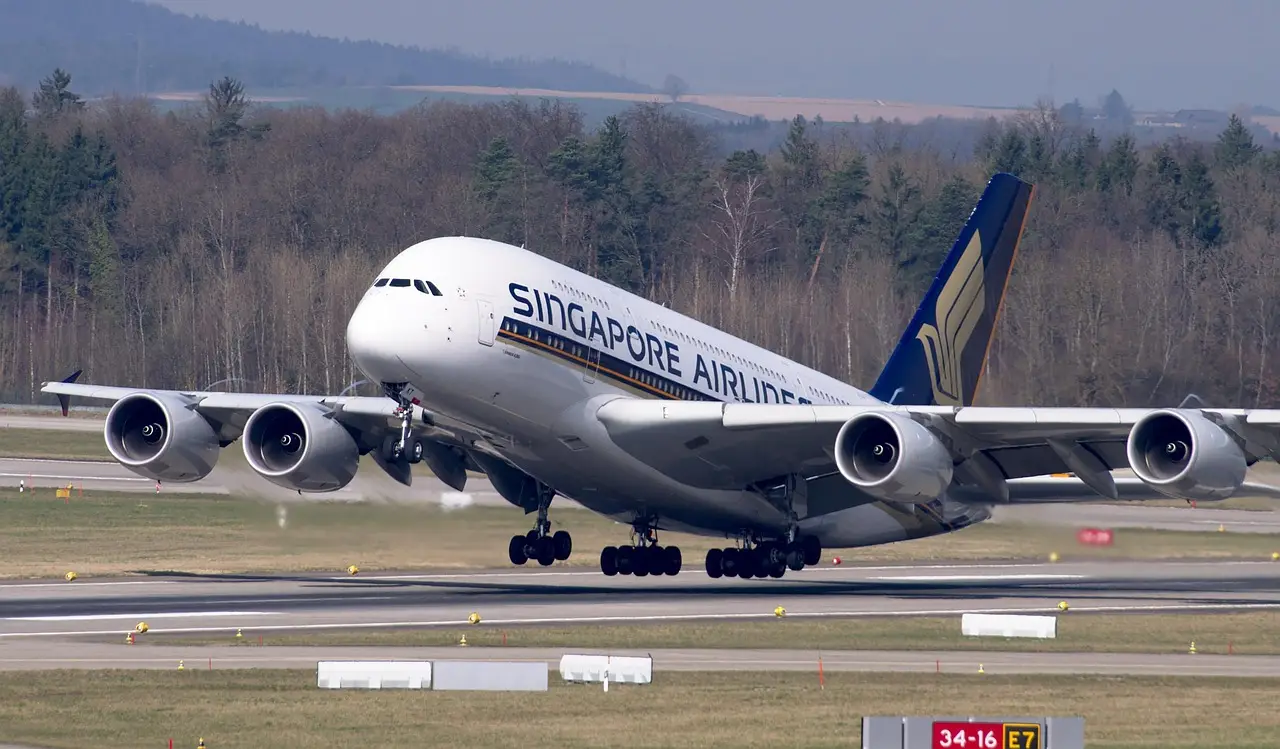
Emirates is operating at 91% of its pre-war capacity, according to the airline, while seven of its 117 A380s sit grounded because of engine-servicing delays. That places the world’s largest A380 operator nine percentage points below its pre-war baseline amid widespread disruption across the Middle East.
At Routes World 2026 in Frankfurt, Emirates President Sir Tim Clark said revenue generated in one week of October was higher than in the same period a year earlier. “We’re actually making more money in terms of income, what with cargo and passengers, than we were doing this time last year,” he said.
The week-long comparison combines cargo and passenger income, but it gives no annual total, traffic split or network-wide load-factor percentage. It therefore shows a stronger revenue week without establishing a full-year financial recovery or quantifying the additional passenger and cargo traffic behind the increase.
Clark identified fuel-cost volatility as a key factor in weakening an airline’s resilience, meaning its capacity to withstand external shocks. He expected demand to return once the disruption faded, describing the likely rebound as a surge consistent with previous cycles.
Demand has already held up in parts of Asia. Clark pointed to strong leisure demand from Thailand and Bali, particularly Denpasar, where Emirates operates with high load factors, meaning the percentage of available seats filled.
Fleet availability sets the near-term limit
Engine availability is the immediate operational constraint: seven A380s remain grounded for engine-servicing delays, the airline said. Clark wants to restore the rest of the network as those aircraft become available, but gave no return date or revised capacity schedule.
The fleet count and capacity figure measure different constraints. Seven grounded jets equal about 6% of the 117-aircraft A380 fleet, while current operations sit 9% below the pre-war baseline. Emirates did not explain how aircraft availability, utilization, meaning how intensively each aircraft is used, and route assignments translate one into the other. The two percentages therefore cannot be treated as a direct restoration calculation.
Emirates did not provide an engine-service completion date, aircraft return schedule or daily flight count with which to test the recovery pace. It also named no engine supplier or maintenance contractor in the remarks. For the Asian leisure markets Clark cited, however, strong demand and high load factors persist, placing the present bottleneck on aircraft availability rather than a stated shortage of passenger demand.
Dubai expansion moves into the 2030s
The airline’s immediate focus is extending base operations at Dubai World Central (DWC), which is due to open in the early 2030s with annual capacity for 165 million passengers. That figure describes planned annual airport throughput, meaning passengers handled per year, rather than current traffic.
The expansion could give Emirates more room to concentrate operations at Dubai as it rebuilds its schedule, but no timetable links DWC to the grounded A380s. The opening date and passenger capacity remain development targets rather than evidence of additional aircraft or flights available now.
At Dubai International Airport (DXB), Clark identified automated processing and biometrics, meaning automated passenger identification, at gates as a means of substantially improving passenger experience and customer satisfaction. He offered no implementation timetable, processing-time target or measured satisfaction gain, leaving the promised gains separate from demonstrated performance.
Service costs and passenger processing
Clark said Emirates had overestimated the cost of delivering its high-end onboard product. If sustained, the lower cost would ease pressure on service spending while preserving the cabin features passengers encounter.
“Good food, good beverages, nice TV, important comfortable seats, nice ambience in the cabin. Don’t make your cabins dark and grey. Make them light and airy.
“People feel good. The actual cost of delivering these high-end products is cheaper than we thought,” he said.
The airline supplied no cabin-cost baseline, per-flight saving or procurement figure, so the statement remains a qualitative management claim. The onboard discussion concerns what Emirates spends to improve the product; the DXB automation proposal concerns what passengers experience on the ground. Neither claim changes the immediate requirement to release grounded aircraft.
What does this change for Emirates’ network?
Operationally, little changes until engine servicing releases the seven A380s. Higher passenger and cargo revenue indicates demand has not disappeared, and Asian leisure markets are already filling available seats, but fuel volatility can still pressure the airline’s resilience.
Engine-servicing releases will set the pace at which Emirates closes the 9% gap to pre-war capacity. Dubai’s planned expansion and DXB automation may shape the longer-term passenger proposition, but neither changes the immediate timetable for returning grounded aircraft.
via travelradar.aero (Source)
More from Sophie Lindqvist
Show full bio
Senior reporter covering people, launches and day-to-day practice in Commercial aviation industry coverage at Flightdeck Report.
615 articles
Same bay
- FDR437Emirates SkyCargo lifts revenue as freight capacity tightens · November 5, 2026
- FDR765Middle East traffic down 10% as fuel tops $171 · September 26, 2026
- FDR626Emirates profit survives fuel shock, but network remains below peak · November 8, 2026
- FDR454Fuel outpaces yields as cargo growth tests freighter economics · October 30, 2026
- FDR873Emirates SkyCargo revenue rose 52% as Group pretax profit fell 66% · November 5, 2026