Clearance CLR-2906 · MRO485
MROFAA
MRO & AftermarketClearance sheet
FAA Lets Boeing Build 35 More 777 Freighters Through 2031
The FAA granted Boeing an emissions exemption allowing up to 35 new 777 freighters to be built between 2028 and 2031, citing de minimis environmental impact and a public interest in keeping widebody cargo production alive.
Read-back
- FAA exemption allows up to 35 new 777 freighters to be built between 2028 and 2031
- Production capped at two aircraft per month at the Everett, Washington final-assembly line
- 777 freighter accounts for 4% of U.S. freighter operations and 16% of 2024 global freighter fuel burn
- Boeing cited a risk of more than $15 billion in lost U.S. exports and 100,000 U.S. jobs supported by the 777 program
- Boeing now expects first 777-9 passenger delivery in 2027, with the 777-8F freighter to follow
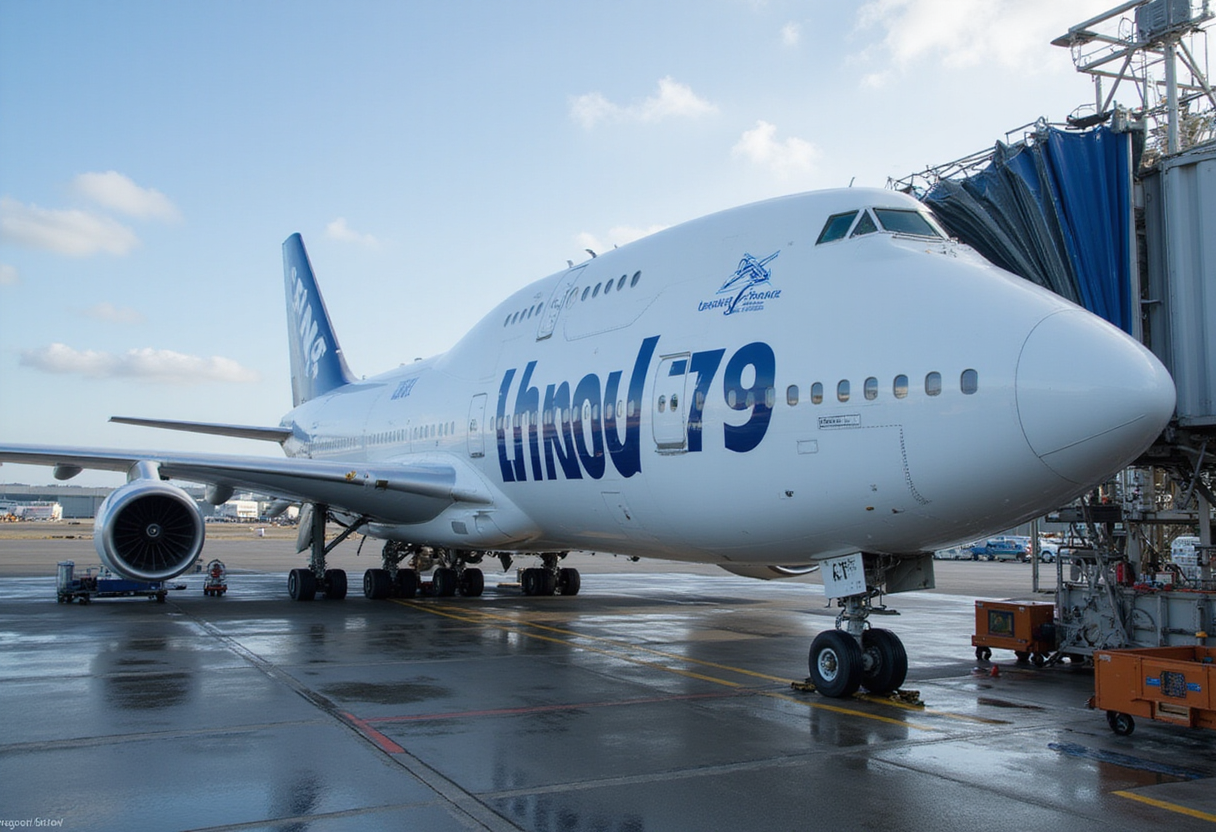
The FAA last week granted Boeing an emissions exemption covering up to 35 new 777 freighters built between 2028 and 2031, sidestepping a 2028 production cutoff tied to new aircraft emissions standards that the cargo jet would not otherwise meet.
Without the waiver, Boeing would have had to halt 777 freighter production once tighter environmental certification requirements take effect. Already-built and certified 777 freighters remain unaffected, but the FAA would no longer certify newly built examples for U.S. operation once the rules apply.
What does the FAA decision cover?
The exemption permits Boeing to deliver up to 35 newly built 777 freighters over a four-year window. Production would run at no more than two aircraft per month at the Everett, Washington final-assembly line, according to the FAA's decision document.
Boeing last year asked the regulator for relief, citing delays with the 777-8F, the freighter derivative of its 777X family that is meant to replace the older cargo jet. The airframer had originally targeted 2020 for first 777X passenger delivery; it now expects to hand over the first 777-9 in 2027, with the freighter to follow later.
What did the regulator find?
In its analysis, the FAA determined the following about the 777 freighter:
- It accounts for 4% of U.S. domestic freighter operations and of cargo flights departing the United States for international destinations.
- It accounted for 16% of fuel burn across the global freighter fleet in 2024.
- New deliveries would add to total fuel burn, but represent a small share of all commercial aviation activity.
"The FAA agrees that the environmental impact … is de minimis and the benefit of producing these airplanes would be in the public interest," the decision reads. The exemption "preserves the economic and operational benefits" the 777 freighter affords to "Boeing, the aviation industry and the United States public," the agency added.
What did Boeing argue?
Boeing told the FAA that the 777 freighter is the only large widebody cargo aircraft in production, and that without it — or a working replacement — the air cargo industry would face disruption. The company estimated more than $15 billion in U.S. exports could be lost absent the waiver and said the broader 777 program supports 100,000 U.S. jobs.
A Boeing spokesperson said the company welcomes the decision. "With the exemption, Boeing can meet some of the anticipated customer demand for newer, more fuel-efficient airplanes until the new (777X freighter) enters service," the spokesperson said.
How does this compare with the 767?
Boeing won a parallel reprieve for the smaller 767 freighter as part of the 2024 FAA reauthorization. That exemption permits 767 sales through 2033, yet Boeing still plans to end 767 freighter production next year — a sign that exemption windows can outlive the production runs they were designed to extend.
What about international operations?
The waiver allows the FAA to certify new 777 freighters and lets Boeing operate them in the United States, but aircraft built after 2028 will still need to satisfy international aviation standards. Boeing may need to seek separate approval from regulators such as the European Union Aviation Safety Agency to fly post-2028 777 freighters outside the U.S. That creates a two-track compliance problem for carriers and lessors serving transatlantic networks.
What comes next?
The exemption buys Boeing a defined runway but hinges on the 777-8F entering service within the four-year window. The airframer has not committed to a firm first-delivery date for the new freighter, and the 777X program has already slipped by several years amid certification and manufacturing setbacks. Continued FAA tolerance may be tested if 777X timing slips further, with the cargo-jet gap widening for integrators that rely on the type.
via seattletimes.com (Original)
More from Grace Kim
Show full bio
News editor covering consumer brands and retail at Flightdeck Report.
298 articles
Same bay
- FDR586Ethiopian Airlines books eight 777-8Fs and two 777Fs for cargo push · October 9, 2026
- FDR914FAA certification reform meets Boeing, Airbus production bottlenecks · October 9, 2026
- FDR948Ethiopian Adds Ten 777 Freighters, Becomes First African 777-8F Customer · October 1, 2026
- FDR976Air China Cargo Takes 14th Boeing 777F Into Fleet · October 9, 2026
- FDR324Airbus A350F Completes First Flight · September 29, 2026