Safety & OperationsClearance sheet
FAA orders recurring 737NG checks over autothrottle loss-of-control risk
The FAA will publish AD 2026-23-04 on November 20, 2026, mandating repeated flight-control system tests on roughly 300 US-registered 737NGs over an autothrottle fault that could lead to loss of control.
Read-back
- AD 2026-23-04 covers an estimated 300 US-registered Boeing 737NGs and takes effect 15 days after publication on November 20, 2026.
- Missing or incorrect spoiler-position data can disable the autothrottle's cruise thrust split monitor, risking an uncommanded roll.
- The directive applies to 737-600, -700, -700C, -800 and -900 models; the 737 MAX is not covered.
- The FAA skipped the normal public-comment period, citing safety risk.
- A similar directive targeted 737 Classic aircraft (-300/-400/-500) in October 2022.
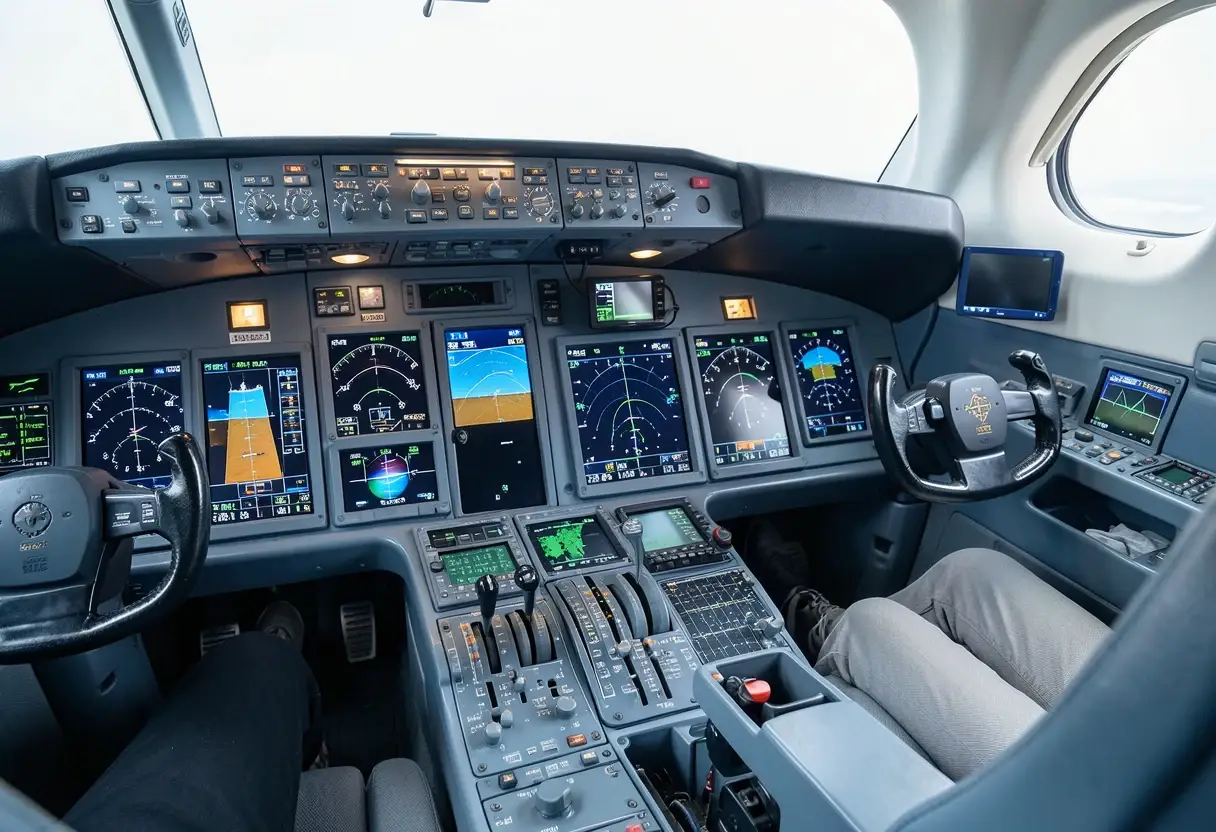
The FAA will publish an airworthiness directive on November 20, 2026 mandating recurring digital flight control system tests on an estimated 300 US-registered Boeing 737NGs, after finding a fault that could let unequal engine thrust build until pilots lose control of the aircraft.
The directive, AD 2026-23-04, takes effect 15 days after publication. It covers specified 737-600, -700, -700C, -800 and -900 airframes. The 737 MAX is not affected.
What is the technical fault?
The problem sits in the autothrottle's cruise thrust split monitor. That monitor depends on spoiler-position data to function. If the data is missing or incorrect, the monitor may fail to activate.
The consequence is specific. A large thrust difference between engines can develop without the autothrottle disengaging. The aircraft can then roll unexpectedly. "If pilots do not recognize and correct the condition promptly, they could lose control," the FAA said.
Put plainly: a data input most passengers have never heard of underpins a safety net most pilots assume is always armed. The FAA's finding says that assumption does not hold.
What does the directive require of operators?
The compliance regime is straightforward but recurring. Operators must:
- Perform repeated built-in tests of the digital flight control system
- Correct any failures found
- Repeat testing until the system passes
The FAA bypassed the normal advance public-comment process, citing the safety risk. That decision is reserved for faults the agency judges too urgent to wait on industry feedback. It also means operators get no window to argue scope or timing before the rule binds them.
What does this change for operators? A recurring test burden across roughly 300 aircraft, plus corrective maintenance whenever a test fails — workload that compounds with each check cycle rather than a one-time fix.
This is not the first such order
The FAA has walked this path before. In October 2022, it ordered repeated tests on certain 737-300, -400 and -500 models — the Classic generation that preceded the NG.
That directive documented the mechanism in detail. A failed spoiler sensor could go undetected by the autothrottle computer. A subsequent review found maintenance testing was needed to identify failures involving the sensor input or its wiring.
Notably, the necessary test already existed in the aircraft maintenance manual at the time. Operators simply were not required to perform it repeatedly. The 2022 rule made recurring testing mandatory so a failure could not remain undetected indefinitely.
That history frames the current directive. The agency identified the sensor-failure pathway on Classics, mandated recurring checks there, and has now extended the same logic to the NG fleet. The unstated question is why the gap persisted four years after the Classic directive — the FAA has not said whether any in-service event on an NG triggered the new order.
Separated by generation, joined by architecture
The pattern across both directives points to shared design lineage. The autothrottle and spoiler interplay carried forward from the Classic into the NG. Regulators are now chasing a known failure mode across successive fleets rather than eliminating it at the design source.
What remains open is whether the same data dependency exists elsewhere in Boeing's product line. The MAX carries a different flight control architecture, and the FAA has excluded it from AD 2026-23-04. But exclusion from this directive is not proof of immunity — only proof the agency has not, on this occasion, found the same fault there.
The tests begin 15 days after November 20, 2026. Whether recurring checks contain the risk, or a future directive follows on another variant, will depend on what those tests surface across the 300-aircraft fleet in the months after the rule takes effect.
via AeroTime (Source)
More from James Calloway
Show full bio
Staff writer covering people, launches and day-to-day practice in Commercial aviation industry coverage at Flightdeck Report.
726 articles
Same bay
- FAA Clears 737 Max Software Glitch, Reopening Path to Max 10 Certification · October 9, 2026
- FAA Clears 737 MAX Software Flaw, Reopening Path to MAX 10 · October 2, 2026
- FAA: 737 MAX Software Flaw Identified by Agency Poses No Safety Risk · October 3, 2026
- FAA Convenes Review Board Over 737 MAX VNAV Software Fault · September 27, 2026
- FAA: 737 MAX software glitch 'doesn't pose safety issue' — WSJ · October 10, 2026