Clearance CLR-6782 · MRO761
MROFAA
MRO & AftermarketClearance sheet
FAA Puts Remote Aircraft Maintenance Under the Microscope
The FAA has flagged aircraft maintenance under remote control on its official feed, signaling that industry practice may be outrunning written guidance for US repair stations.
Read-back
- The FAA published an item titled "Aircraft Maintenance Under Remote Control" on its official government news channel.
- The announcement names no airlines, OEMs or MRO providers and sets no effective date.
- The topic bears on US repair-station certificates and mechanic certification under 14 CFR.
- No specific approval, quota or technical figure appears in the published item.
- Formal follow-up could take the form of an advisory circular, policy memo or rulemaking, each on a different timeline.
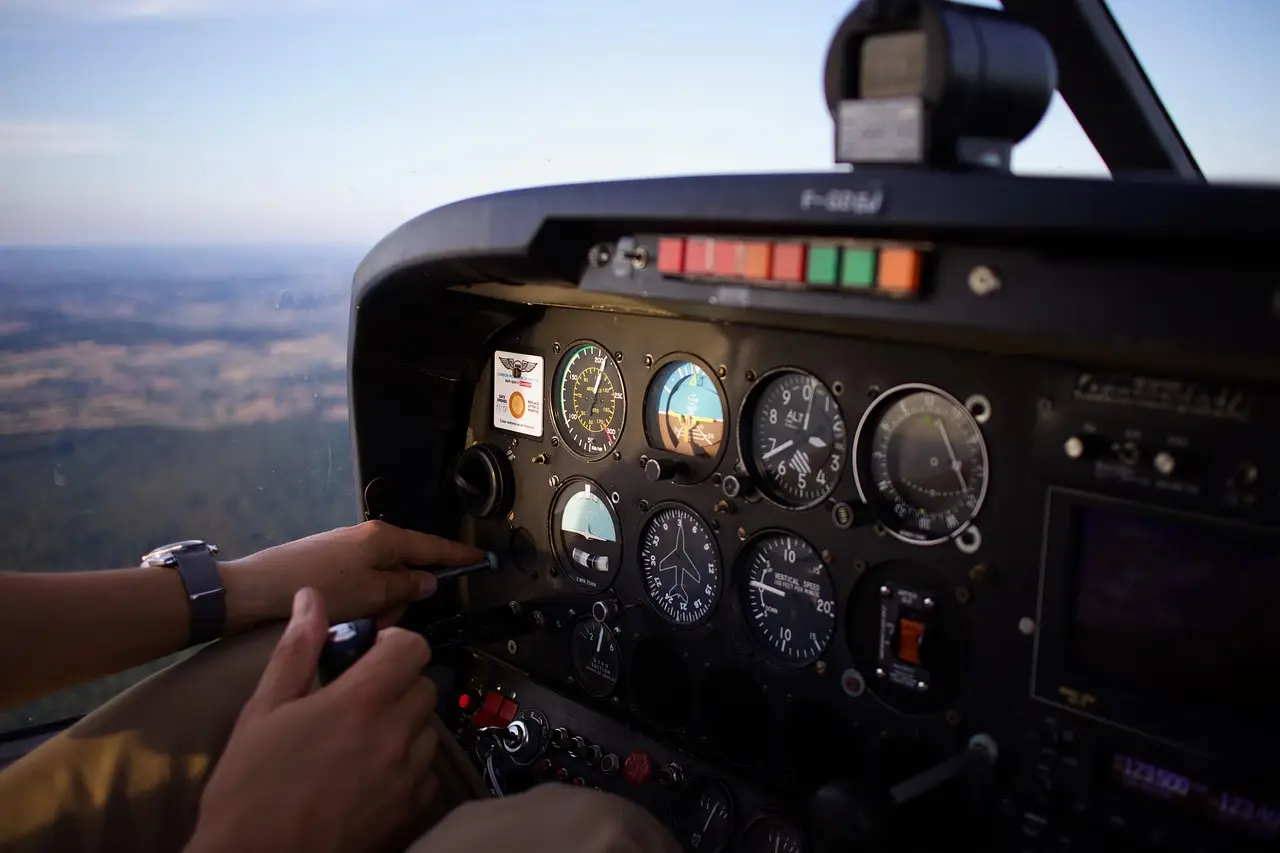
The Federal Aviation Administration has turned its attention to aircraft maintenance performed under remote control, a development that touches every certificate holder in the US repair-station system. The agency published the item under the title "Aircraft Maintenance Under Remote Control" on its official government news feed. No airline, OEM or MRO names appear in the announcement itself. The significance lies in what the regulator chose to signal, not in a new rule dropping today.
The subject matters because maintenance is the second-largest cost block for most airlines after fuel, and because US carriers outsource a substantial share of heavy checks (deep scheduled inspections of airframe structure and systems) to third-party repair stations. Any change in how the FAA treats distance-based work — supervision, sign-off, oversight — flows directly into shop capacity, turnaround times and fleet availability.
What does "remote control" mean in a maintenance context?
Remote maintenance covers several distinct practices, and the FAA's framing does not separate them. The term can mean:
- A licensed mechanic performing physical work guided in real time by an off-site engineer or inspector
- Inspection support, where an on-site technician streams video while a remote authority directs the examination
- Remote sign-off questions — who holds the airworthiness-release authority when work and oversight happen in different places
- Diagnostics and troubleshooting performed by specialists connected to the aircraft's data systems rather than standing next to it
Each category raises a different certification question. Current FAA rules for repair stations and for mechanic certification assume, in most cases, that supervision and inspection happen where the work happens. Remote methods stretch that assumption.
What does this change for operators and MROs?
In practical terms, the FAA signaling interest does not yet change any compliance obligation. What it changes is planning. Repair stations investing in connected tools, augmented-reality headsets and remote-inspection workflows now face the prospect of explicit regulatory criteria replacing case-by-case approvals. Airlines that rely on line maintenance at outstations (airports with only minimal staff) could gain access to qualified oversight without positioning inspectors at every location.
The capacity angle is concrete. The global MRO market has struggled with technician shortages for years, and carriers have reported longer ground times on maintenance-driven delays since the pandemic recovery. If remote oversight lets one senior inspector cover several sites, the effective supply of inspection capacity rises without a single new hire. If the FAA restricts the practice instead, that latent capacity stays locked.
Why the regulator acts now
Aviation authorities in several regions have already issued guidance or trial approvals for remote inspection techniques, and equipment vendors have shipped connected-tooling products to airlines and repair stations. The FAA's own airworthiness framework is built around Title 14 of the Code of Federal Regulations, which governs both mechanic privileges and repair-station operations. A regulator publishing on "maintenance under remote control" typically signals that applications or industry practice have outrun the written guidance.
The mechanism to watch is simple. The FAA can act through advisory circulars (non-binding explanatory documents), through orders affecting repair-station certificates, or through rulemaking that rewrites the regulatory text itself. Each path carries a different timeline — advisory material can appear within months, formal rulemaking takes years. The announcement does not state which instrument follows.
What is verified versus what is promised
Verified: the FAA has publicly flagged remote-control maintenance as a topic of record on its official channel. That is the whole of the hard fact in this announcement.
Not established from this item: any named participant airline, repair station or manufacturer; any effective date; any specific technical approval; any figure for how much maintenance already happens under remote supervision. Claims about cost savings or capacity gains from remote methods circulate widely in the MRO sector, but this announcement contains none of them, and readers should treat vendor projections accordingly.
The questions that will define the outcome
Three unresolved issues will determine whether remote maintenance becomes routine or remains an exception:
- Authority: does the releasing mechanic — the person legally responsible for returning an aircraft to service — need to be physically present at any defined stage?
- Verification: how does an inspector confirm, on the record, what a remote camera or a guided technician actually saw?
- Liability and oversight: which certificate holder answers when work guided across state or national lines fails?
Industry consensus answers to none of these exist yet in a form the FAA has endorsed.
The next concrete signal to watch is whether the FAA follows this item with formal guidance — an advisory circular, a policy memorandum, or a docketed rulemaking — and whether it names trial participants. Until then, remote maintenance in the US remains technically possible, operationally attractive to cost-pressed MROs, and regulatorily unfinished.
via Google News: Aviation MRO (Source)
More from Sophie Lindqvist
Show full bio
Senior reporter covering people, launches and day-to-day practice in Commercial aviation industry coverage at Flightdeck Report.
564 articles
Same bay
- FDR535Sri Lanka hosts regional workshop on maintenance programme lifecycle · October 12, 2026
- FDR616Air Force Rapid Sustainment Office demos digital binder app for aircraft maintenance · September 30, 2026
- FDR777Aviation Week Examines Scaling Aircraft MRO Inspection · September 30, 2026
- FDR405U.S. to Deploy AI-Powered Tool for Air-Traffic Control · September 30, 2026
- FDR697American Airlines Taps Pittsburgh Institute of Aeronautics for Maintenance Talent Pipeline · October 3, 2026