Clearance CLR-9402 · AIR593
AIRFAA
Airspace & RegulationClearance sheet
FAA Turns to AI to Help Manage US Airspace
US aviation regulators are turning to artificial intelligence to help manage the nation's airspace, Ideastream Public Media reports, as traffic complexity and system strain grow.
Read-back
- US aviation regulators are turning to AI to help manage the nation's airspace, per Ideastream Public Media
- The report frames AI adoption as a decision already taken by the regulator, not a proposal under study
- No specific AI systems, deployment dates or performance figures were disclosed in the report
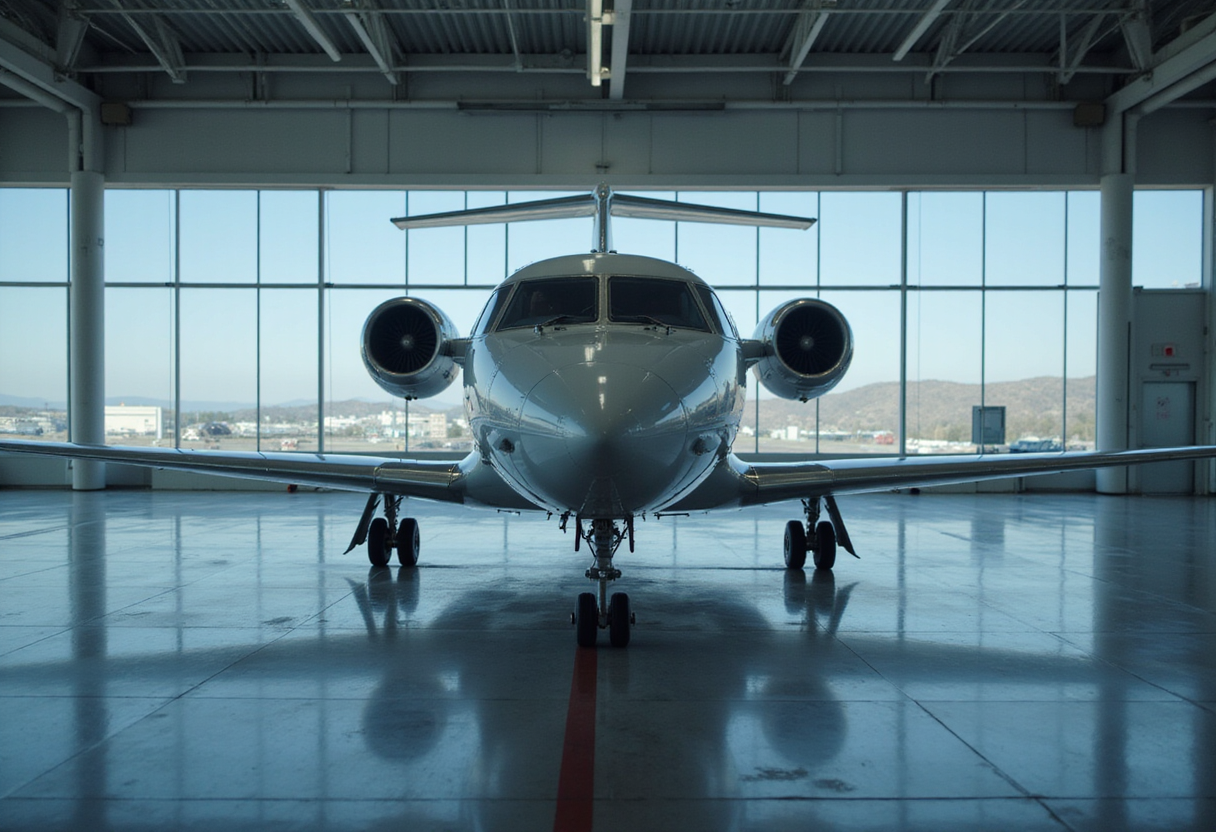
US aviation regulators are turning to artificial intelligence to help manage the nation's airspace, according to a report from Ideastream Public Media — a shift that comes as the agency responsible for controlling the world's busiest traffic system confronts rising flight volumes, aging infrastructure and persistent controller staffing shortfalls.
The report establishes the central fact plainly: the regulator sees AI not as a distant research concept but as a practical instrument for airspace management, deployed against problems that conventional procedures have struggled to contain. What the report does not yet establish is equally important for an analytical read: which specific AI systems are operational, which remain in testing, and what certification or safety-review path they must clear before controllers rely on them in live traffic.
What is driving regulators toward AI?
Airspace management in the United States has grown steadily more complex. The traffic mix now spans legacy airliners, regional jets, a growing volume of general aviation, and — increasingly — drones and advanced air mobility vehicles that do not fit the pilot-and-tower model the system was built around.
Against that backdrop, the regulator's interest in AI reflects a capacity problem as much as a technology preference. Machine-assisted tools can process surveillance, weather and flight-plan data at a scale no human workforce can match. If AI can shoulder routine data-fusion and monitoring work, controllers could focus on the decisions that require judgment.
That division of labor, however, is precisely where the safety case must be built. Air traffic control is a domain in which a single erroneous automated output can cascade across a sector within seconds. Any AI tool touching separation, routing or traffic flow will face scrutiny well beyond what airline-facing software encounters.
What does the adoption of AI change?
For airlines and other airspace users, the significance is operational. Congestion and flow-control restrictions impose measurable costs — held departures, longer routings, burned fuel. Tools that improve prediction and traffic management could translate directly into schedule reliability and capacity recovery at constrained hubs.
For the regulator itself, AI offers a way to stretch a system whose human and physical infrastructure has not kept pace with demand. The report frames the turn to AI as a management decision already taken, not a proposal under study.
The unanswered question is accountability. If an AI-assisted decision contributes to a disruption or an incident, the certification and oversight framework surrounding the tool becomes the deciding factor in whether adoption accelerates or stalls. Regulators moving AI into airspace management will need to demonstrate, with data, that these systems perform reliably under the same scrutiny applied to the hardware and procedures they supplement.
A shift worth watching, claims worth verifying
Flightdeck Report treats the regulator's turn to AI as a milestone to track against outcomes, not announcements. The measures that matter are concrete: documented reductions in flow restrictions, improved throughput at constrained facilities, and a transparent record of how AI-assisted tools are validated before and during operational use.
Until those metrics exist, the certified-and-flying portion of this story remains small compared with the ambition around it. The report signals the direction of travel; the delivery record has yet to be written.
The move suggests that within the current decade, AI-assisted airspace management will move from pilot programs toward routine use — with the pace set less by the technology itself than by how quickly regulators can prove it safe.
via Google News: Air traffic control and airspace (Source)
More from Sophie Lindqvist
Show full bio
Senior reporter covering industry trends and analytics at Flightdeck Report.
419 articles
Same bay
- FDR160Aviation Regulators Are Turning to AI to Manage US Airspace · October 10, 2026
- FDR837US Aviation Regulators Turn to AI for Airspace Management · October 10, 2026
- FDR386US Aviation Regulators Begin Turning to AI for Airspace Management · September 28, 2026
- FDR762US Aviation Regulators Are Turning to AI for Airspace Management · October 10, 2026
- FDR118US Aviation Regulators Turn to AI for Airspace Management · September 30, 2026