Clearance CLR-6040 · SAF603
SAFFLY
Safety & OperationsClearance sheet
flydubai Flight Denied Landing by Saudi Arabia and Jordan After Mayday Call
A flydubai aircraft transmitted a mayday and was denied landing clearance by controllers in both Saudi Arabia and Jordan, according to a New York Post headline. Flight details remain unconfirmed in indexed coverage.
Read-back
- A flydubai aircraft declared mayday and was denied landing clearance by both Saudi Arabia and Jordan, per a New York Post headline.
- No fatalities, injuries, or final diversion outcome appear in the indexed headline text.
- ICAO Annex 2 and Doc 4444 require priority handling and safe landing for aircraft in distress.
- The GCAA, GACA, and Jordan's Civil Aviation Regulatory Commission would hold overlapping jurisdiction under Annex 13.
- Neither flydubai nor any of the three regulators had issued a public statement in indexed coverage at the time of writing.
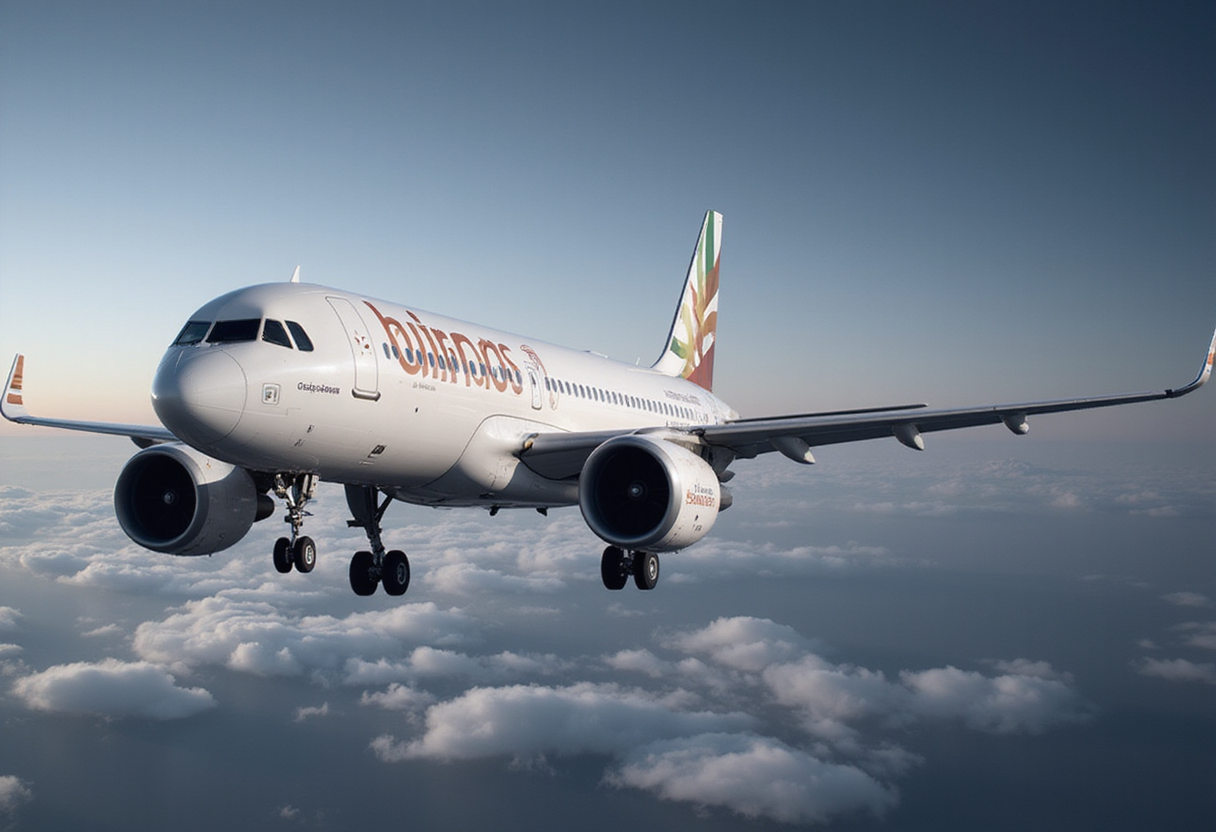
A flydubai aircraft transmitted a mayday call and was denied clearance to land by both Saudi Arabia and Jordan, according to a headline published by the New York Post and indexed by search aggregators at the time of this filing.
The Post headline characterized the distress transmission as a "terrifying mayday call." Full reporting from the New York Post was not accessible in indexed search results as of publication, leaving the flight's registration, route, and the precise nature of the emergency unconfirmed by any primary source.
What does the available reporting confirm?
Three concrete facts appear in the indexed headline: a flydubai aircraft declared an emergency, controllers in Saudi Arabia denied landing clearance, and controllers in Jordan denied landing clearance. No reference to fatalities, injuries, or the final diversion outcome appears in the indexed text.
The article links through Google's RSS redirect, and the underlying New York Post story did not load in standard search queries. Aviation trade publications including FlightGlobal and The Air Current had not referenced the incident in publicly indexed stories at the time of this report.
Which aircraft and crew might be involved?
Without confirmed details, the specific aircraft registration, flight number, and origin–destination pair remain unknown. flydubai, the Dubai-based low-cost carrier affiliated with the Emirates Group, operates Boeing 737 narrowbodies on routes from Dubai International (DXB) and Dubai World Central–Al Maktoum (DWC) to more than 100 destinations across the Middle East, Africa, the Caucasus, and South Asia.
A diversion scenario to Saudi Arabian airports or Queen Alia International in Amman would be geographically plausible for many of those routings, depending on the point at which the emergency occurred.
Why would two neighboring states refuse a distress aircraft?
Denial of landing clearance to an aircraft transmitting mayday is highly irregular. ICAO Annex 2 (Rules of the Air), ICAO Doc 4444 (PANS-ATM), and ICAO Annex 14 all establish that aircraft in distress receive priority handling and may land at any airport capable of accommodating them safely. Coordinated refusals between two adjacent flight information regions would point to circumstances outside standard ICAO procedures.
Possible explanations range from declared airspace restrictions, military activity, security directives, or specific capacity constraints at nominated diversion airports. Officials in either capital rarely publish refusal rationales in real time, and absent any public statement the cause remains a matter of inference.
Which regulators would examine the case?
The General Civil Aviation Authority (GCAA) of the UAE, as the state of registry for flydubai's aircraft and the state of the airline's principal place of business, would take the lead investigative role under ICAO Annex 13 if a reportable incident occurred. Saudi Arabia's General Authority of Civil Aviation (GACA) and Jordan's Civil Aviation Regulatory Commission would each possess jurisdiction over their own denied-clearance decisions, regardless of where the aircraft ultimately touched down.
A formal probe would also draw in Dubai Air Navigation Services, flydubai's operational quality division, and — if the sequence involved any breach of protocol by either regional FIR — direct regulator-to-regulator communications between Abu Dhabi, Riyadh, and Amman.
What happens next
Several gaps remain that only official statements can close:
- Aircraft registration and flight number
- Airport or airports to which the diversion request was addressed
- Cause of the original mayday declaration
- Final disposition of the aircraft and any occupants
- Any diplomatic or regulatory communications among the three states
Until flydubai, the GCAA, GACA, or the Jordanian regulator publish a statement, the industry is working from a single secondary headline. Flightdeck Report will update this story when additional details become available.
via Google News: Air traffic control and airspace (Source)
More from Grace Kim
Show full bio
News editor covering consumer brands and retail at Flightdeck Report.
350 articles
Same bay
- FDR703Saudi Arabia opens air safety probe into flydubai incident · October 9, 2026
- FDR661Saudi NTSC opens safety probe into Flydubai Tabuk emergency landing · October 2, 2026
- FDR208Saudi Arabia opens parallel air safety probe into flydubai attack · October 10, 2026
- FDR482Israel Prepared to Down flydubai Jet in Reported Hijack Attempt · October 9, 2026
- FDR336Saudi Arabia Opens Air Safety Probe Into Flydubai Incident · October 10, 2026