Clearance CLR-2057 · AIR758
AIRGAO
Airspace & RegulationClearance sheet
GAO Finds 75% of FAA ATC Systems Unsustainable as BNATCS Builds
GAO finds over 75% of 138 FAA ATC systems unsustainable; BNATCS's $12.5 billion rebuild runs ahead on delivery but lacks lifecycle cost and schedule integration.
Read-back
- GAO reported in September 2024 that over 75% of the FAA's 138 ATC systems are unsustainable or potentially unsustainable.
- Congress appropriated $12.5 billion for BNATCS in July 2025; Phase 1 targets completion by December 2028.
- FAA installed 179 voice switches against a 130-unit baseline target and upgraded nearly 400 radio sites against a 304 baseline.
- GAO found 11,389 unintegrated project schedules and no comprehensive lifecycle cost estimate for BNATCS.
- FAA selected Peraton as prime integrator on 4 December 2025, per Holland & Knight LLP.
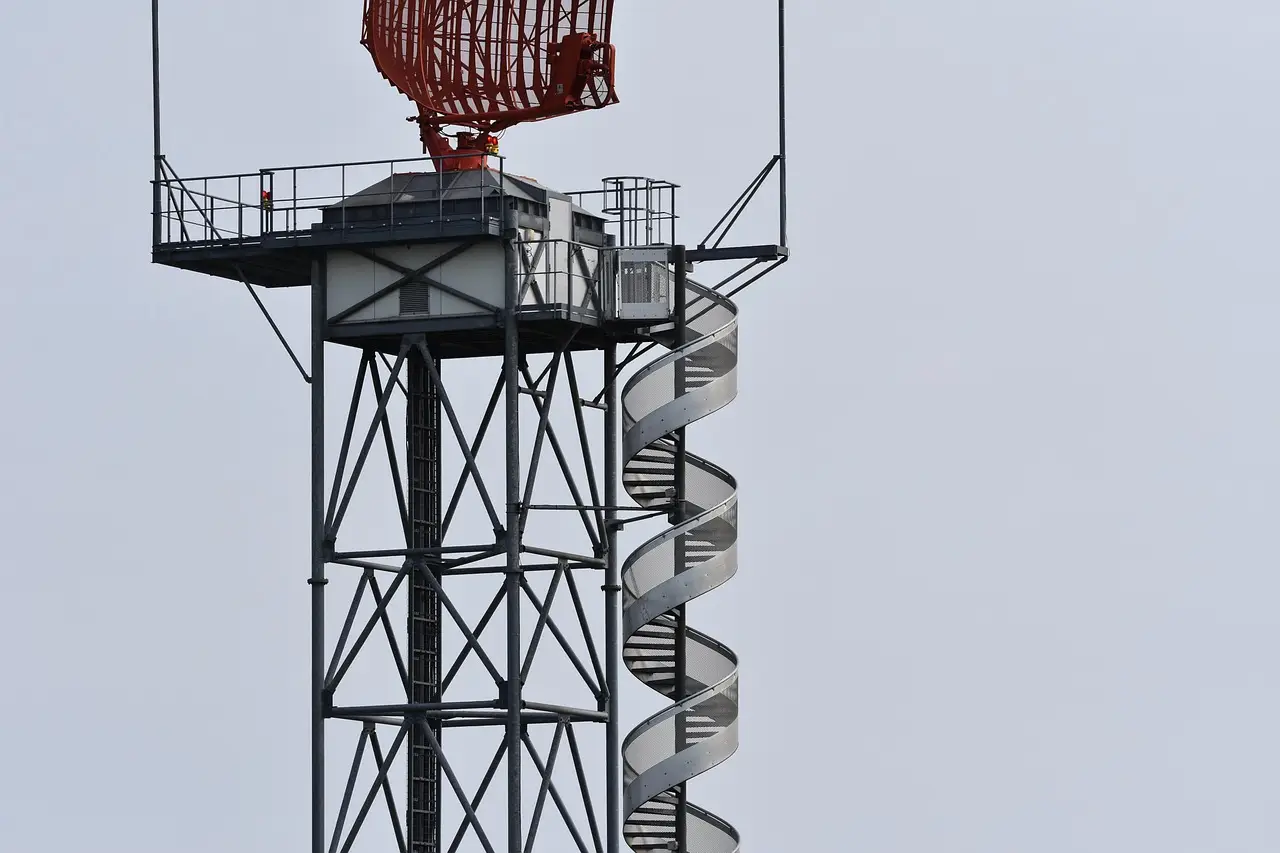
More than 75% of the FAA's 138 air traffic control systems are unsustainable or potentially unsustainable, according to a September 2024 report by the U.S. Government Accountability Office. The systems in question handle roughly 45,000 flights per day. That figure is the clearest measure yet of how badly a generation of FAA modernisation attempts has fallen short, and it frames the stakes for BNATCS, the Brand-New Air Traffic Control System now under way.
Transportation Secretary Sean Duffy announced the BNATCS plan on 8 May 2025, according to the NBAA. Congress appropriated $12.5 billion in July 2025 through the One Big Beautiful Bill Act, a figure confirmed by both the GAO and the NBAA. The money is not symbolic. Holland & Knight LLP reports the act allocated $4.75 billion for telecoms infrastructure, $3 billion for radar replacement and $1.9 billion for new Air Route Traffic Control Centres, plus $1 billion for TRACON recapitalisation and $100 million for ARTCC realignment.
What does the programme cover?
Phase 1 spans communications, surveillance, weather and training systems across approximately 4,600 sites nationwide, according to the NBAA. The GAO notes Phase 1 targets completion by December 2028. Phase 2 carries an FAA estimate of roughly $10.2 billion, excluding facilities costs, and the GAO found the FAA has set neither a start nor a completion date for it.
The FAA is also building the first new Air Route Traffic Control Center in decades, the NBAA confirms. On 4 December 2025, per Holland & Knight LLP, the FAA selected Peraton, a Virginia-based defence contractor, as prime integrator. That is a structural departure from the loose programme coalitions that preceded it.
Is the delivery record any better than NextGen's?
So far, yes. The FAA had installed 179 voice switches against a baseline target of 130, the NBAA reports. Nearly 400 radio sites had been upgraded with new equipment, running 100 units ahead of the baseline target of 304. For context, that is delivery at roughly 138% of the voice-switch baseline.
The network work is moving at a similar pace. The FAA told the GAO that as of May 2026 it had replaced 2,560 of 5,170 copper wire connections with fibre optic cable — almost exactly half. The NBAA reports that as of August 2026 the FAA had converted more than 3,320 TDM copper circuits to IP, a 64% completion rate, with full conversion targeted for 2027. The GAO also notes the FAA plans to modernise voice radio systems nine years earlier than originally planned.
Successive programmes, most notably NextGen, promised transformation and delivered incremental results at enormous cost. The pattern was consistent: ambitious scope, fragmented execution, infrastructure left substantially unchanged. The GAO's September 2024 findings confirmed the cumulative price of that failure.
Where does the GAO see the risk?
The delivery numbers are real. The accounting behind them is not complete. The FAA's current cost estimate omits government costs, most Phase 1 operations costs and all Phase 2 costs, according to the GAO. In June 2026 the FAA provided high-level per-programme estimates but could not supply the supporting analysis. The GAO found no comprehensive lifecycle cost estimate for BNATCS exists.
The scheduling picture matches. The FAA maintains 11,389 individual project schedules that are not integrated into a master schedule, the GAO identified, and installations at the same sites are generally not optimised to reduce impact on controller operations. Projects delivered in isolation, without a coherent view of how they interact or what they collectively cost, is precisely the fragmentation that derailed earlier programmes.
Kristie Greco Johnson, Senior Vice President for Government Affairs at the NBAA, framed the need directly: "BNATCS is needed to replace aging telecommunications, radar and other infrastructure, address persistent controller staffing challenges and prevent outages that threaten the safety, reliability and efficiency of the National Airspace System."
Why might this attempt differ?
The honest answer is that nobody yet knows. The conditions, at least, have changed. A single $12.5 billion appropriation removes the cycle-by-cycle funding uncertainty that plagued earlier efforts. A named prime integrator creates clearer accountability. Phase 1 targets are being met or exceeded.
Against that, the GAO describes a programme without a reliable total cost estimate and without a schedule binding its thousands of moving parts. Those are not administrative footnotes. They are the conditions under which large government technology programmes lose control of themselves.
The NBAA offered a framing as honest as any: "Foundations are never exciting, but they are critical for the longevity that allows the house to stand for the next 50-60 years." For the 45,000 daily flights that depend on the NAS, the question the GAO has put on the table is whether the FAA can sustain Phase 1's momentum through its December 2028 target and build the programme discipline Phase 2 will demand. That is the thing to watch.
By Grace Kim
via theaviationhub.co.uk (Source)
More from Grace Kim
Show full bio
News editor covering companies, deals and strategy in Commercial aviation industry coverage at Flightdeck Report.
583 articles
Same bay
- FDR460FAA places Phase One of ATC modernization at $16 billion · October 10, 2026
- FDR634US Senate's Modern Skies Act Seeks $30 Billion to Complete ATC Modernisation · October 10, 2026
- FDR637Duffy and Airlines Press Congress for $30 Billion ATC Bill · September 29, 2026
- FDR852Duffy Backs $30 Billion Air Traffic Control Modernization Push · October 12, 2026
- FDR449Transportation secretary puts $30 billion price tag on ATC modernization · October 10, 2026