Clearance CLR-7226 · AIR977
AIRGEB
Aircraft & EnginesClearance sheet
GE, BETA claim world-first hybrid-electric assisted takeoff
GE Aerospace and BETA Technologies used a modified Saab 340B for what they called the world's first hybrid-electric-assisted takeoff at commercial airliner altitudes.
Read-back
- GE Aerospace and BETA Technologies used a modified Saab 340B at BETA's Plattsburgh, New York, flight-test facility for what they called the world's first hybrid-electric-assisted takeoff.
- The right-side hybrid-electric engine is a fully integrated megawatt-class, multi-kilovolt system, while a GE Aerospace CT7 gas engine powered the other side.
- Earlier tests covered electrical assist during climb and cruise and power regeneration during cruise and descent; early observations showed less takeoff noise than gas engines alone.
- CFM RISE, unveiled in 2021, has completed approximately 500 test campaigns and more than 10,000 endurance and dust-ingestion cycles, with a target of more than 20% better fuel burn than engines in service today.
- CFM International is a 50-50 joint company between GE Aerospace and Safran Aircraft Engines; RISE is a demonstration program, not a product for commercial sale.
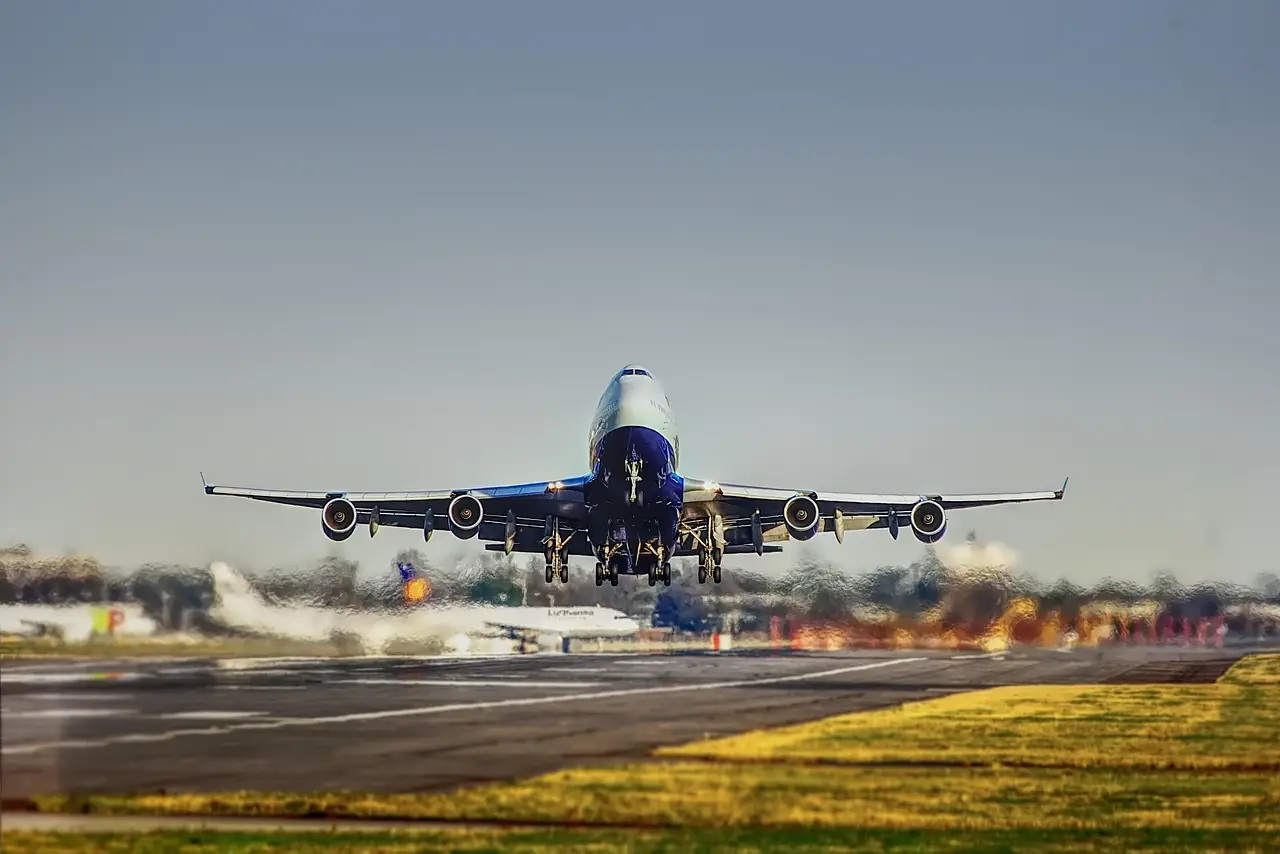
GE Aerospace and BETA Technologies completed what the companies described as the world’s first hybrid-electric-assisted takeoff in an aircraft designed to operate at commercial airliner altitudes with passengers. The test used a modified Saab 340B at BETA’s flight-test facility in Plattsburgh, New York.
What did the test establish?
The installation placed a conventional GE Aerospace CT7 gas engine on one side of the aircraft and a modified hybrid-electric engine on the right. The hybrid unit is a fully integrated, megawatt-class, multi-kilovolt propulsion system.
During the takeoff run, the electric motors and battery system provided additional power to the traditional gas engine, delivering the thrust needed. The hybrid installation assisted the CT7 rather than replacing it.
The result extends earlier work rather than introducing a new flight regime. Previous joint tests used electrical power assist during climb and cruise, together with power regeneration during cruise and descent. The Plattsburgh trial extended that assistance to the takeoff segment.
Based on early observations, the hybrid-electric takeoff produced less noise than the gas engines alone. The announcement supplied no decibel reading, measurement duration or comparison conditions, leaving the noise result as an early test observation rather than an operating specification.
How does it fit into CFM RISE?
The work sits within the Revolutionary Innovation for Sustainable Engines (RISE) technology-demonstration program, unveiled in 2021. GE describes RISE as one of the aviation industry’s most comprehensive technology demonstrators.
CFM International, a 50-50 joint company between GE Aerospace and Safran Aircraft Engines, runs the program. RISE is not a product offered for commercial sale, and the announcement names no airline, lessor, MRO, regulator or certification milestone.
According to the companies, RISE has completed:
- approximately 500 test campaigns;
- more than 10,000 endurance and dust-ingestion cycles; and
- tests of Open Fan, compact core and hybrid-electric architectures.
RISE prioritizes safety, durability and efficiency and targets more than 20% better fuel burn than commercial engines in service today. Those are program-wide goals, not measured results from the Saab 340B trial.
What could it change for airlines?
RISE’s fuel-burn target is the direct link to airline operating cost. A verified noise reduction could affect airport and network planning, but the takeoff yielded only an early observation, no certified specification and no capacity or fleet data. The announcement provides no fuel saving for the flight, fleet order or delivery date.
GE says hybrid-electric systems are highly compatible with different fuel types and advanced aircraft engine architectures. Open Fan removes the traditional casing, allowing a larger fan with less drag to improve fuel efficiency. Both hybrid and Open Fan technologies are being developed through RISE, among other innovations.
GE Aerospace Vice President of Future of Flight Engineering Arjan Hegeman said: “GE Aerospace is advancing the building blocks that will define the future of hybrid electric flight, now successfully demonstrating a more efficient commercial takeoff with a hybrid electric system.”
The announcement does not quantify the efficiency gain behind that characterization. Hegeman continued: “Step by step, we’re proving out a suite of next-generation technologies, from hybrid systems to Open Fan architecture, to meet customer needs.”
The announcement gives no flight-test date or external benchmark for the world-first label, while the claimed operating benefits need repeatable data and certification before they can support an airline procurement decision.
Because RISE is not for commercial sale, there is no production backlog, order book or delivery schedule against which to judge a path into service. The next proof point is whether the companies can convert this takeoff demonstration into certified, repeatable performance.
via geaerospace.com (Original)
More from Nathan Brooks
Show full bio
Correspondent covering technology and product news in Commercial aviation industry coverage at Flightdeck Report.
674 articles
Same bay
- FDR146Maxwell's M1-HC: Hybrid Amphibian Aims at 2,000 lb Over 1,000 nm · November 4, 2026
- FDR445Heart Aerospace Unveils Larger ES-30 Successor as JSX Orders 100 · September 30, 2026
- FDR109Beijing Airlink Unveils Belyn 100HF and 100HP Concepts · November 11, 2026
- FDR327Honeywell-led NEWBORN consortium integrates megawatt hydrogen power source · September 30, 2026
- FDR131Electra lands fixed-wing EL2 at Manhattan heliport in blown-lift first · October 26, 2026