Clearance CLR-4121 · AIR266
AIRGER
Air CargoClearance sheet
German security agencies move to block Cosco's Zippel takeover
Berlin is set to reject Cosco's takeover of Hamburg logistics firm Konrad Zippel after security services warned of China's cumulative acquisition strategy in maritime infrastructure.
Read-back
- German federal government is reportedly ready to block Cosco's acquisition of Hamburg logistics company Konrad Zippel
- A classified government note, reported by Handelsblatt, describes the deal as part of a 'cumulative acquisition strategy' by China
- German domestic security services flagged the deal as giving China excessive leverage over regional maritime infrastructure
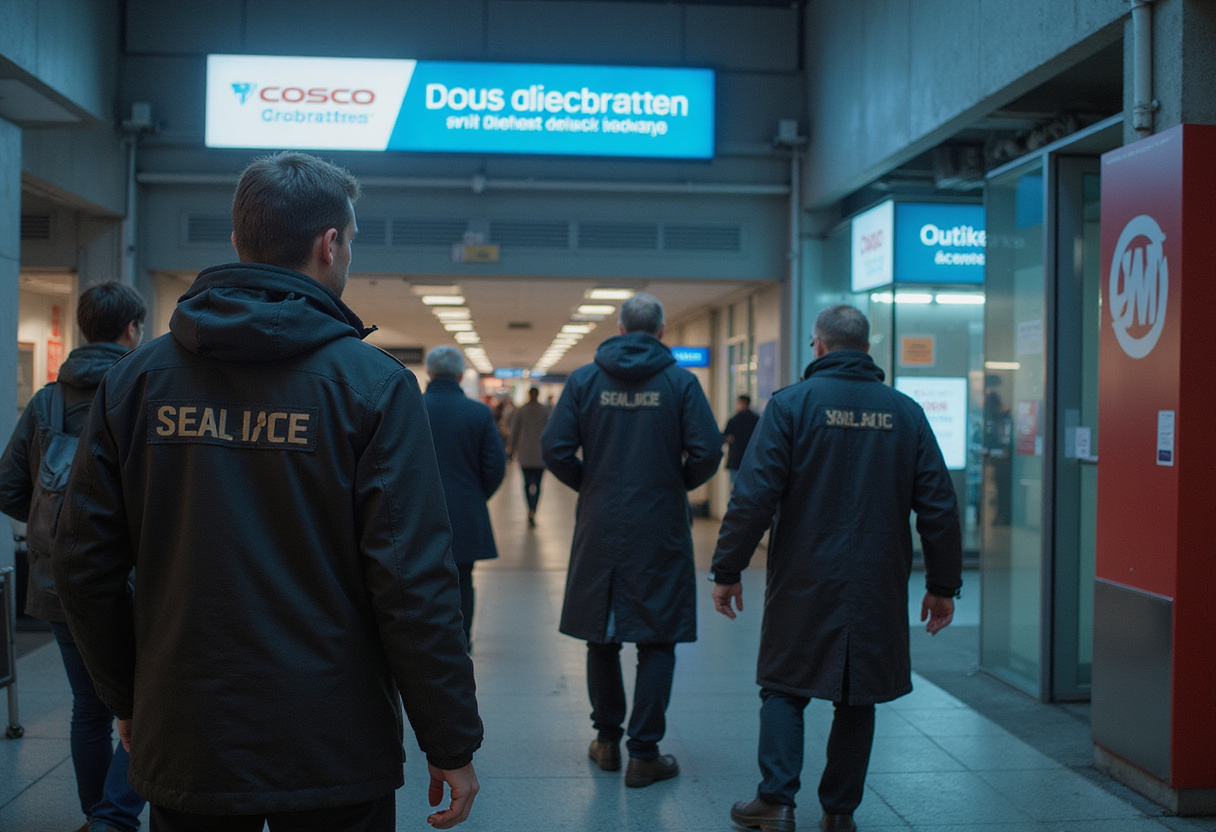
German federal authorities are preparing to block Cosco's acquisition of Hamburg logistics company Konrad Zippel after the country's domestic security services flagged the deal as a risk to regional maritime infrastructure.
According to a report in the German business daily Handelsblatt, which cited a classified government note, Berlin is ready to act on concerns that the purchase forms part of what officials described as a "cumulative acquisition strategy" by China to secure a strategic foothold in northern European port and logistics assets.
The intervention signals that Cosco, the Chinese state-owned shipping and ports giant, faces a second front in Germany after its contested stake in Hamburg's container terminal. The Zippel transaction, a far smaller deal on paper, has nonetheless drawn the attention of security agencies precisely because of the target's position within Hamburg's maritime logistics chain.
Konrad Zippel operates in the logistics sector in and around Hamburg, one of Europe's largest container gateways and a hub that handles a substantial share of Germany's seaborne trade. Security officials warned that allowing a Chinese state-linked group to extend its reach across such infrastructure would compound existing exposure, according to the Handelsblatt account.
Cumulative exposure
The phrase "cumulative acquisition strategy" is the operative element of the classified note. It indicates that German agencies assessed the Zippel bid not in isolation but as one further increment in a pattern of Chinese investment across European ports, terminals, inland logistics and related services.
That framing matters for the wider industry. If Berlin formalizes the block, it will set a precedent for how small and mid-sized logistics acquisitions — deals that rarely trigger headlines — are screened when the buyer is a state-owned foreign entity with existing holdings in the same corridor.
For carriers, forwarders and shippers using Hamburg, the outcome carries practical consequences. Chinese lines and their logistics arms have expanded aggressively into European inland networks, and restrictions on such acquisitions could reshape who controls warehouse, drayage and terminal-adjacent capacity at major gateways.
Hamburg precedent
The move follows years of friction over Chinese investment in Hamburg's port infrastructure. Cosco's earlier attempt to take a larger shareholding in a Hamburg container terminal was scaled back after similar security objections, with Berlin approving only a reduced stake following a cabinet-level dispute.
The Zippel case suggests the threshold for Chinese acquisitions in German maritime logistics has now shifted decisively. Deals that would previously have cleared investment screening on commercial grounds are being weighed against strategic exposure calculations advanced by the security services.
No final decision has been announced by the federal government, and Cosco has not publicly commented on the reported position, according to the Handelsblatt report. The classified note indicates the direction of travel within government rather than a completed regulatory act.
What is established at this stage: German security agencies have formally raised objections, a classified note exists documenting those concerns, and the federal government is reportedly prepared to block the transaction. What remains uncertain is the timing of any formal prohibition and whether Cosco will restructure or contest the deal.
A formal block would mark one of the clearest cases yet of Germany applying national security screening to a mid-market logistics acquisition, and port and logistics groups across Europe will be watching whether the "cumulative acquisition" doctrine it rests on becomes standard practice in inbound investment reviews.
via The Loadstar (Source)
More from Sophie Lindqvist
Show full bio
Senior reporter covering industry trends and analytics at Flightdeck Report.
161 articles
Same bay
- FDR856Millat seeks UK support to lift EU cargo restriction · September 30, 2026
- FDR898Swissport re-enters France with Basel-Mulhouse cargo operation · September 30, 2026
- FDR896Transpacific Rates Stay Elevated as Peak Season Nears · September 27, 2026
- FDR158Swissport Enters Indonesia Through UNEX Joint Venture · September 28, 2026
- FDR415CMA CGM Air Cargo in Talks to Acquire MRO Provider Crystal · September 27, 2026