Clearance CLR-5204 · AIR529
AIRHIG
AirportsClearance sheet
Highline School Board Demands Student Protections in Sea-Tac Expansion
The Highline School Board has told the Port of Seattle that Sea-Tac Airport's expansion must include enforceable protections for students affected by noise and emissions.
Read-back
- The Highline School Board has formally demanded student protections as a condition of Sea-Tac Airport expansion.
- The Port of Seattle owns and operates Sea-Tac, a major hub for Alaska Airlines and Delta Air Lines.
- The district's demands cover noise disruption, air quality, and student health near the airport's flight paths.
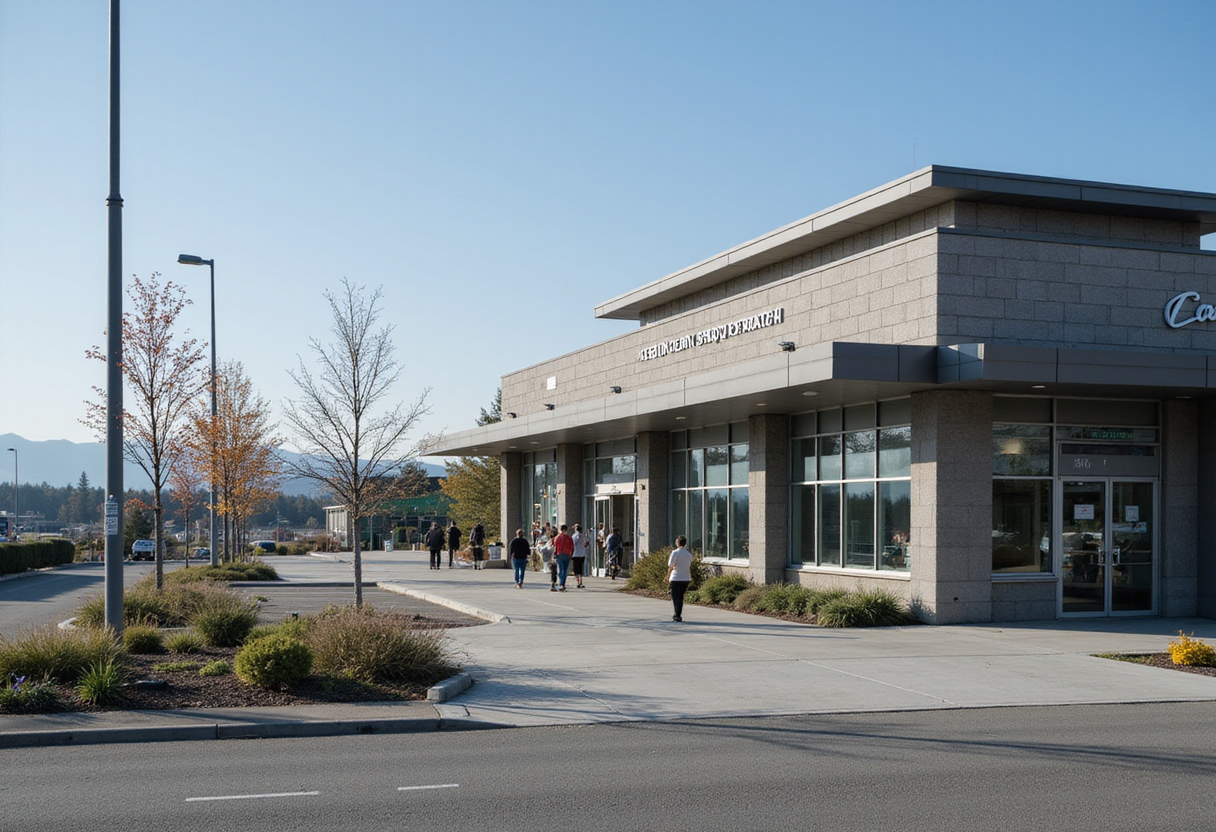
The Highline School Board has formally told the Port of Seattle that any expansion of Seattle-Tacoma International Airport must come with enforceable protections for students in the districts surrounding the facility.
The board's position lands as the Port advances long-range planning for growth at Sea-Tac, one of the busiest airports in the United States and a critical hub for Alaska Airlines and Delta Air Lines. The airport's development footprint sits directly alongside schools serving the Highline district, where thousands of students attend classes under flight paths and within zones affected by aircraft noise and emissions.
School board members argue that airport expansion cannot be evaluated as a purely operational or capacity question. In their message to the Port, they frame student welfare — classroom noise disruption, air quality around school buildings, and the health of children living in neighboring communities — as a condition that the Port must address before expansion proceeds.
The demand sets up a governance friction point between two public bodies. The Port of Seattle, which owns and operates Sea-Tac, answers to regional economic and aviation-capacity pressures. The Highline School Board answers to families in the communities that absorb the environmental consequences of that capacity. Airlines and cargo operators with stakes in Sea-Tac's growth have so far treated mitigation as a matter for the Port to negotiate with local jurisdictions.
Highline's intervention follows a pattern seen around other major U.S. airport expansions, where school districts have used environmental review processes and lease-approval cycles to extract soundproofing funds, air-quality monitoring, and health studies. Districts near large hubs have historically secured grants for building insulation and ventilation upgrades tied to airport noise-exposure maps, and school boards that engage early in planning tend to hold more leverage over the terms of mitigation.
For the Port, the cost implications are direct. Expansion programs at large airports already carry noise-mitigation line items, and adding school-focused obligations — whether building retrofits, filtration systems, or community health commitments — would add to a capital budget shaped by terminal construction, gate expansion, and airfield work. The Port has positioned Sea-Tac growth as necessary to sustain regional connectivity and airline capacity in the Pacific Northwest.
The school board's demand also carries political weight in the environmental review and public-comment processes that accompany major airport development. Airport expansions in the United States typically must pass state and federal environmental scrutiny, and formal objections from affected school districts can lengthen timelines and force additional study of noise and air-quality impacts on sensitive receptors such as schools.
Highline officials have indicated they intend to remain engaged as the Port refines its expansion plans, pressing for commitments that are binding rather than advisory. The Port of Seattle now faces the task of reconciling airline-driven capacity growth at Sea-Tac with a school district that has made student protection a stated precondition for its support.
via Google News: Airport expansion (Source)
More from Sophie Lindqvist
Show full bio
Senior reporter covering industry trends and analytics at Flightdeck Report.
161 articles
Same bay
- FDR915Port of Seattle weighs Seattle-Tacoma airport expansion · September 27, 2026
- FDR774Port of Seattle Extends SAMP Comment Deadline to Aug. 20 · September 27, 2026
- FDR601Seattle-Tacoma opens timber-centred C Concourse expansion · September 30, 2026
- FDR365Aspen Daily News column challenges airport expansion assumptions · September 30, 2026
- FDR547ACI World Calls on Governments to Plan Airport Capacity Now · September 30, 2026