Clearance CLR-8723 · MRO652
MROHON
MRO & AftermarketClearance sheet
Honeywell Aerospace Chases APAC Growth Three Months After Spin-Off
Three months post spin-off, Honeywell Aerospace leans on Asia Pacific: an 810-aircraft IndiGo win, $1 billion in supply chain investment and a defense push across Japan, Korea and Australia.
Read-back
- Honeywell Aerospace's commercial aftermarket generates over $8 billion annually with content on 65,000+ aircraft.
- The spin-off from Honeywell closed June 29, 2026; the company trades on Nasdaq as HONA with 36,000+ employees.
- IndiGo selected Honeywell avionics and APUs for 810 Airbus A320neo-family aircraft in July 2026.
- CEO Jim Currier said about 70 suppliers still had quality or delivery problems in September 2026, down from hundreds in 2022.
- Honeywell Aerospace has invested more than $1 billion in its supply chain in recent years.
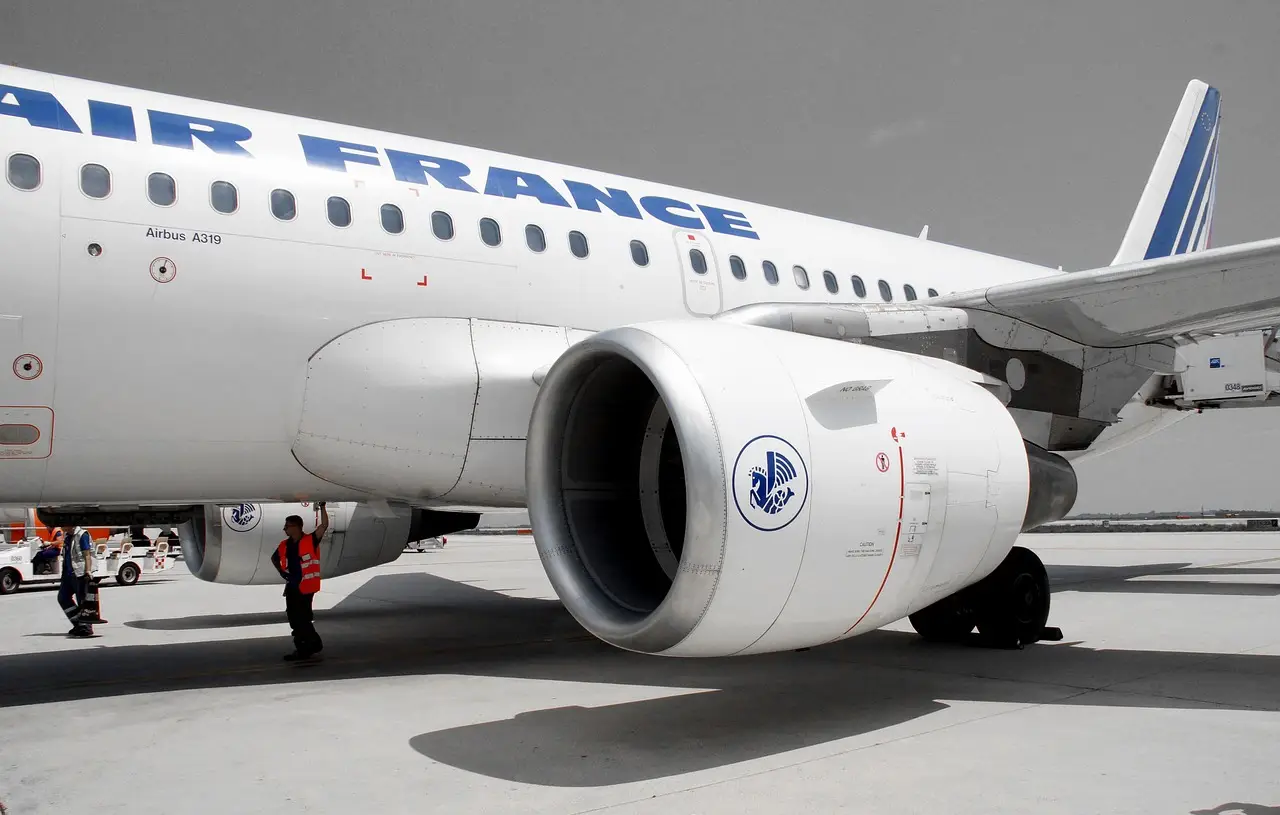
Honeywell Aerospace now books more than $8 billion a year in commercial aftermarket revenue and holds content on over 65,000 aircraft in service worldwide. Three months after its June 29, 2026 spin-off from Honeywell and listing on Nasdaq under the ticker HONA, the Phoenix-based company is betting much of its next growth phase on Asia Pacific.
Anthony Florian, President of Global Commercial Aftermarket, laid out the strategy on day two of MRO Asia-Pacific 2026 in Singapore, in an interview with AeroTime. "A lot of the global growth is coming from the Asia Pacific market," Florian said. The standalone company employs more than 36,000 people and serves over 10,000 customers.
What changes after the spin-off?
Florian frames the separation primarily as a question of focus. "Having our own board of directors, our own management committee, and being a standalone public company that's focused on the aerospace industry is very exciting for us," he said. "It provides a lot of opportunity for us to get a razor-sharp focus on the aerospace and defense industry, on what we have to do now, but also what we have to do for our long-term future."
Investors will judge that claim against delivery records, not adjectives. A dedicated board and management committee concentrate accountability. They do not, by themselves, fix suppliers or win platform positions.
Aging fleets, upgrades and new technology
Florian described the commercial aftermarket as "vibrant" and put supply chain resilience at the top of the corporate agenda. The practical response has two tracks: growing the partner network through channel localization, and expanding Honeywell Aerospace's own industrial capacity to support fleets that airlines keep in service longer.
The product strategy runs in phases. The company is upgrading existing platforms to extend service life, and further out, introducing new technologies. "We're talking to customers about all those phases of our product lifecycle," Florian said. That sequencing matters for MRO capacity in the region: upgrades on the installed base generate near-term shop-visit revenue, while new technology positions arrive only as forward-fit lines deliver.
How deep does the IndiGo deal go?
In July 2026, at the Farnborough International Airshow, IndiGo selected Honeywell Aerospace avionics and auxiliary power units for its order of 810 Airbus A320neo-family aircraft. Honeywell Aerospace called it the largest new-aircraft equipment win in its history.
Florian said India leads much of the region's growth and that the company already operates a strong engineering base there to support it. "We're very happy to be expanding our partnership with IndiGo in terms of our extended capability with its weather radar, multimode receivers and other content that we have in FMS, to be able to bring technology infusion to the forward-fit line, which Airbus continues to produce at increasing rates," he said.
What does this change for Honeywell Aerospace in India? Content on 810 aircraft ties revenue to Airbus production rates and IndiGo deliveries for years, not to a single sale. Florian conceded market share matters but said the company takes particular pride in bringing new technology into a fast-growing market. Neither the deal's value nor delivery timings were disclosed.
Defense demand and the 'develop once' model
Japan, South Korea and Australia drive most recent defense growth in the region, according to Florian, who called Asia Pacific one of the company's most dynamic markets across both commercial and defense lines. He noted that Asia Pacific and EMEA customers share expectations around localized support and long-term relationships.
"For us, it's important to be here and be present," he said. The technology strategy reinforces that posture. "Our technology set is very much develop once, deploy everywhere, where we take core technologies like our inertial reference systems and have both commercial applications as well as defense applications," Florian said. In his telling, that model builds supply chain resilience and makes partners easier to find and scale.
Supply chain: progress, not resolution
In September 2026, CEO Jim Currier said about 70 suppliers still had quality or delivery problems, down from hundreds in 2022, and that the company would consider acquisitions to bring outsourced work back in-house. Over the past several years Honeywell Aerospace has invested more than $1 billion in its supply chain through insourcing, multi-sourcing, deploying its own people and capital to suppliers, and firming long-term agreements.
"We're turning the corner on several of those supply situations to be able to support the market growth, both on the defense and the commercial front," Florian said. He acknowledged a handful of challenges remain and said the company is committed to deploying capital against its most constrained suppliers, with specific milestones tracked to secure the stability its long-term growth targets require. Seventy problem suppliers is progress. It is not resolution.
The next five years
Florian expects demand to stay strong over five years, citing passenger growth and resilient business and general aviation activity. The plan is to keep supporting existing airframes, upgrade the installed base, and win positions on new aircraft through deals such as IndiGo's.
"We see growth on multiple fronts, led by Asia Pacific, led by the Indian subcontinent, where there are good growth dynamics with such a concentrated population," Florian said. "That's going to continue to be a growth story for us here in APAC."
via AeroTime (Source)
More from James Calloway
Show full bio
Staff writer covering people, launches and day-to-day practice in Commercial aviation industry coverage at Flightdeck Report.
620 articles
Same bay
- FDR130Mechanical parts shortages cap Honeywell Aerospace growth in first solo quarter · October 29, 2026
- FDR584Airbus Forecast: Aviation Services Market to Hit $420 Billion by 2045 · October 16, 2026
- FDR424Bombardier Commits S$85 Million to Singapore Maintenance Centre Expansion · September 28, 2026
- FDR695MAG to Buy Sepang Aircraft Engineering from Airbus, Targeting 2027 Close · October 1, 2026
- FDR257Malaysia Aviation Group Signs Seven Global Partnerships to Expand MRO Business · October 10, 2026