Clearance CLR-8146 · AIR571
AIRHOU
Airspace & RegulationClearance sheet
House Rejects Senate-Passed Aviation Safety Bill
The House has rejected the Senate-passed aviation safety bill, stalling safety legislation and leaving FAA oversight and certification policy under the existing statutory framework.
Read-back
- The House rejected the Senate-passed aviation safety bill, as reported by Roll Call.
- The rejection leaves aviation safety legislation stalled between the two chambers.
- Safety measures in the Senate bill remain unimplemented until Congress resolves the disagreement.
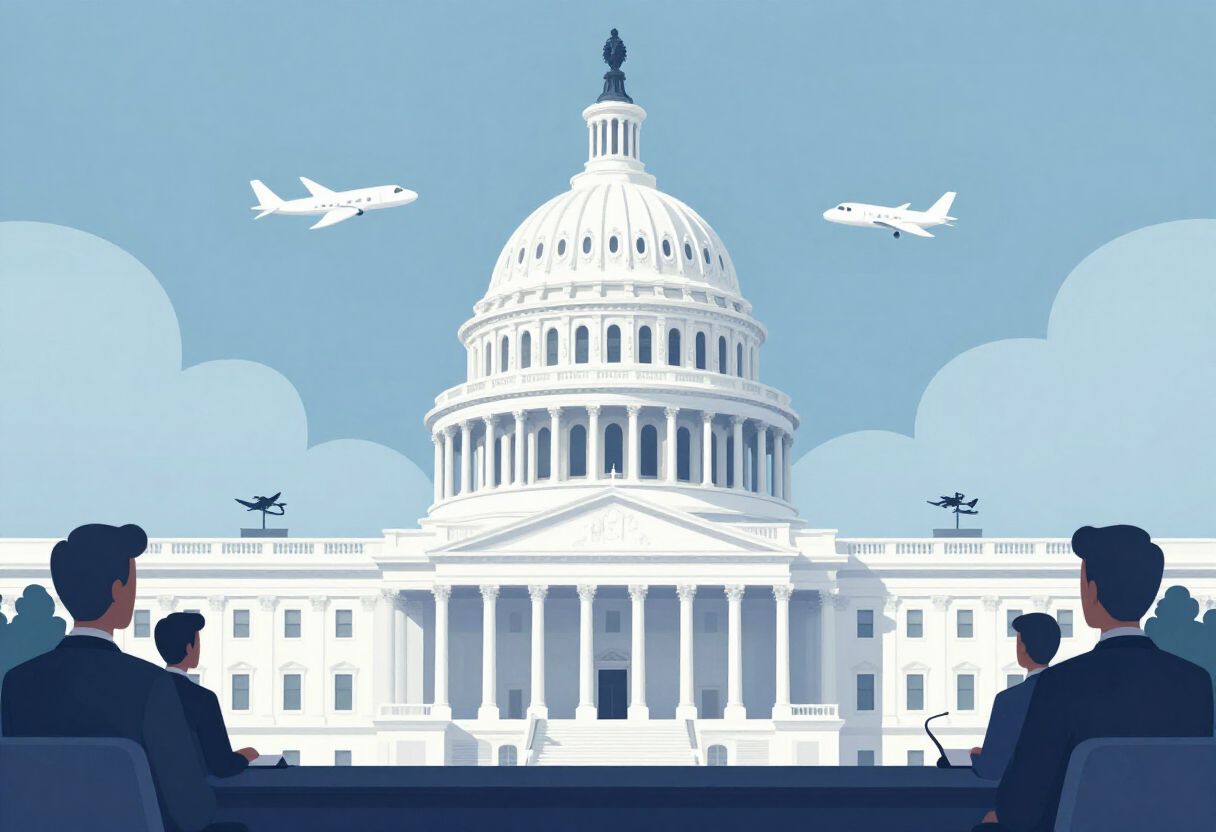
The House has rejected the Senate's aviation safety bill, leaving the chamber's safety legislation without a clear path forward and casting doubt on when Congress will move companion measures through both houses.
The Senate bill, which Roll Call reports the House turned back, contained safety provisions that lawmakers in the upper chamber had already assembled and passed. The House's rejection means the two chambers must resolve their differences before any aviation safety package can reach the President's desk.
The rejection matters for more than parliamentary procedure. Aviation safety bills typically carry consequences for the FAA's operating authority, its oversight posture toward airlines and manufacturers, and the certification timelines that determine when new aircraft programs enter service. When such legislation stalls, regulators and industry are left working under existing law, and any safety mandates contained in the Senate text remain unimplemented.
For airlines, an unresolved safety bill defers decisions that touch training requirements, crew-rest rules, and inspection regimes — all of which feed directly into crew scheduling, fleet utilization, and network planning. For manufacturers, the same dynamic applies to certification staffing and process changes at the FAA that can accelerate or slow type-certificate programs.
The House's action also signals substantive disagreement between the chambers rather than a simple scheduling failure. A rejection of a Senate-passed bill is a floor-level decision, and it typically reflects either opposition to the bill's specific provisions or a broader leverage play over unrelated legislative business.
What comes next depends on how the chambers choose to proceed. Congress can attempt to negotiate a compromise version in conference, the Senate can take up a House-drafted alternative, or the safety provisions can be attached to must-pass vehicles such as broader transportation or funding legislation. Each route carries different timelines, and none guarantees action before the current legislative calendar fills with competing priorities.
Roll Call's report identifies the core fact: the Senate passed an aviation safety bill, and the House rejected it. The reasons for the rejection, the specific provisions at issue, and the vote margins are questions that subsequent reporting will need to answer as the chambers decide whether to revive the package.
Until they do, the safety measures in the Senate text remain proposals rather than law, and the FAA and the industry it regulates continue operating under the existing statutory framework.
via Google News: Aviation safety (Source)
More from James Calloway
Show full bio
Staff writer covering industry trends and analytics at Flightdeck Report.
156 articles
Same bay
- FDR593House Passes Aviation Safety Bill on Second Attempt · September 30, 2026
- FDR282US House to Take Up Aviation Safety Legislation Next Week · September 27, 2026
- FDR323US House Set to Vote on Aviation Safety Bill Next Week · September 30, 2026
- FDR190US House Members Unveil Comprehensive Aviation Safety Bill · September 30, 2026
- FDR274US House Fails to Pass Aviation Safety Bill After Pentagon Withdraws Support · September 28, 2026