Clearance CLR-9996 · AIR309
AIRHOU
Airspace & RegulationClearance sheet
Houthi Attacks Push Europe-Asia Air Routes Toward Longer, Costlier Diversions
Houthi attacks are threatening Europe-Asia air routes, compounding the airspace constraints created by the war in Ukraine and raising costs for carriers flying between the two continents.
Read-back
- Houthi attacks in the Red Sea region threaten Europe-Asia air routes, Chosun Ilbo reports
- The campaign compounds airspace constraints already imposed by the war in Ukraine
- Multiple simultaneous conflicts are reshaping airline routing maps and forcing diversions
- Longer routings increase fuel burn, reduce aircraft utilization, and may force payload restrictions
- The report offers no timeline for resolution, suggesting carriers face a structural risk condition
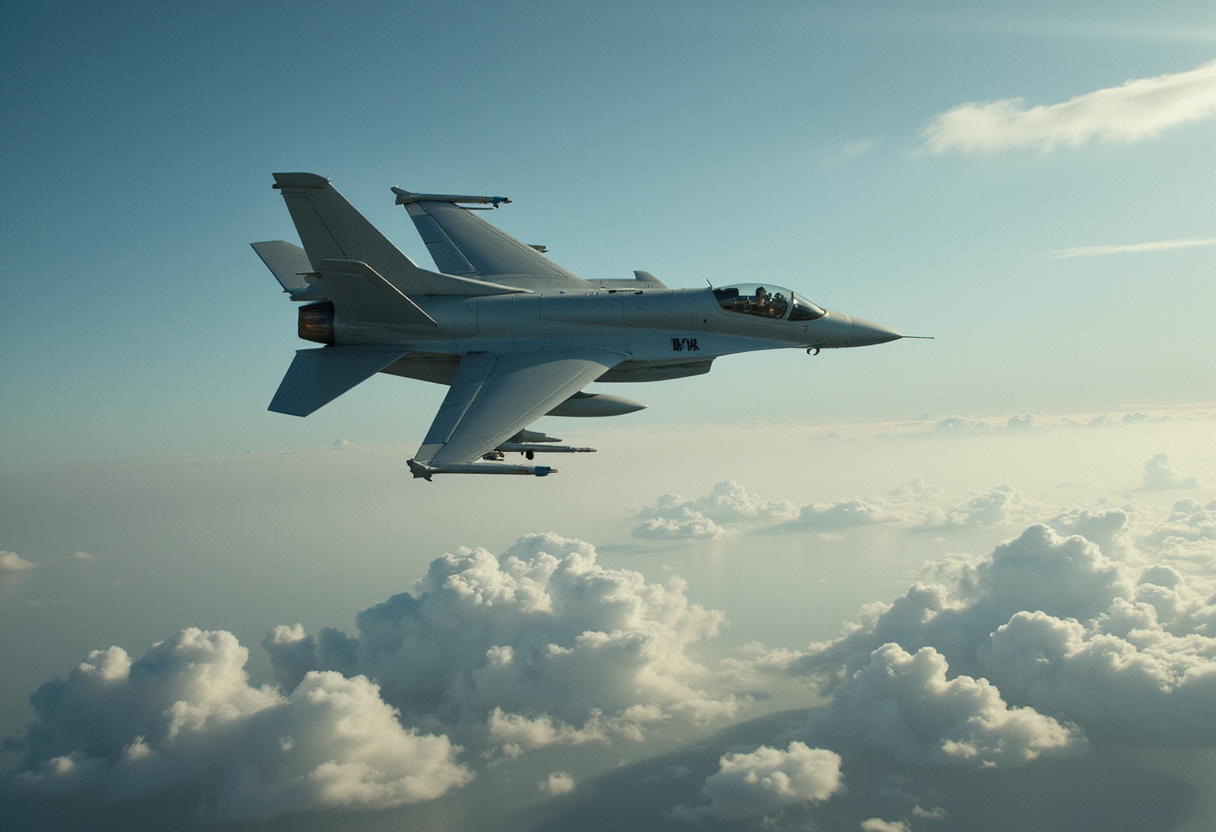
Houthi attacks on shipping and regional airspace are threatening the Europe-Asia air corridor, adding a new layer of risk to long-haul operations that already avoid Russian and Ukrainian airspace, according to a report by South Korea's Chosun Ilbo.
The report frames the Yemen-based militant group's campaign as part of a broader pattern: multiple simultaneous conflicts are now reshaping the maps that airline dispatchers work from, forcing carriers to weigh circuitous routings, added fuel burn, and payload penalties against the alternative of suspending services.
Why does this matter for Europe-Asia operations?
Airlines flying between Europe and East Asia have operated for years under the constraint of closed Russian airspace following the invasion of Ukraine, with the Ukraine conflict having already closed that corridor to most Western carriers. The result has been longer flight times, higher fuel consumption, and in some cases payload restrictions on routes that once tracked the great-circle path over Siberia.
The Chosun Ilbo report identifies the Houthi campaign as a compounding factor rather than an isolated nuisance. The group's attacks, which have targeted commercial shipping in the Red Sea and the Bab el-Mandeb Strait area, sit beneath flight paths that connect the Gulf, the Arabian Peninsula, and the Horn of Africa to South Asian and Southeast Asian destinations. Carriers that might otherwise route over or near the region must now account for the risk of missile strikes, drone activity, and rapidly changing airspace closures in the vicinity of Yemen.
The practical consequence is a squeeze from two directions. Northern routings between Europe and Asia remain complicated by the war in Ukraine and restrictions tied to Russia. Southern routings now carry their own risk premium near the Red Sea and the Arabian Peninsula. The remaining options add distance, time, and cost.
What does this mean for cost and capacity?
Longer routings translate directly into block-time increases, which eat into aircraft utilization. A widebody flying an extra hour each way loses cycles it could otherwise dedicate to revenue service, and crews hit duty-time limits sooner, complicating scheduling on ultra-long-haul sectors.
Fuel is the more immediate variable. Added distance on a Europe-Asia round trip can add measurable tonnage to the fuel bill per rotation, and on sectors already operating near range limits, carriers may trade payload for range — carrying fewer passengers or less cargo to complete the flight within tank capacity.
Cargo operators face particular exposure. Freighters routing between European hubs and Asian manufacturing centers have leaned on the corridors now affected, and any diversion that adds distance raises unit costs on lanes where margins are thin and competition from sea freight — itself disrupted by the Red Sea shipping attacks — has shifted demand toward the air.
How are carriers and regulators responding?
Airspace decisions in the region rest with national civil aviation authorities and, where military activity is involved, with the security assessments that underpin notices to airmen and airspace advisories. Carriers make the final routing call, and their tolerance for risk varies: some operators continue flying near-adjacent corridors, while others have re-routed well clear of the affected areas.
The Chosun Ilbo report does not catalog specific airline responses, and any carrier-by-carrier accounting of diversions, suspensions, or schedule changes would need to be verified against published timetable data and operator statements. What the report establishes is the direction of travel: the number of conflicts with direct airspace consequences for commercial aviation is growing, not shrinking.
Is this temporary?
The report offers no timeline for resolution, and the Houthi campaign has persisted despite international naval responses in the Red Sea. For network planners, that argues for treating the current risk environment as a structural condition rather than a passing disruption — one that lengthens Europe-Asia flying, raises operating costs, and keeps the sector dependent on the willingness of governments and militaries to keep the skies and sea lanes open.
via Google News: Air traffic control and airspace (Source)
More from Sophie Lindqvist
Show full bio
Senior reporter covering people, launches and day-to-day practice in Commercial aviation industry coverage at Flightdeck Report.
436 articles
Same bay
- FDR184Houthi Strikes Push Europe–Asia Traffic Onto Central Asia Reroutes · October 12, 2026
- FDR701EASA widens Saudi airspace warning after Houthi airport attack · October 9, 2026
- FDR538Reported Iranian-Modified Missiles Raise New Questions Over Yemen · September 30, 2026
- FDR820EU Aviation Agency Issues Saudi Airspace Advisory After Houthi Attacks · September 30, 2026
- FDR198Houthis warn airlines against Saudi airports and airspace · October 11, 2026