Clearance CLR-9779 · AIR134
AIRICA
Airspace & RegulationClearance sheet
ICAO pushes global ATFM reforms targeting delays and emissions
ICAO is hosting talks through 9 October 2026 on ATFM reforms: free route airspace, A-CDM, and reviewed separation minima to cut delays and emissions.
Read-back
- Talks conclude 9 October 2026, after which ICAO will update guidance to member states
- ICAO forecasts international aviation emissions could triple by 2050 versus 2015
- Aviation produced 13.9% of transport emissions and 3.8–4% of EU GHG emissions in 2022
- A-CDM and free route airspace form the core of the proposed reforms
- ICAO is reviewing minimum aircraft separation distances to increase airspace capacity
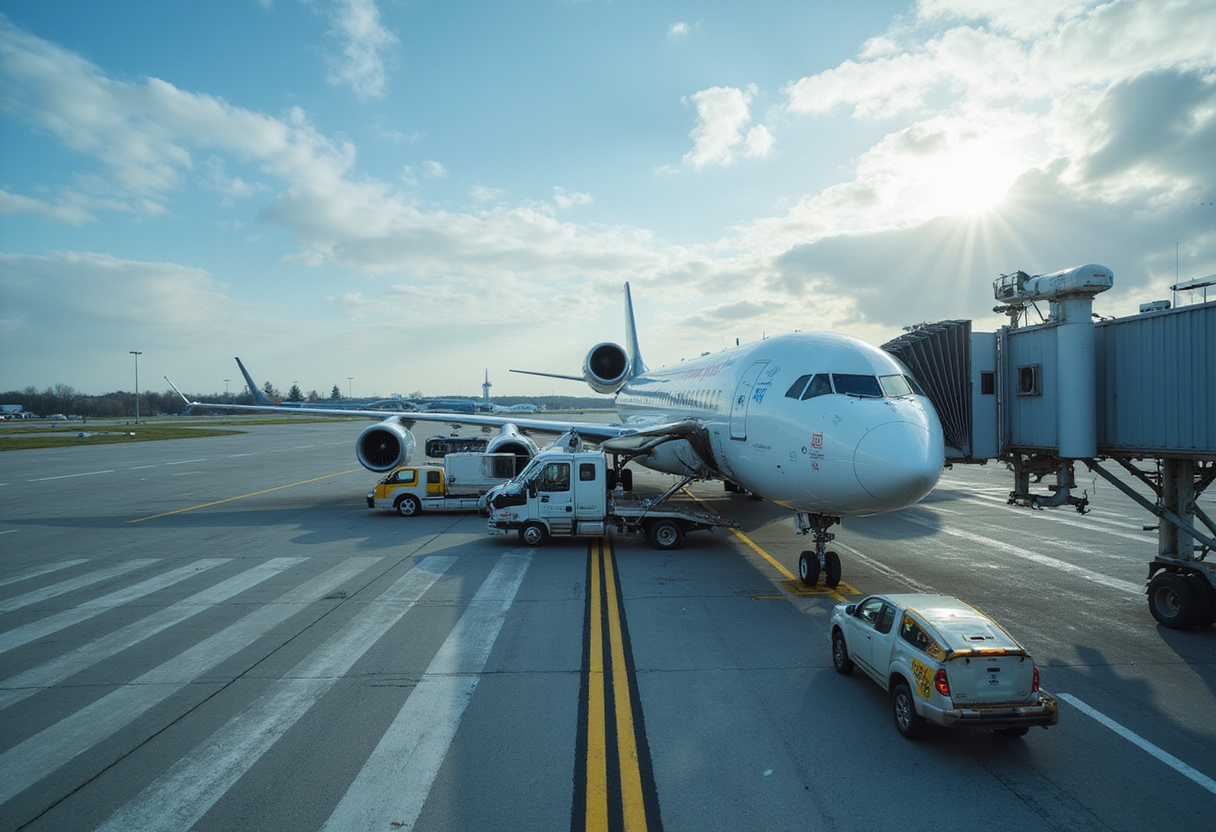
ICAO has convened global aviation stakeholders at its Montréal headquarters to agree procedures that could scrap pre-defined flight paths, tighten aircraft separation and coordinate departure and arrival decisions across airlines, airports and air traffic control, with updated guidance to member states promised after the talks close on 9 October 2026.
The UN agency frames the initiative as a response to persistent delays and cancellations across global networks. Central to the package is Airport Collaborative Decision Making, or A-CDM, a process that lets airlines, airports and air traffic controllers exchange real-time information and jointly decide when and how flights take off and land. ICAO says this improves flight reliability.
A-CDM sits inside a broader "Total Airport Management" concept. Coordination would extend across all airport activities — baggage handling, refuelling and passenger movements, not just the movement of aircraft.
What changes in the air?
The second pillar is structural. ICAO wants the gradual adoption of "free route airspace," allowing pilots to fly the most direct and efficient path rather than following pre-established routes. Entire portions of controlled airspace would be dynamically managed to traffic demand under the ATFM "flexible use of airspace" principle.
ICAO notes that air traffic flow management implementation is already required in many circumstances; the Montréal talks aim to ramp up and expand its general usage worldwide.
A declared top priority is ensuring "every region and airport can accurately measure and manage airspace and airport capacity" — the maximum number of aircraft safely handled in a given time period. ICAO is also reviewing minimum aircraft separation distances, with the stated aim of safely increasing airspace capacity.
The capacity argument carries direct cost implications for carriers: reduced holding, fewer departure slots lost and more departures per hour at constrained airports.
Why emissions figure in the agenda
Sustainability sits alongside punctuality in ICAO's case. The agency forecasts that by 2050 international aviation emissions could triple compared with 2015 levels. In 2022, direct aviation emissions accounted for 3.8% to 4% of total EU greenhouse gas emissions, and the sector generates 13.9% of transport emissions — second only to road transport.
The European Commission proposed a review of its emissions trading system in July 2026, aimed at improving European competitiveness while keeping the bloc on track for its 2040 climate targets. Free route operations and reduced holding are among the operational levers available before fleet renewal and sustainable fuel scale up.
What did ICAO's leadership say?
Secretary General Juan Carlos Salazar set the objective in his opening statement to delegates: "Together, we will deliver a truly connected network for air traffic flow management, enabling every flight to operate in a predictable and efficient manner while enhancing safety and sustainability."
He also pressed for concrete outcomes within the week: "By the end of this week, we should ensure we have coherent and practical plans, working side by side in coordination with our neighbours and partners."
From talk to guidance
Nothing is yet mandated. What is flying today is a patchwork: ATFM is required in many circumstances and A-CDM operates at some European airports, but free route airspace and dynamic airspace management remain partial. ICAO has convened stakeholders from all areas of global aviation operations to find a path to wider adoption.
Once the talks conclude on 9 October 2026, ICAO says it will update its guidance to member states to support rollout of the new procedures — guidance, not regulation, with implementation resting with national authorities, ANSPs and airport operators. How quickly that translates into measurable capacity gains and lower delay figures will depend on the coherence of the plans Salazar demanded and the pace at which states adopt them.
via icao.int (Original)
More from Priya Raman
Same bay
- FDR547ACI World Calls on Governments to Plan Airport Capacity Now · September 30, 2026
- FDR631Duffy Takes Air Traffic Control Modernization Case Public · September 28, 2026
- FDR175Senators Float $30 Billion-Plus Bill to Overhaul Air Traffic Control · September 28, 2026
- FDR438FAA Puts SMART Software Tool Into Service To Ease Flight Delays · September 27, 2026
- FDR159Air Canada Unveils Seven New Routes in Record Network Expansion · September 30, 2026