Clearance CLR-6009 · AIR414
AIRLAT
Air CargoClearance sheet
LATAM Cargo's pharma traffic to Brazil jumps 150% on GLP-1 demand
LATAM Cargo moved nearly 32,000 tonnes between Europe and Brazil in seven months, with pharma shipments up 150% year-on-year on GLP-1 demand, even as the carrier described the global market as flat.
Read-back
- LATAM Cargo moved nearly 32,000 tonnes of cargo between Europe and Brazil in the first seven months of the year.
- Total Europe-Brazil volumes rose 27% year-on-year.
- Pharmaceutical shipments on the lane grew 150% versus the same period in 2025.
- Growth is driven by demand for GLP-1-based medications used in type 2 diabetes treatment.
- LATAM Cargo described the global pharmaceutical air cargo market as 'flat'.
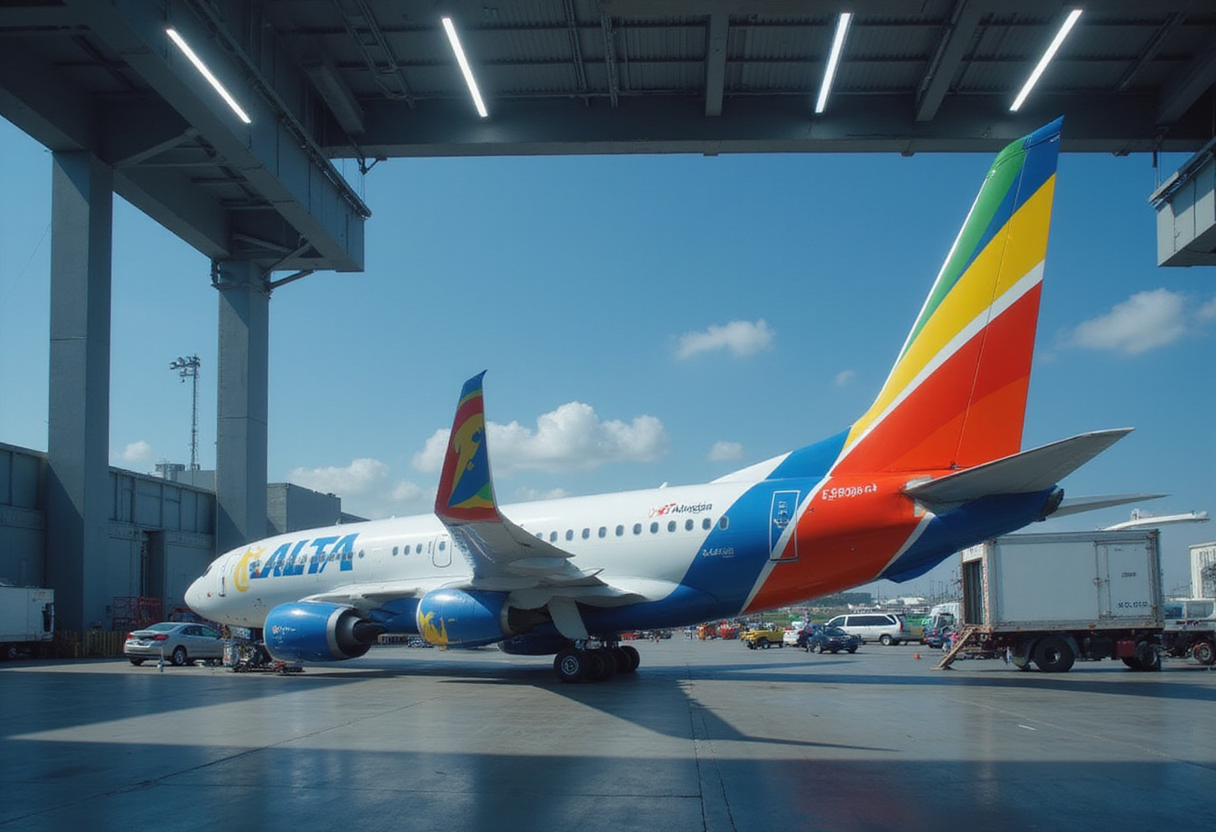
LATAM Cargo moved nearly 32,000 tonnes of freight between Europe and Brazil in the first seven months of the year, a 27% year-on-year increase, with pharmaceutical shipments on the lane jumping 150% over the same period in 2025.
The carrier attributes the surge to GLP-1 receptor agonists — the injectable class developed for type 2 diabetes — and frames it as a structural reshaping of cold-chain demand across the South Atlantic.
What's driving the Europe-to-Brazil lane?
GLP-1 medicines now account for a growing slice of LATAM Cargo's pharmaceutical tonnage out of European gateways. The carrier has not disclosed volumes for individual molecules, but a 150% lift in pharma traffic on a single corridor tells a clear story: demand for these drugs has moved from a regional phenomenon into Latin American distribution channels faster than ground logistics can absorb.
The growth sits squarely on imports into Brazil. For an air freight operator with the temperature-controlled capacity to move active cold-chain product door-to-door, that setup converts directly into tonnage.
How does it fit the wider market?
LATAM Cargo's gains land against what the carrier describes as a flat global pharmaceutical air cargo market. The contrast is instructive: aggregate volumes may be stagnant, but specific corridors — particularly those tied to high-value, temperature-controlled biologics — are running well ahead of the baseline.
That divergence matters for how operators size capacity. A flat headline number can mask very different realities inside regional flows, and the South Atlantic is currently one of the lanes where the gap between the average and the actual is widest.
Why the South Atlantic is the lane to watch
Brazil is Latin America's largest pharmaceutical market by value, and Europe is the dominant origin for branded biologics. A 27% increase in total Europe-Brazil volumes against flat global demand suggests LATAM Cargo is gaining share rather than simply riding a rising market.
The economics reinforce that read. Pharmaceutical air cargo typically commands premium yields over general freight, and a 150% increase in a single product category on one corridor is the sort of mix shift that changes a network's margin profile. It also tightens planning downstream: active containers, cool-chain handling at stations like São Paulo-Guarulhos, and reefer truck capacity at the Brazilian end all become constrained when one product class grows that quickly.
What the 'flat' global framing obscures
Calling the global market flat while a key lane posts triple-digit growth points to the limits of headline numbers in air cargo analysis. Flat aggregate volumes can hide a market reshaping itself around a handful of molecules with outsized logistics footprints. GLP-1 drugs need active temperature control, typically in the 2–8°C range, with tight delivery windows. That makes them difficult to move by sea at scale and pushes them onto aircraft even when global pharmaceutical demand is otherwise unremarkable.
What does it mean for capacity planning?
The 150% lift isn't just a revenue story. It has direct implications for how LATAM Cargo allocates active container capacity, which is the constrained resource in any cold-chain operation. Adding that much pharma volume on a single lane means either more investment in temperature-controlled ULDs, more chartering of reefer capacity from partners, or both.
The bottleneck, though, is just as likely on the ground as in the air. Reefer trucking at Guarulhos is finite, and customs clearance for biologics adds dwell time that doesn't exist for general cargo. The carriers that hold this tonnage are the ones that can integrate air, ground, and customs under a single service contract.
For LATAM Cargo, the question now is whether the 150% growth rate is the new baseline or a peak that will normalize as supply chains adjust. If GLP-1 production keeps expanding and Brazilian demand continues absorbing imports at this pace, the carrier's Europe-Brazil lane looks set to remain the standout performer in an otherwise flat global market through the rest of the year.
via The Loadstar (Source)
More from Nathan Brooks
Show full bio
Correspondent covering technology and product news in Commercial aviation industry coverage at Flightdeck Report.
468 articles
Same bay
- FDR850GLP-1 demand lifts LATAM Cargo Europe–Brazil pharma volumes 150% · October 10, 2026
- FDR414GLP-1 demand lifts Europe–Brazil pharma volumes for LATAM Cargo · October 2, 2026
- FDR996LATAM Cargo reports 150% surge in Europe–Brazil pharma volumes · October 15, 2026
- FDR144Europe-Brazil pharma air cargo volumes expand 150% in 2026 · October 9, 2026
- FDR833LATAM Cargo pharma volumes climb as global air freight stalls · October 15, 2026