Clearance CLR-2614 · AIR559
AIRNIG
Airspace & RegulationClearance sheet
Nigeria bridges civil-military aviation divide after NAF crash
Nigeria's Aviation Minister Festus Keyamo and CAS Air Marshal Sunday Aneke will launch a joint NCAA–NAF committee covering airworthiness and certification training following the Igbokoda accident.
Read-back
- Aviation Minister Festus Keyamo and CAS Air Marshal Sunday Aneke met in Abuja following an NAF aircraft accident at Igbokoda, Ondo State, in which civilians were among the casualties
- The two leaders agreed to establish a joint NCAA–Nigerian Air Force committee covering airworthiness, certification, training and broader aviation safety measures
- Keyamo said he had already contacted NCAA Director-General Chris Najomo and opened a direct line between the agency and the Air Force chief
- The minister confirmed NAF already relies on civil air traffic control infrastructure, framing that dependency as the basis for a structured partnership
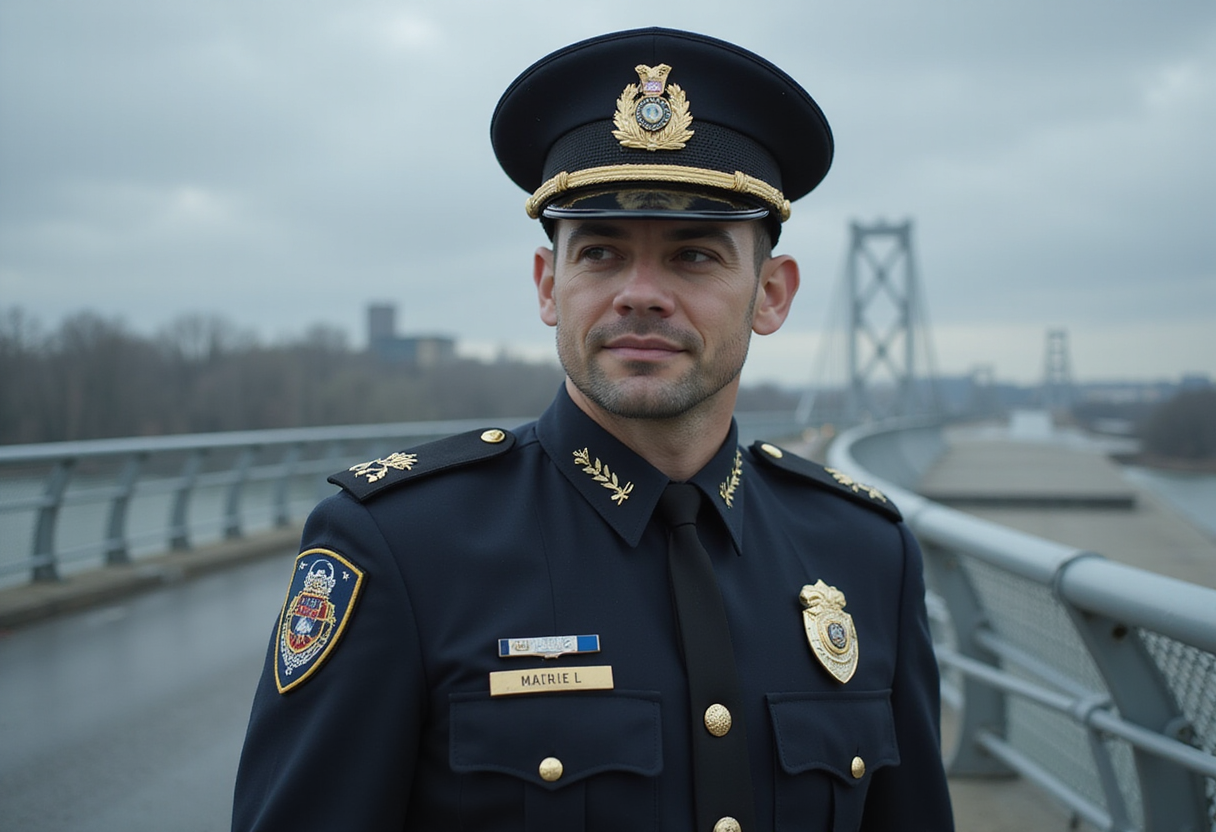
Nigeria's Minister of Aviation and Aerospace Development Festus Keyamo and Chief of Air Staff Air Marshal Sunday Aneke agreed in Abuja to stand up a joint framework between the Nigeria Civil Aviation Authority (NCAA) and the Nigerian Air Force, covering airworthiness, certification, training and capacity building. The accord follows the NAF accident at Igbokoda, Ondo State, in which civilians were reported among the casualties.
Keyamo signed a condolence register at NAF headquarters before holding a private meeting with Aneke. Speaking to reporters afterward, the minister cast the incident as a turning point for cooperation between two oversight cultures that have historically operated in parallel rather than in tandem.
What triggered the renewed cooperation?
The Igbokoda accident exposed the human cost of operating civil and military airspace without a unified safety architecture. Keyamo argued that mishaps do not distinguish between uniformed and civilian operators.
"It is one country, one people. When disaster happens, it affects everybody," he said. "There were civilians in that air crash and when there's an air crash in the civil aviation too, there can be military personnel. And so, it is important that we cooperate in the area of safety."
The minister's framing reframes a single incident as a structural problem. Nigeria's military aviation fleet operates inside airspace managed, in significant part, by the same air traffic control infrastructure that serves commercial carriers. Gaps in airworthiness assurance on one side of that boundary can propagate across the entire system.
How will the joint framework work?
A joint committee will coordinate NCAA-NAF engagement across four workstreams: airworthiness, certification, training, and broader aviation safety measures. Keyamo said he had already contacted NCAA Director-General Chris Najomo and opened a direct line between the agency's leadership and the Air Force chief.
The framework will respect the statutory mandates of each institution while creating room for deeper technical exchange, according to the minister. That formulation preserves NCAA's regulatory primacy over civil operators while acknowledging NAF's separate chain of authority on military aircraft.
What expertise will each side contribute?
The collaboration is intended to flow in both directions. Keyamo said NAF personnel could access civil aviation training pipelines run by NCAA, since "we have a lot of training we go for" — and there is no administrative reason to exclude Air Force candidates from those programmes.
The minister also pointed to the NAF's existing reliance on civil air traffic control, arguing that this dependency makes a structured partnership overdue rather than optional. Aneke, for his part, signalled readiness to make NAF technical expertise available to the civil side where it adds value, particularly in airworthiness and certification disciplines.
"We have both agreed that we need to move the aviation industry, whether military or civil, to a higher level," Aneke said. "We are serving the same government; we are protecting the same Nigerians. So, we are just a blend of each other."
What sits outside the agreement?
The minister stopped short of placing NAF aircraft under NCAA certification, a step that would require legislative change and would collide with the constitutional command of the armed forces. The framework therefore works within existing legal boundaries rather than rewriting them.
No timeline for the committee's first meeting has been disclosed, and no program-by-program breakdown of training slots or certification work has been published. The joint committee will need to translate the political agreement into operational outputs, from shared airworthiness reviews to combined training or simulator activity, if it is to outlast the current ministerial term.
via cdn.guardian.ng (Original)
More from Sophie Lindqvist
Show full bio
Senior reporter covering industry trends and analytics at Flightdeck Report.
396 articles
Same bay
- FDR941Nigeria forms NCAA–Air Force joint committee after Igbokoda crash · October 10, 2026
- FDR874Keyamo, Nigerian Air Force widen civil-military ties after Ondo crash · October 10, 2026
- FDR705Nigeria's Aviation Minister and Air Force Chief Align on Safety After Igbokoda Crash · October 10, 2026
- FDR821Nigeria to Build NCAA-Air Force Committee After Igbokoda Crash · October 8, 2026
- FDR887Ondo Crash Pushes Nigeria Toward Civil-Military Aviation Coordination · October 10, 2026