Clearance CLR-5610 · AIR409
AIRROM
Airspace & RegulationClearance sheet
Romania Detects Three Drones Near Ukrainian Border
Romania detected three drones near its border with Ukraine, BGNES reports. Airspace was not violated. No civil-aviation disruption follows, but the episode renews scrutiny of border-zone drone activity.
Read-back
- Romanian authorities detected three drones near the Ukrainian border
- Romanian airspace was not violated, according to BGNES
- No disruption to civil aviation was reported in connection with the detections
- Drone type, altitude and operator were not specified in the report
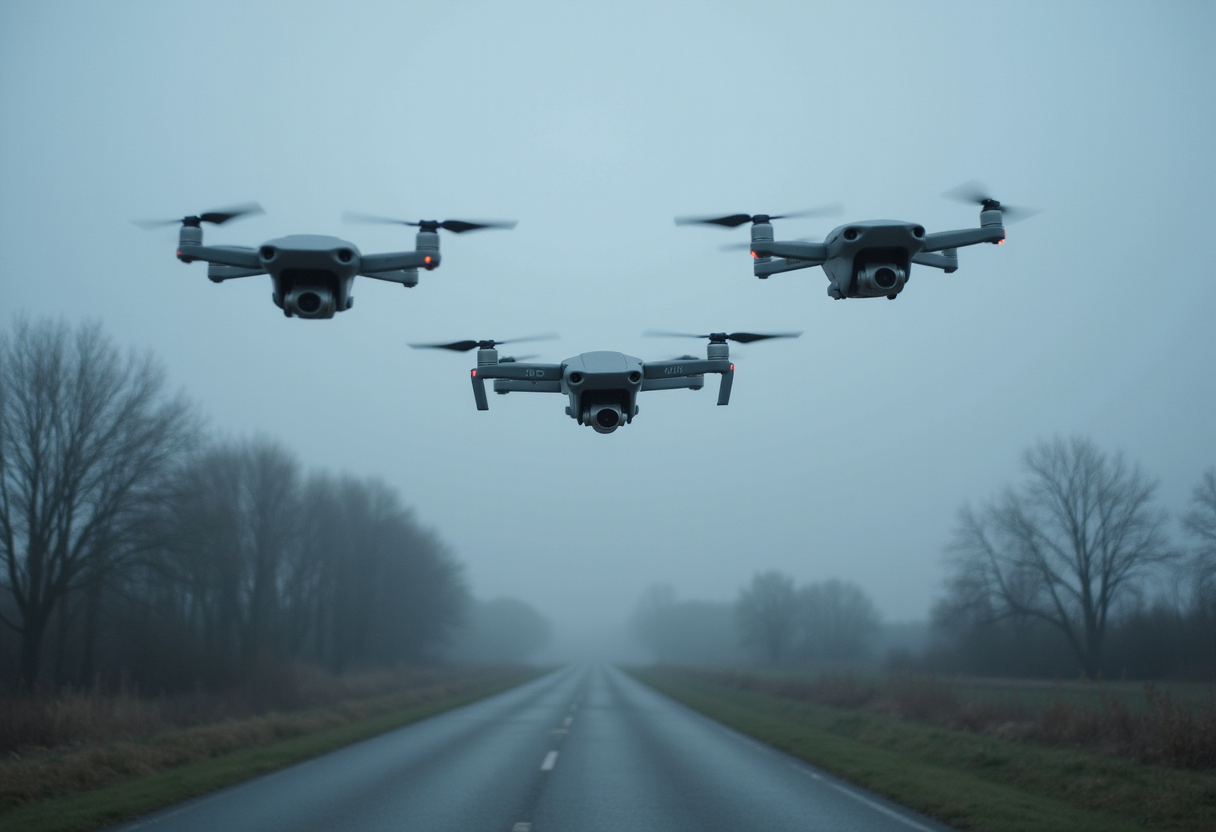
Romanian authorities detected three drones operating near the country's border with Ukraine, according to a report from Bulgarian news agency BGNES. Romania's airspace was not violated, the report stated.
The detection places a NATO and EU member state once again in the position of tracking unmanned aircraft in the vicinity of its eastern frontier, an area adjacent to active combat operations. BGNES reported the incident without specifying the exact time of detection, the type of drones involved, or their point of origin.
Romanian defence and transport authorities have not, according to the report, indicated any disruption to civil aviation as a result of the detections. The distinction matters for carriers: a detection near — but not inside — national airspace does not trigger the same regulatory consequences as an incursion.
What does this change for air traffic?
For airlines and their regulators, the operative fact in the BGNES report is the statement that Romanian airspace remained unviolated. No temporary flight restriction, no airport closure and no rerouting follows from an event of this category, based on the information available.
The incident nonetheless renews attention on the integrity of airspace boundaries in the Black Sea region. Romania hosts several airports serving civilian traffic, including Bucharest Otopeni and Constanta, and lies beneath flight paths that connect southeastern Europe with the wider European network.
Drone detections near conflict borders carry a different risk profile for civil aviation than conventional military activity. Unmanned aircraft of the class typically involved in the Ukraine conflict operate at low altitudes and may not appear on conventional secondary surveillance radar, which relies on transponders. Primary radar coverage and visual observation therefore carry the detection burden.
How does the region classify such events?
Under international civil aviation practice, an airspace violation occurs only when an aircraft enters sovereign airspace without authorization. The BGNES report explicitly framed the Romanian event as falling short of that threshold. That framing is consistent with how regional authorities have previously distinguished between drones detected in border zones and confirmed incursions.
For Romania, a NATO member since 2004 and an EU member since 2007, the episode adds to a pattern of drone activity reported in the wider region since the start of the full-scale war in Ukraine. Neighboring Bulgaria has reported similar detections, and other NATO states bordering Ukraine — Poland, Slovakia, Hungary — have dealt with comparable episodes.
What remains unknown
The BGNES report leaves several operational questions open, and readers should treat the following as unresolved rather than assumed:
- The exact location of the detections relative to the border line
- The altitude at which the drones were tracked
- The party operating the unmanned aircraft, if determined
- Any response measures taken by Romanian air defence
None of these details appears in the source material, and none should be inferred.
The wider picture
Regional carriers have adapted routings across southeastern Europe since 2022, with flight paths adjusted away from Ukrainian and, at times, southwestern Russian airspace. Romania sits on the western shore of the Black Sea, adjacent to that adjusted network.
An event in which airspace remains formally unviolated does not alter those routings. It does, however, keep the question of airspace assurance on the agenda for the region's civil aviation authorities, particularly as drone activity continues to be reported near the conflict zone's periphery.
Further detections in Romanian or neighboring airspace would test whether the current distinction between border-zone presence and violation continues to hold as the basis for civil-aviation decision-making in the region.
via Google News: Air traffic control and airspace (Source)
More from Priya Raman
Show full bio
Market editor covering money, funding and market shifts around Commercial aviation industry coverage at Flightdeck Report.
463 articles
Same bay
- FDR521Russian Drone Crossed Romanian Airspace Before Downing · October 14, 2026
- FDR821Romanian Defence Ministry Confirms Drone Incursion Near Sulina · October 14, 2026
- FDR143Drone Fragments Found in Southern Romania Amid Border Alerts · September 30, 2026
- FDR730Moldova records third airspace violation by drone in single day · October 1, 2026
- FDR203Five Russian Missiles and Drones Exploded Over Moldova's Airspace, Sandu Says · October 3, 2026