MRO & AftermarketClearance sheet
Ryanair Puts €500 Million Into Seville Engine MRO
Ryanair will invest €500 million in a 28,000 sq m engine MRO in Seville — Andalusia's first — overhauling CFM56-7B and LEAP-1B engines from 2029, with 600+ jobs and a second site to follow in 2027.
Read-back
- Ryanair is investing €500 million in a 28,000 sq m engine MRO in Seville, Andalusia's first engine overhaul facility
- The site will service CFM56-7B and LEAP-1B engines, creating over 600 skilled jobs
- Construction starts in early 2027; operations begin in 2029
- Two new MROs, including a second site to be announced in 2027, will perform c.400 overhauls annually and support up to 2,000 engines by 2034
- The program underpins growth to 800 aircraft and 300 million passengers per year by FY34
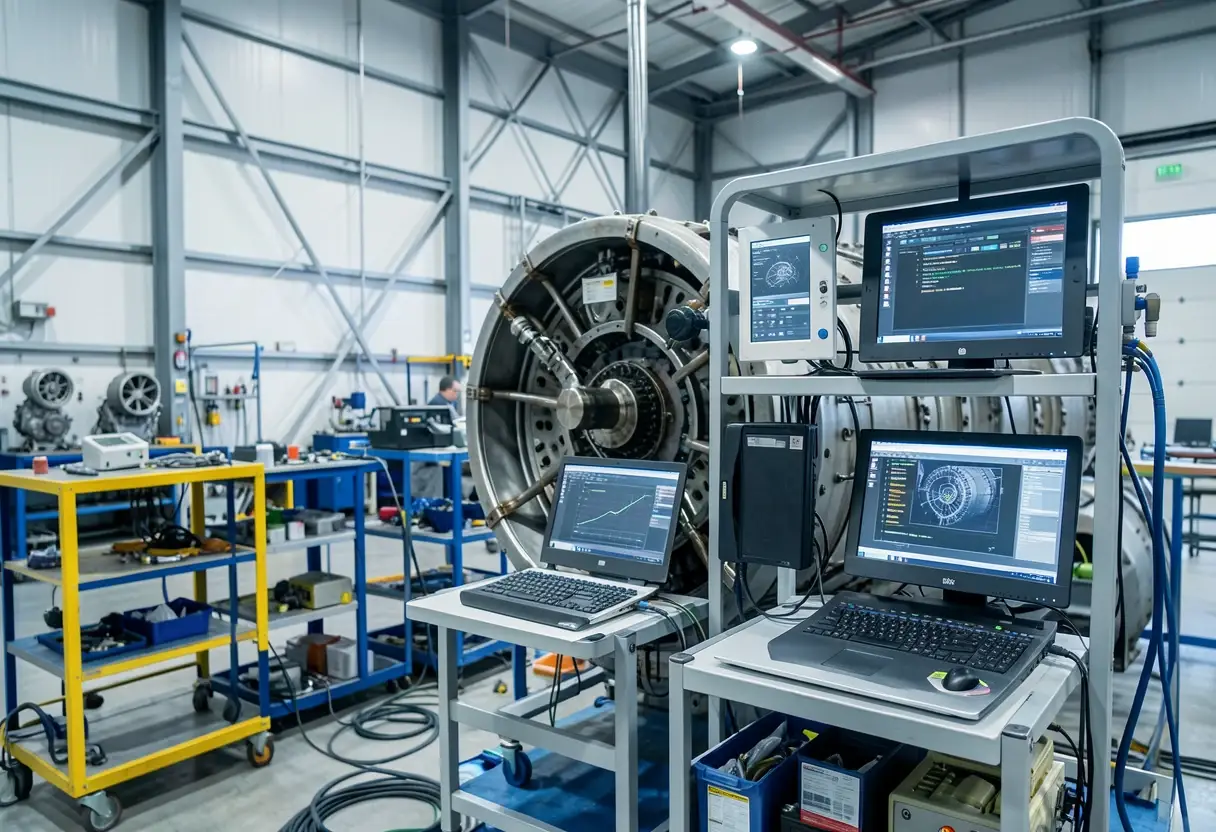
Ryanair will spend €500 million on an engine MRO in Seville, the first engine overhaul facility ever built in Andalusia, with operations due to start in 2029.
The Irish carrier announced the project as part of a wider in-sourcing push for its powerplant fleet. The Seville site will service both the CFM56-7B, which powers Ryanair's Boeing 737NG fleet, and the LEAP-1B fitted to the 737 MAX family now arriving in volume. Construction begins in early 2027.
The facility covers 28,000 square meters. Ryanair expects it to create more than 600 skilled aviation jobs in the region.
What does this change for engine costs?
For an operator of Ryanair's scale, engine overhaul is one of the largest maintenance cost lines outside heavy airframe checks. CFM56 shop visits routinely run into millions of dollars per engine, and LEAP-1B maintenance has tightened since the type entered wide service, with shop capacity constrained industry-wide.
Bringing overhaul work in-house at Seville gives Ryanair direct control of turnaround times and slot availability. That matters for an airline running one of Europe's highest daily aircraft utilization rates, where an engine on ground is an aircraft on ground.
The scale targets are large. Ryanair says the Seville site, together with a second MRO location it plans to announce in 2027, will:
- Carry out roughly 400 full engine overhauls annually
- Support an engine pool of up to 2,000 engines by 2034
- Underpin fleet growth to 800 aircraft and 300 million passengers per year by FY34
Those figures align with Ryanair's stated fleet plan, but they remain targets rather than certified capacity. A facility announced in 2025, with construction starting in 2027 and operations in 2029, sits four years from first overhaul. Hiring and training the workforce to staff 600 technical positions is the critical path, not the building.
Training pipeline or hiring problem?
Ryanair acknowledged that constraint implicitly. Alongside the Seville MRO, it will open an Engineering Academy in the region to train aircraft technicians and engineers. The academy is meant to secure long-term local supply of qualified staff for technical roles.
The move reflects a real shortage. Licensed aircraft engineers and engine specialists are scarce across Europe, and airlines competing for the same talent face wage pressure. Ryanair's answer is to grow its own pipeline rather than bid for it.
Whether the academy can produce licensed engineers at the pace the 2029 opening requires is untested. Ryanair has not disclosed enrollment numbers, curriculum details, or certification timelines for the school.
Capacity, network and the 2034 plan
The engine strategy tracks Ryanair's broader growth plan: 800 aircraft and 300 million annual passengers by FY34. An engine pool of up to 2,000 units implies spare coverage and shop-visit throughput sized for that fleet, roughly 400 overhauls a year across the two sites.
For comparison, that annual volume would place Ryanair's in-house operation among the more significant narrowbody engine shops in Europe. Independent MRO providers and CFM's own network currently compete for exactly that work.
Andalusia gains a sector it has never had. No engine MRO has operated in the region before, and the 600-plus jobs are pitched as highly skilled aviation roles rather than line-station staffing.
What remains unsaid
The announcement specifies no phased investment schedule, no partner or joint-venture structure, and no indication of whether Seville will handle work for third parties or serve Ryanair exclusively. Test-cell capacity, a bottleneck for any engine shop, goes unmentioned. So does the identity of the second MRO location promised for 2027.
The €500 million figure covers the Seville site, but Ryanair has not broken out split costs between the hangar, test infrastructure, tooling and the academy.
Construction in early 2027 and operations in 2029 is an aggressive but conventional timeline for a greenfield engine shop. The 2034 engine-pool and overhaul targets depend on the second site arriving on schedule — a dependency the airline states plainly but does not yet substantiate with a location.
If both facilities deliver, Ryanair will own a vertically integrated engine maintenance operation sized to its 800-aircraft fleet, insulating it from third-party shop pricing and slot scarcity through the decade's end.
via ryanair.com (Original)
More from James Calloway
Show full bio
Staff writer covering people, launches and day-to-day practice in Commercial aviation industry coverage at Flightdeck Report.
734 articles
Same bay
- Spain and Poland Compete for Ryanair Aircraft Maintenance Hub · September 28, 2026
- Ryanair Adds 22 New Routes to UK Winter 2026 Schedule · September 27, 2026
- IAG Engine Tech targets early 2027 for LEAP engine services · October 30, 2026
- Ryanair adds six new routes from major UK base · September 27, 2026
- Ryanair Opens First Summer 2027 Routes From Four Spanish Bases · October 9, 2026