Clearance CLR-5855 · MRO734
MROSAF
MRO & AftermarketClearance sheet
Safran Expands Aircraft Maintenance Capacity in Singapore
Safran is adding aircraft maintenance capacity in Singapore, deepening its Asia-Pacific footprint as regional fleet growth strains repair capacity and shop-visit backlogs persist.
Read-back
- Safran announced an expansion of its aircraft maintenance capacity in Singapore
- The company did not disclose the scale, product lines or timeline of the added capacity
- The move deepens Safran's aftermarket presence in the Asia-Pacific region's largest MRO hub
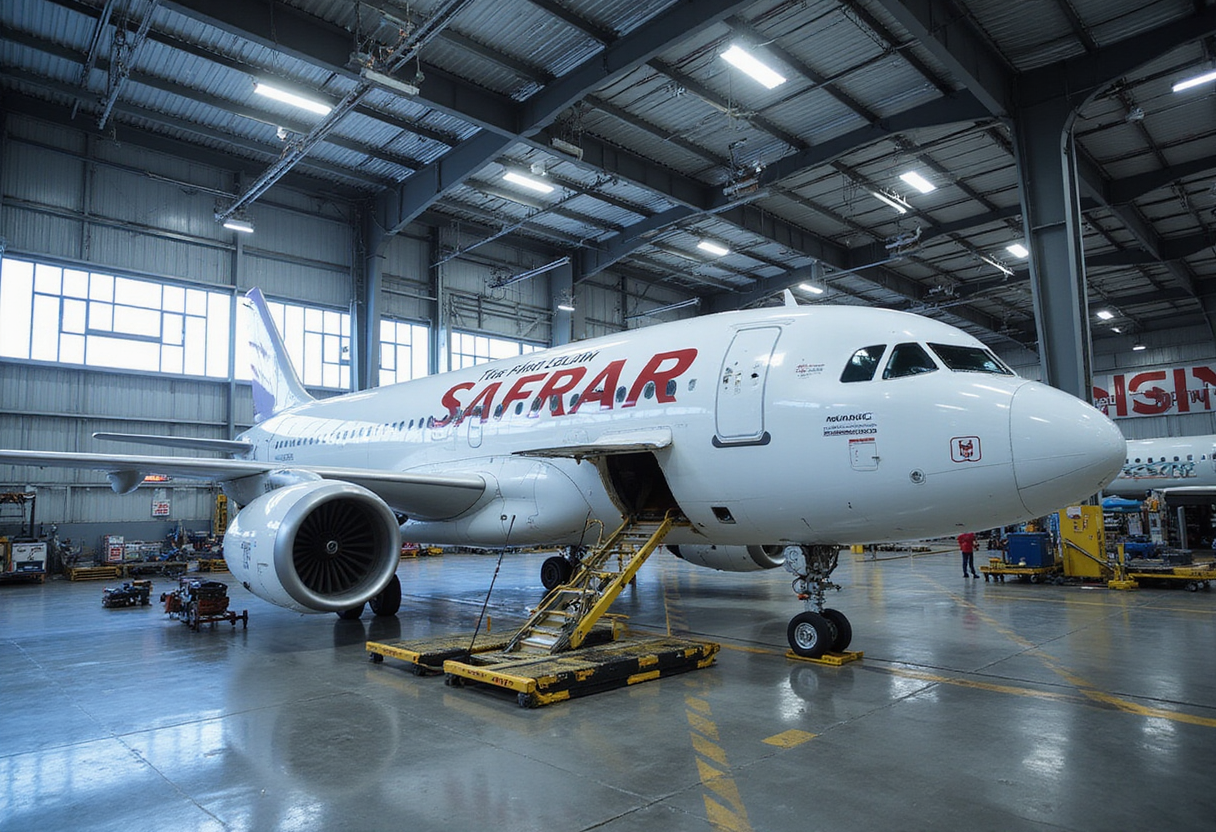
Safran has announced an increase in its aircraft maintenance capacity in Singapore, extending a multi-year build-out of the French aerospace group's presence at one of Asia's most contested MRO hubs.
The company disclosed the capacity expansion under the headline "Safran boosts its aircraft maintenance capacity in Singapore." The announcement confirms that the group is adding volume to its existing Singapore maintenance operations rather than opening a new site, positioning the city-state as a larger node in its global support network for airline customers across the Asia-Pacific region.
Singapore has become the region's most concentrated cluster of third-party and OEM-operated airframe, engine and component repair capacity. For an equipment manufacturer and engine maker of Safran's scale, incremental shop capacity in the city-state directly affects turnaround times for operators flying CFM International powerplants and other Safran-produced systems on narrowbody and regional fleets based across Southeast Asia, China, Oceania and India. The announcement itself did not specify which product lines the additional capacity will serve, the square footage or bay count involved, or the timeline for the ramp-up.
The timing aligns with a structural reality in the aftermarket: maintenance capacity, not aircraft production, is the binding constraint on much of the global fleet's availability. Airlines across Asia-Pacific have spent the past two recovery years wrestling with shop-visit backlogs and engine-induced aircraft-on-ground events, particularly on current-generation narrowbody engines that require more frequent and longer shop visits than the mature fleets they replaced. OEMs with repair capacity near their customers' operating bases hold a commercial advantage, because proximity shortens transport time on rotables and engines and gives operators a faster path back to service.
Safran's Singapore operations sit within an ecosystem that includes independent MRO groups, airline-owned repair shops and competing OEM support organizations, all competing for the same pool of skilled technicians and the same flow of shop visits. Capacity additions in that environment carry consequences beyond the company's own throughput: they absorb part of regional demand that would otherwise queue at European or North American facilities, and they signal confidence in the durability of Asia-Pacific traffic growth and fleet expansion over the coming decade.
The financial logic for an OEM maintenance network is straightforward. Safran's aftermarket revenue depends on the number of engines and equipment in service and on the shop visits they generate over decades of operation. Singapore, sitting at the center of the world's fastest-growing long-haul and regional markets, functions as both a demand catchment and a logistics platform. Expanding there converts projected fleet growth into contracted, geographically anchored service volume.
What remains to be quantified is scale. Safran has not stated in the announcement how much additional capacity the expansion represents — whether measured in shop visits per year, additional repair bays, headcount or invested capital — nor when the new capacity will reach full operational capability. Those figures will determine whether the move is an incremental debottlenecking of existing facilities or a step change in the group's regional service posture. Analysts tracking the aftermarket will also be watching for indications of which customer segments the added capacity targets: established flag carriers, low-cost operators, cargo fleets or lessor-owned assets requiring transition work.
The expansion also carries workforce implications. Singapore's MRO sector competes aggressively for licensed engineers and technicians, and any meaningful capacity increase implies either training pipelines, transfers or new hiring at a time when technical labor scarcity is a global constraint on repair output.
For airlines in the region, the practical test of the announcement will be measurable in days saved — shorter engine and component turnaround times, fewer aircraft parked awaiting parts, and more predictable maintenance scheduling as the added capacity comes online.
Safran's move signals that the largest OEM suppliers continue to bet on Asia-Pacific as the growth engine of the civil aftermarket, and further capacity announcements from competitors in Singapore and neighboring hubs are likely as fleet growth translates into sustained demand for repair services.
via Google News: Aviation MRO (Source)
More from Nathan Brooks
Show full bio
Correspondent covering media and advertising at Flightdeck Report.
149 articles
Same bay
- FDR424Bombardier Commits S$85 Million to Singapore Maintenance Centre Expansion · September 28, 2026
- FDR267Chongqing Airport Completes Construction of New Aircraft Maintenance Center · September 28, 2026
- FDR872Hong Kong Charts Sustainable Aviation Fuel Course in Five-Year Plan · September 27, 2026
- FDR727CMA CGM Group Enters Aircraft Maintenance via Crystal Aero Solutions · September 28, 2026
- FDR601UMeWorld Moves Malaysian SAF Project Into FEED Contractor Selection · September 28, 2026