Clearance CLR-1125 · SAF216
SAFSEN
Safety & OperationsClearance sheet
Senate Panel Confronts Surge in Airport Close Calls
Senate lawmakers convened to examine aviation safety, focusing on a series of close calls at US airports that has raised questions about federal oversight.
Read-back
- Senate lawmakers held a hearing focused on aviation safety and close calls at US airports
- The discussion took a system-level view, covering near-collision events across multiple facilities
- The hearing establishes a congressional record that may drive regulatory or budgetary follow-up
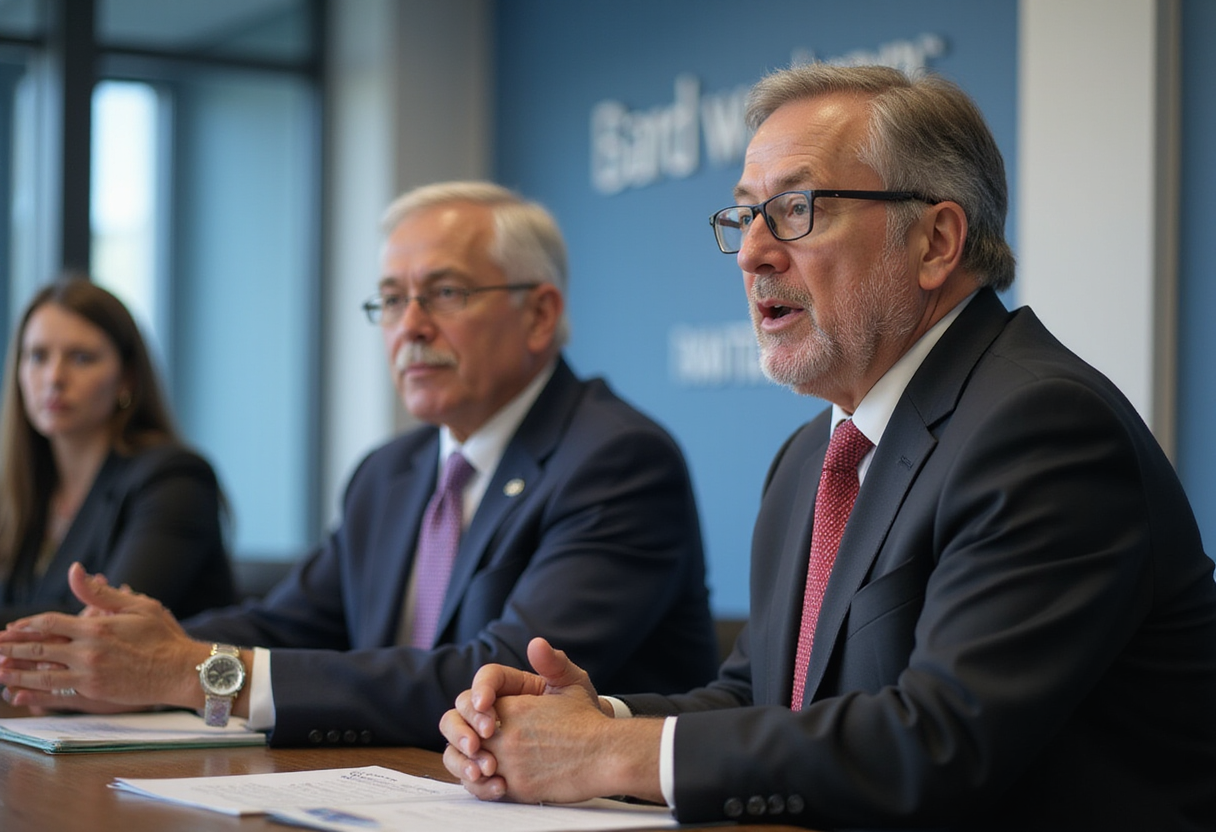
US Senate lawmakers have convened to examine aviation safety, with the discussion centered on a string of close calls at American airports that has put renewed pressure on the federal oversight system.
The Senate hearing addressed what has become one of the most persistent operational concerns in US aviation: serious near-collisions on runways and in airspace surrounding major airports. Close calls — events in which aircraft come closer to one another than regulated separation minima allow — have drawn congressional scrutiny after a series of high-profile incidents surfaced through federal investigation records and media reporting.
For Senate lawmakers, the session served two purposes. First, it established a public record of congressional concern over the state of surface safety at US airports. Second, it gave legislators a forum to question whether the current regulatory architecture — centered on the Federal Aviation Administration — is resourced and structured to keep pace with traffic levels that have rebounded since the pandemic-era collapse in flights.
The political stakes are straightforward. Aviation safety in the United States has long rested on the absence of a fatal commercial airline accident, a record that close calls threaten more through cumulative erosion of margins than through any single event. Each serious incident or near miss, even without casualties, functions as a leading indicator — a data point that safety boards and regulators treat as a proxy for latent system risk.
That framing matters for how the industry reads the hearing. Runway incursions and airborne proximity events do not impose direct costs the way a grounding or a certification delay does. But they drive investigative workload, training mandates and, in some cases, procedural changes at airports and air traffic control facilities. For airlines, the network consequence is measured in delay minutes and schedule buffer, not cancellations. For the regulator, the consequence is congressional attention of exactly the kind on display in the Senate.
Lawmakers did not confine the discussion to a single airport or operator. The hearing took a system-level view, reflecting the fact that close calls have occurred across multiple facilities rather than clustering at one location — a pattern that points toward systemic contributors such as airspace design, controller staffing, surface procedures and equipment rather than isolated human error.
The Senate's engagement follows the standard congressional playbook for aviation safety: convene a hearing, air the incidents, and press the responsible agencies on corrective action. Whether the session produces legislative or budgetary follow-through — additional funding for air traffic infrastructure, staffing reforms, or mandates for surface-detection technology — will determine whether the discussion marks a turning point or a routine checkpoint.
For now, the hearing itself is the concrete outcome: Senate lawmakers have put airport close calls on the legislative record, and the aviation safety community will be watching for the regulatory and budgetary responses that follow.
via Google News: Aviation safety (Source)
More from James Calloway
Show full bio
Staff writer covering industry trends and analytics at Flightdeck Report.
156 articles
Same bay
- FDR190US House Members Unveil Comprehensive Aviation Safety Bill · September 30, 2026
- FDR316Post-Wichita–DC Crash Safety Reforms Stall in Washington · September 30, 2026
- FDR385NTSB Calls on Congress to Advance Aviation Safety Reforms · September 30, 2026
- FDR571House Rejects Senate-Passed Aviation Safety Bill · September 27, 2026
- FDR282US House to Take Up Aviation Safety Legislation Next Week · September 27, 2026