Airlines & NetworksClearance sheet
Singapore Airlines cuts A350-900 ULR to 132 seats on US routes
Singapore Airlines will cut A350-900 ULR capacity from 161 to 132 seats, introduce a first-class row and 70 business suites on a fleet built for the longest US routes.
Read-back
- The revised A350-900 ULR configuration has 132 seats, down from 161.
- It adds the type's first first-class row and 70 business-class suites; the premium-economy count remains undisclosed.
- Singapore ordered seven A350-900 ULRs and more than 50 standard A350-900s.
- The A340-500 served Los Angeles and Newark until October and November 2013.
- Newark returned in October 2018, Los Angeles followed in November, and JFK joined in late 2020.
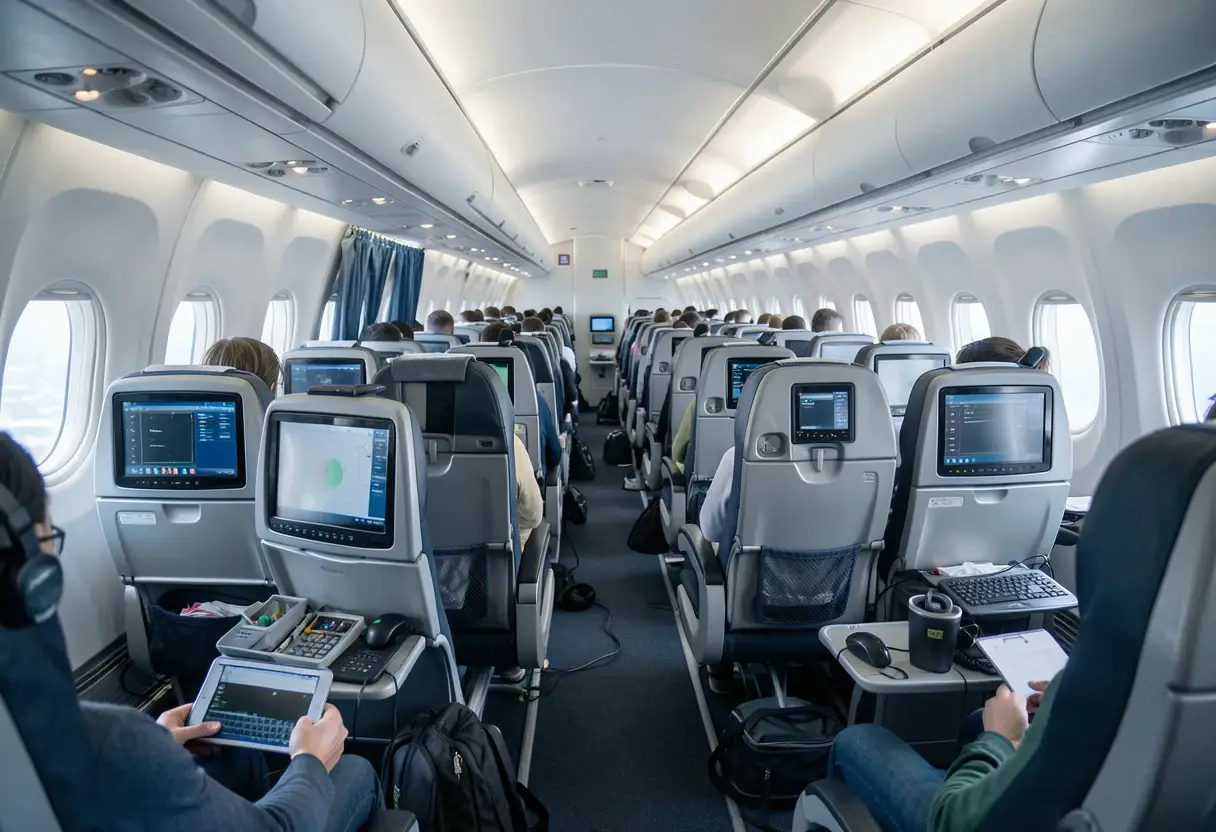
Singapore Airlines will reduce the Airbus A350-900 ULR (ultra long-haul) cabin from 161 seats to 132. The revised layout adds the type's first first-class row and 70 business-class suites, removing 29 seats as the airline pursues a more premium mix.
Only the total and business-class count are firm. Singapore has not released the premium-economy count or final layout, so the revenue case remains untested. The change must cover lower seat volume, fuel costs and the aircraft's weight limits.
Why did Singapore first choose the A340-500?
Singapore put the A340-500 into service in 2004, when nonstop US flights required avoiding third-country stops. It introduced five aircraft to Los Angeles and Newark. The Airbus type was 25 feet shorter than the A340-600, but added a fuel tank, four large engines and a wing sized to carry them.
The original cabin had 64 angled flat business-class beds in a 2-2-2 arrangement (two, two and one across each row) and 117 “executive economy” seats, with no regular coach. Executive economy was an early premium-economy format. Derated engines and takeoff weight constrained full-load performance.
After four years, Singapore rebuilt it in 2008 with only 100 fully flat business-class beds in 1-2-1 (one, two and one around an aisle). Fewer seats helped the aircraft complete the journey, but left too little capacity to earn and narrowed its route options. The original 181-seat layout could support Jakarta; the all-business version stayed on Los Angeles and Newark.
Why did the A340-500 leave the US network?
Near retirement, Newark service had fallen from daily to six times weekly and Los Angeles to five, suggesting demand existed but not profitably. Los Angeles ended in October 2013, with Newark following in November. Three aircraft became freighters, known as “beer cans,” while two first served as VIP transports.
Singapore then waited for a different long-range aircraft. It ordered more than 50 standard A350-900s and seven A350-900 ULRs. The standard jets could reach the US West Coast; the ULR made the operation easier and opened the East Coast.
How did the ULR rebuild the network?
Singapore's return unfolded in stages:
- October 2018: Newark returned with the A350-900 ULR.
- November 2018: Los Angeles followed.
- End-2020: New York JFK joined Newark with its own ULR flight.
- Since then: ULRs have rotated among Newark, Los Angeles, San Francisco and JFK. Los Angeles has recently used standard -900s more regularly, while San Francisco has seen a mix. Some ULRs also flew San Francisco before JFK entered the schedule.
The A350-900 ULR is about four feet shorter than the A340-500, yet uses an extra-wide body. That does not increase business-class density: both cabins use 1-2-1. Current seating totals 161: 67 business-class seats and 94 premium-economy seats in 2-4-2 (two seats, four seats and two seats around two aisles).
The A340 used 2-3-2 premium-economy rows (two, three and two around one aisle). Denser business seating helped its original total reach 181, compared with 161 on the current ULR.
What does the 132-seat configuration change?
Singapore Airlines states that its newly unveiled business suites offer “a 50 inch seat pitch,” against 60 inches on the previous seats. Seat pitch measures row spacing, so the smaller figure reflects geometry rather than comfort and should let the airline fit more suites, potentially across the first two cabin zones.
The new 132-seat total includes 70 business-class seats, a first-class row and fewer premium-economy seats. No new premium-economy seat is planned, so the reduction comes from removing rows rather than changing seat density.
Without an exact count or accurate aircraft plan, the final arrangement could require more galley space (food-preparation and storage areas), a larger buffer behind first class and business seating extending into the rear cabin. That remains an estimate rather than an airline-confirmed plan.
First class also carries operating costs beyond the seat itself. Singapore must fund staffing, catering and the ground experience, then charge appropriately for the product.
Its only first-class service touching the US is currently one row on Boeing 777-300ER flights from Los Angeles to Tokyo and JFK to Frankfurt. The airline does not offer first class from Newark or San Francisco, and these new tickets are unlikely to be cheap.
Can 132 seats work on the longest routes?
Two possible motives sit behind the reduction. The ULR may be too heavy for a full passenger load and possibly cargo at the required takeoff weight, so fewer seats ease the constraint. Alternatively, Singapore may be chasing premium demand and expecting more revenue from each remaining traveler.
Both options leave the airline exposed to fuel costs; the profit case may not work until fuel prices fall dramatically. The exact premium-economy count and actual fares remain unknown.
Qantas provides a useful scale comparison: for Project Sunrise, it expects its forthcoming A350-1000 ULR to fly farther and carry 238 seats, more than 100 above Singapore's total, with only about 23 feet more interior space. That remains a future expectation, not an operating result.
The decisive test will be whether Singapore fills 70 business seats and its new first-class row at fares that offset 29 removed seats. If it cannot, the same range advantage will continue to come at the expense of profitable capacity.
via open.spotify.com (Original)
More from Sophie Lindqvist
Show full bio
Senior reporter covering people, launches and day-to-day practice in Commercial aviation industry coverage at Flightdeck Report.
726 articles
Same bay
- Singapore Airlines Commits S$2 Billion to Next-Generation Long-Haul Cabins · November 6, 2026
- Singapore Airlines commits $1.6 billion to cabins led by aviation's largest double bed · November 10, 2026
- Singapore Airlines to Review Recaro Business Seat After Backlash · November 14, 2026
- AirAsia Weighs Largest-Ever A220 Order for Fleet Renewal · September 28, 2026
- Singapore Airlines Puts Doors on Business Class and a Queen Bed Up Front · November 8, 2026