Clearance CLR-1075 · AIR386
AIRSIX
Airspace & RegulationClearance sheet
Sixteen US jurisdictions sue FAA over drone delivery review
Sixteen US jurisdictions are suing the FAA over its environmental review of nationwide commercial drone delivery, alleging NEPA violations in the Part 135 programmatic assessment.
Read-back
- 15 US states plus Harris County, Texas filed the lawsuit against the FAA on 28 September 2026, led by California Attorney General Rob Bonta.
- The challenge targets the FAA's Final Programmatic Environmental Assessment and Record of Decision for Part 135 small-UAS package delivery, the documents used to satisfy NEPA.
- Plaintiffs include attorneys general of California, New York, Arizona, Colorado, Delaware, Illinois, Maine, Maryland, Massachusetts, Michigan, New Mexico, Oregon, Rhode Island, Washington, and Wisconsin.
- Commercial drone delivery is already operating in at least four states: Florida, Utah, Arkansas, and California.
- The petition asks the court to vacate the Record of Decision and order either a revised PEA with localized analysis or a full Environmental Impact Statement under NEPA.
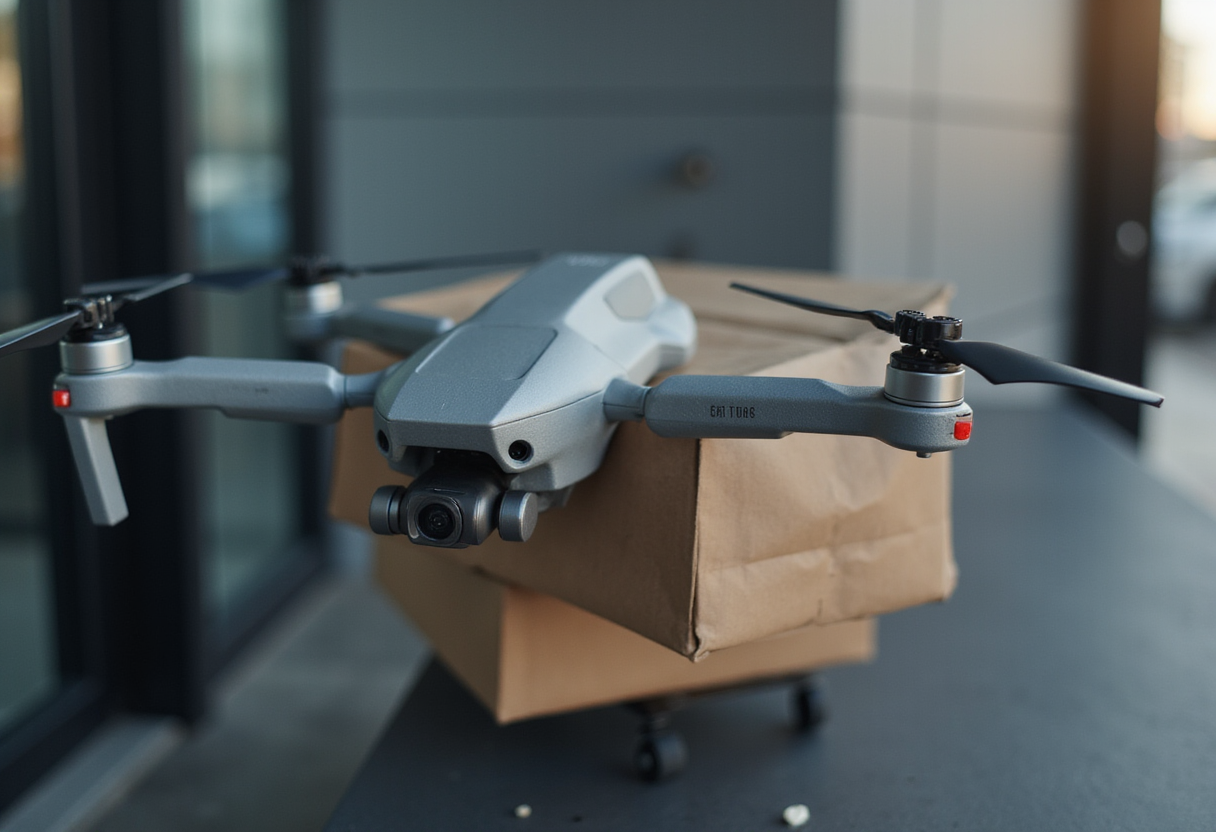
Fifteen US states and Harris County, Texas have filed a lawsuit against the Federal Aviation Administration, contending the agency brushed past the environmental consequences of authorizing nationwide commercial drone delivery.
Filed on 28 September, the petition argues the FAA failed to satisfy the National Environmental Policy Act (NEPA) when it cleared expanded Part 135 small UAS package operations through a single programmatic review document. NEPA requires federal agencies to assess environmental effects before approving major federal actions.
The attorneys general of California, New York, Arizona, Colorado, Delaware, Illinois, Maine, Maryland, Massachusetts, Michigan, New Mexico, Oregon, Rhode Island, Washington, and Wisconsin signed the action along with Harris County, Texas, a jurisdiction that covers most of metropolitan Houston. The California Office of the Attorney General is leading the case.
What do the states allege?
At issue is the FAA's Final Programmatic Environmental Assessment (PEA) for Part 135 small drone package delivery, together with its associated Finding of No Significant Impact (FONSI) and Record of Decision (ROD)—the documents the agency used to satisfy NEPA before authorizing expanded beyond-visual-line-of-sight (BVLOS) operations.
California Attorney General Rob Bonta said the PEA sketches a national blueprint for delivery flights at "future points in time" without supplying meaningful detail on the communities and environments those flights will affect.
"It contemplates a dramatic expansion of package delivery by drones but does not adequately address the potential safety risks or other environmental impacts," Bonta said on 28 September.
What does the PEA actually authorize?
The Final PEA covers commercial package delivery under FAA Part 135, the air-carrier certificate framework that also governs on-demand charter operators. The Finding of No Significant Impact allowed the FAA to clear expanded small-UAS operations without requiring site-specific environmental review for each route or operator.
The petitioners argue the programmatic structure is the legal defect. A single national document, they say, cannot capture the noise, emissions, overflight, and safety effects that drone flights will impose on neighborhoods, schools, wildlife habitat, or other locally sensitive resources.
Drone delivery operations are already running in at least four states—Florida, Utah, Arkansas, and California—the coalition notes, and the lawsuit characterizes those flights as a preview of the scale the FAA's review has effectively endorsed.
What relief are the states seeking?
The petition asks the court to vacate the Record of Decision and order the FAA to prepare either a revised PEA with localized analysis or a full Environmental Impact Statement (EIS) under NEPA.
A vacated decision would not necessarily ground existing operators immediately, but it would cast a legal cloud over future Part 135 approvals that rely on the contested review, and could push operators seeking new routes into a slower, project-by-project environmental review process.
What happens next?
The FAA will file its first response in the coming weeks, after which the court will set a briefing schedule. The case will weigh two competing priorities: the federal mandate to integrate commercial drones into the national airspace and NEPA's requirement that agencies take a hard look at environmental effects before authorizing large-scale operations.
The ruling will determine whether the FAA retains a single national PEA as the foundation for new Part 135 drone operations or must shift toward route-by-route environmental review—a change that would slow the rollout of commercial drone networks while raising the regulatory bar for each new market.
via unmannedairspace.info (Original)
More from Priya Raman
Same bay
- FDR441Fifteen States Sue FAA Over Drone Delivery Environmental Review · September 30, 2026
- FDR450Trump Drone Plan Needs FAA Review, Lawmaker Says · September 27, 2026
- FDR351Court rejects challenge to Oakland airport expansion plan · October 10, 2026
- FDR659House Panel Clears 10 Aviation Bills Spanning Drones to Supersonic · September 30, 2026
- FDR795Illinois lawmaker: drone launch site at Trump Arch needs safety study · September 30, 2026