Clearance CLR-6957 · AIR544
AIRSMA
Air CargoClearance sheet
SmartKargo releases four AI apps for airline cargo operations
SmartKargo's four AI apps use APIs to improve cargo pricing, disruption response, equipment tracking and data translation without replacing core airline systems.
Read-back
- SmartKargo released four AI applications in its AI Apps portfolio on October 26.
- The apps can go live in weeks rather than years, with pricing based on usage, transactions or assets.
- IATA reported $151 billion in air-cargo revenue for 2025.
- McKinsey says more than half of a flight's capacity is often booked during the final week.
- SmartKargo named VietJet Cargo as the only early adopter identified in the announcement.
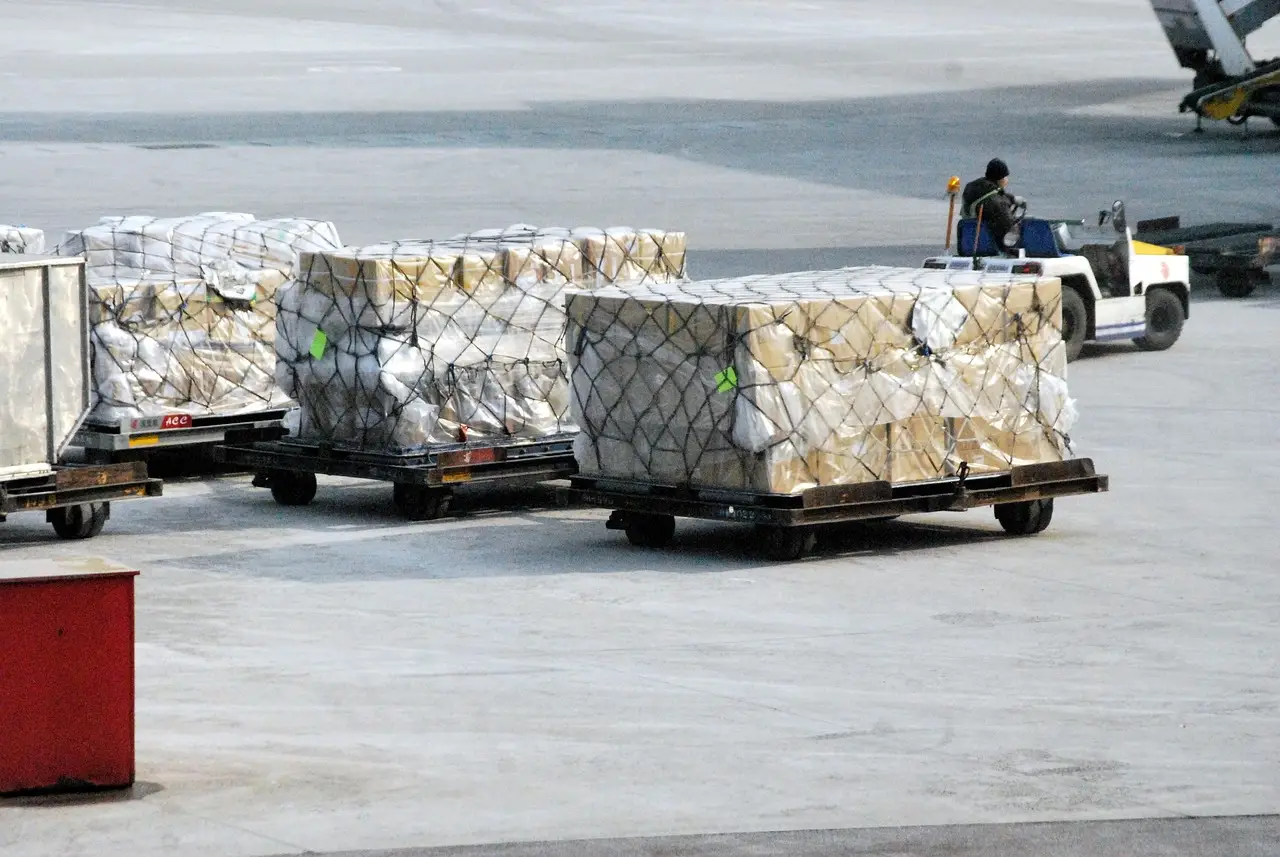
SmartKargo released the first four applications in its AI Apps portfolio on October 26, targeting revenue, operations, assets and data across airline cargo networks.
The Cambridge, Massachusetts, cargo technology company says each product operates as an intelligence layer over existing cargo-management systems, rather than forcing a replacement. SmartKargo says this avoids the multi-year, high-risk programs typical of core-system replacements.
Through application programming interfaces (APIs, software connections between systems), the applications run over a carrier’s commercial or internally developed cargo-management platform. Airlines can go live in weeks rather than years, begin with one app and add the rest later.
Each application stands alone and carries usage-, transaction- or asset-based pricing, not seat-based fees. That structure lowers the entry barrier for airlines that have seen large cargo-system replacements run over budget and late, although no comparative deployment figures were provided.
IATA figures put 2025 air-cargo revenue at $151 billion, yet many pricing and operating decisions still rely on static rules, manual overrides and delayed reports. SmartKargo Chief Revenue Officer Olivier Houri said: "At SmartKargo, we start with something far more useful than hype: a business question."
AIRCAM: pricing against the booking curve
McKinsey & Company says more than half of a flight’s capacity is often booked during the final week, when yield volatility (variation in revenue per unit of capacity) is widest. Hand-adjusted tariffs struggle in that window.
AIRCAM, the revenue and capacity-management application, reads demand, capacity and market signals for each shipment before recommending a rate inside the booking and quoting flow. It forecasts booked and unbooked demand, flags underpriced capacity and allocates belly capacity (cargo space inside passenger aircraft) and freighter capacity (space in dedicated freighters) to the highest-value mix.
Each recommendation displays its reasoning, addressing revenue managers’ need to audit automated advice. Win-loss outcomes return to the model for continuous improvement, rather than waiting for the next quarterly review. VietJet Cargo is the named early adopter.
AINOC: earlier warning for disruption
AINOC, an AI-powered cargo control tower (centralized operations monitoring system), moves exception handling earlier. It combines cargo milestones, flight and airport operations, weather and airspace data, and partner signals.
Its models predict the location and duration of delays, flag service-level agreement (SLA) risk, trace root causes and rank every exception by business impact rather than operational noise. A generative artificial intelligence layer, software that converts analysis into written briefs, produces plain-language updates for operations staff and executives.
SmartKargo says a typical pilot covers one hub and two trade lanes before network expansion. The announcement gives no pilot duration, named airport or measured delay reduction.
AIULD and AICTX: asset visibility and data exchange
AIULD manages unit load devices (ULDs, aircraft cargo containers) and ground equipment, where damage, loss and idle time reduce margin. It combines location and condition data with utilization and loss-prevention models across owned, leased and pooled assets.
Tracking uses SmartKargo Eye, which the company describes as flight-certified and able to operate without fixed readers at each station. The announcement does not identify the certifying authority, leaving that status a manufacturer claim rather than an independently documented approval.
AICTX addresses interoperability between Cargo-IMP, Cargo-XML, IATA ONE Record and customs filings. It translates in both directions, checks missing or ambiguous data before downstream problems, and lets partners connect without changing their systems.
These older and newer messaging formats still run alongside one another, creating a data-quality burden that can undermine every model. AICTX therefore supplies the clean data that SmartKargo says AIRCAM, AINOC and AIULD require.
What does this change for airline cargo teams?
The practical change is a staged procurement route: airlines can test one application above their current cargo-management platform, rather than fund a network-wide replacement. It also concentrates investment on revenue, operations and risk, the three pressure points SmartKargo identifies.
The larger claim is that AI can become a shared intelligence layer across the operation. Models would learn from booking outcomes, identify disruption before it cascades and clean data for subsequent models, giving early users what SmartKargo calls a compounding advantage.
What the launch does not establish is equally important. No quantified savings, broad carrier list, rollout schedule or carrier performance results accompany the four releases, while only VietJet Cargo is identified by name. The commercial case therefore rests on whether pilot results improve revenue, reduce cost or reduce risk, rather than on the technology alone.
The next test will be whether airlines disclose pilot results, operating scope and realized gains, converting SmartKargo’s modular proposition into evidence of lower cost, stronger yield and fewer disruptions.
via freightwaves.com (Source)
More from Priya Raman
Show full bio
Market editor covering money, funding and market shifts around Commercial aviation industry coverage at Flightdeck Report.
662 articles
Same bay
- FDR637CargoTech extends air cargo platform with AI, compliance tools · October 10, 2026
- FDR255Turkish Cargo to Lift SMARTIST Capacity to 4.5 Million Tonnes by 2028 · October 10, 2026
- FDR789Air Cargo Carried $157 Billion in Frontloaded Trade in 2025, IATA Says · October 14, 2026
- FDR187Emirates SkyCargo launches AI cargo service, targets 23 freighters · November 4, 2026
- FDR215FAA Deploys $875 Million AI Tool SMART at Washington Airports · September 30, 2026