Clearance CLR-2804 · AIR989
AIRSOU
Aircraft & EnginesClearance sheet
Southeast Asia's Airlines Step Up Fleet Expansion
Aviation Week reports Southeast Asia's airlines are ramping up fleet growth, restarting expansion plans paused during post-pandemic restructuring across the region's carriers.
Read-back
- Aviation Week reports fleet growth is ramping up across Southeast Asian airlines
- Expansion follows post-pandemic years of restructuring and deferrals
- Growth affects Airbus and Boeing narrowbody backlogs in the region
- Delivery pace, not orders, will determine whether the ramp materializes
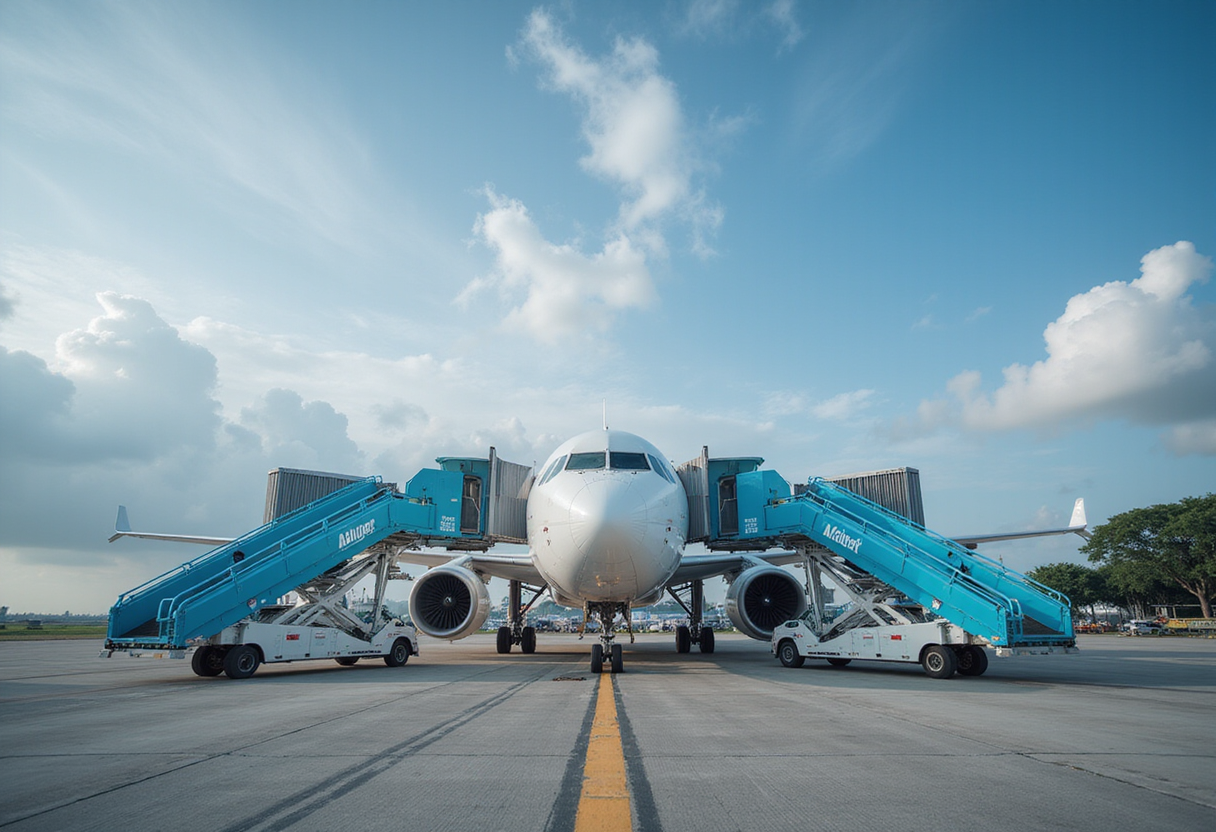
Southeast Asia's airlines are ramping up fleet growth, Aviation Week reports, marking a decisive turn for a region that spent the post-pandemic years repairing balance sheets rather than ordering aircraft.
The headline finding is simple but consequential: capacity ambitions across the region's carriers are rising again, and fleet plans that were paused, deferred or quietly shelved are returning to execution. For lessors, MRO providers and the two dominant airframers — Airbus and Boeing — Southeast Asia is once again behaving like a growth market rather than a restructuring case.
Why does this matter beyond the region?
Southeast Asia has historically been one of the world's fastest-growing aviation markets, and its carriers sit prominently in both manufacturers' backlogs. When the region's airlines accelerate deliveries, the effect propagates through the supply chain: lessors reposition narrowbodies toward Asian operators, MRO shops in Singapore, Malaysia and Indonesia see heavier input, and slot-constrained hubs such as Singapore Changi, Bangkok Suvarnabhumi and Jakarta Soekarno-Hatta absorb additional frequencies.
The reversal also carries financial weight. Several of the region's carriers spent the crisis years in court-supervised restructuring or deep fleet rationalization. A return to net fleet growth signals that management teams and their lenders now see demand durable enough to justify capital commitments — aircraft orders, pre-delivery payments and the crew-training pipelines that precede deliveries.
What is driving the ramp-up?
The Aviation Week report frames the expansion as broad-based across the region rather than concentrated in a single carrier. Growth at this scale typically rests on three legs:
- Recovered and expanding intra-Asian passenger demand, particularly on trunk routes between the region's major capitals;
- Low-cost carrier competition, which pushes incumbents and challengers alike to add capacity before rivals lock in slots;
- Replacement demand, as older narrowbodies retire and airlines chase lower fuel burn and maintenance costs.
Each of these legs converts directly into delivery schedules. The open question, as with every fleet-growth story in the current cycle, is whether airframers can actually convert the region's demand into handed-over aircraft at the pace airlines are planning around.
What should watchers verify?
Manufacturer enthusiasm about Asian demand is easy to find; delivered airframes are the harder metric. Readers tracking this story should set the optimism against the verifiable record:
- Delivery tallies for A320neo-family and 737 MAX jets to Southeast Asian operators, quarter by quarter;
- Backlog positions and any deferral or cancellation adjustments disclosed by the region's carriers;
- Regulatory and certification milestones — notably the return-to-service and delivery pipeline dynamics for the 737 MAX in key national markets;
- Actual capacity deployment, measured in available seat kilometres, rather than announced intent.
The gap between ordered and delivered aircraft has been the defining constraint of this cycle, and Southeast Asia's growth plans will be tested by it as much as any region's.
What comes next?
If the ramp holds, the region's airlines will move from defense to offense — adding routes, densifying hubs and pressing lessors for near-term narrowbody capacity. Aviation Week's reporting points to a region whose carriers have decided growth is back on the agenda; the delivery records over the coming quarters will show whether the industry's supply chain can keep the promise.
via Google News: Aircraft orders and fleets (Source)
More from Grace Kim
Show full bio
News editor covering consumer brands and retail at Flightdeck Report.
354 articles
Same bay
- FDR424Bombardier Commits S$85 Million to Singapore Maintenance Centre Expansion · September 28, 2026
- FDR603Airbus Points to New Routes as Engine of Asia-Pacific Narrowbody Demand · September 27, 2026
- FDR965Asia Airport Expansion Push Forces Strategic Rethink Across Sector · October 3, 2026
- FDR542Philippines Backs Asean Effort to Develop Sustainable Aviation Fuel · October 9, 2026
- FDR820Green Fuel Forward Widens Alliance to Push SAF Uptake Across Asia · October 9, 2026