Clearance CLR-5826 · AIR703
AIRTHA
Airlines & NetworksClearance sheet
Thai Airways Removes CEO Chai Eamsiri After Baggage Crisis
Thai Airways' board removed CEO Chai Eamsiri on October 2, 2026, after flooding triggered delays across 34 flights and a baggage backlog spanning 52 more at Suvarnabhumi.
Read-back
- Thai Airways removed CEO Chai Eamsiri with immediate effect at a special board meeting on October 2, 2026.
- 34 THAI flights were delayed on September 28, 2026; baggage from 52 flights flown September 26–27 remained undelivered for days.
- The airline canceled 15 flights on October 1 and nine on October 2, targeting full operations from October 3.
- Chai faces a second probe into a wine purchase of ~860,000 bottles worth over THB 800 million (~US$24 million).
- Director Samrit Samniang was appointed acting CEO; the Finance Ministry is THAI's largest shareholder.
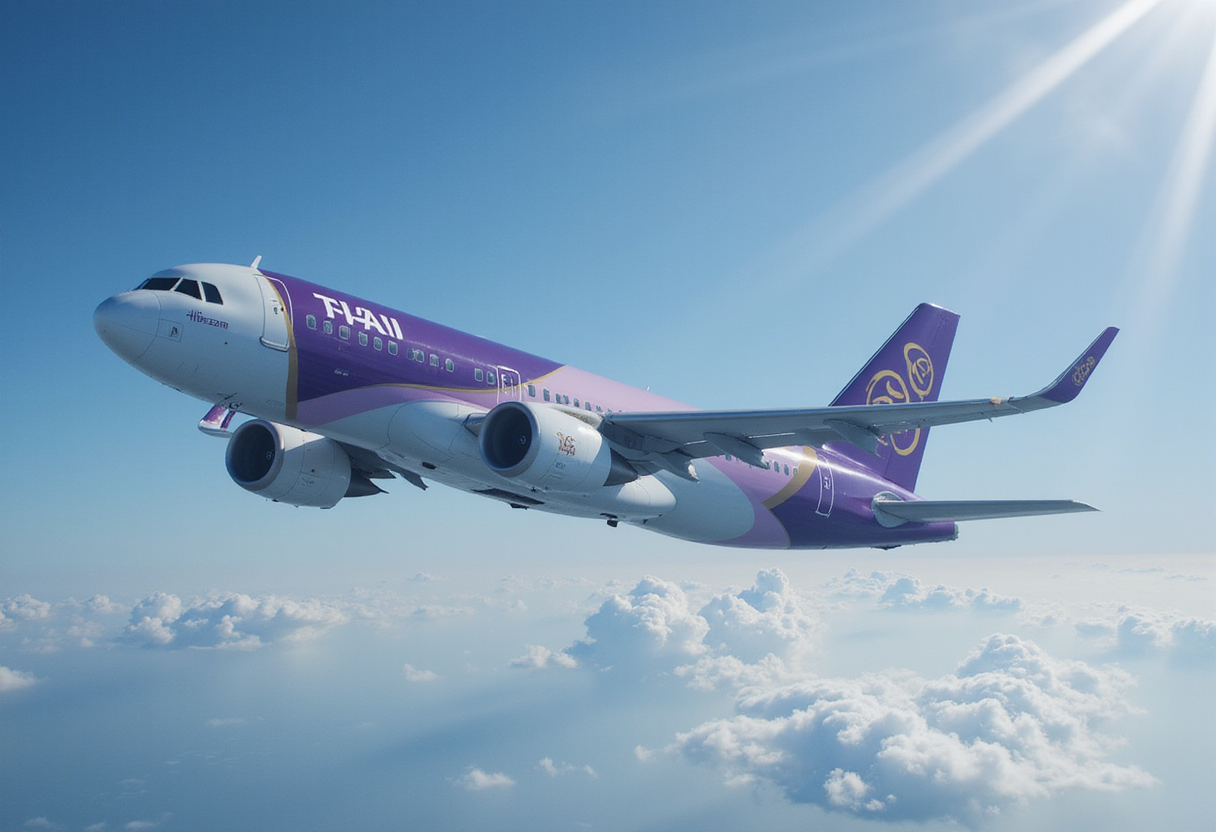
Thai Airways International removed Chai Eamsiri as chief executive with immediate effect on October 2, 2026, one week after flooding in Bangkok left baggage from 52 flights unsorted for days and forced the cancellation of dozens of services at Suvarnabhumi Airport.
The airline's board, chaired by Lavaron Sangsnit, took the decision at a special meeting and appointed director and executive committee member Samrit Samniang as acting CEO. Chai remains a board director while a fact-finding investigation into the disruption runs its course.
What triggered the operational collapse?
Heavy rain and flooding swept Bangkok and surrounding provinces from September 25, 2026. Many of THAI's ground-handling staff could not reach Suvarnabhumi, the carrier's busiest base, because their homes were flooded or they stayed to protect family and property — even after the airline sent vehicles to collect them.
The staffing gap hit baggage handling, flight operations and ground services within days. On September 28 alone, 34 THAI flights were delayed. Baggage from 52 flights operated on September 26 and 27 remained undelivered two to three days later.
Chai argued that THAI suffered more than other carriers because Suvarnabhumi is its main hub and the airline also provides ground handling for partner airlines. He apologized publicly, saying the airline "offers no excuses."
How did the airline and government respond?
Airports of Thailand coordinated additional manpower from the Royal Thai Air Force, military personnel and Thailand Post, which helped sort bags and deliver them directly to passengers' homes and hotels. THAI shifted part of its third-party ground-handling work to other providers and expanded its call center from two lines to 24.
To stabilize the operation, the airline canceled 15 flights on October 1 and nine on October 2, planning full operations from October 3.
Political pressure escalated on September 30, when Tourism and Sports Minister Surasak Phancharoenworakul inspected the airport and called on THAI executives to resign if they would not resolve a crisis he said was damaging Thailand's image. Surasak accused the airline of assigning scarce ground staff to partner airlines to avoid contractual penalties, leaving its own passengers short of support — a claim echoed in local media reports that THAI prioritized partner flights. He also criticized the airline's treatment of soldiers sent to help, saying they received no food or accommodation.
Surasak and Deputy Transport Minister Siripong Angkasakulkiat both demanded an urgent board meeting. The Finance Ministry is THAI's largest shareholder.
Why two investigations are now running?
The board cited persistent operational failures — flight delays, baggage handling problems and broader ground service breakdowns — in removing Chai. He now faces two internal probes. The first examines the operational breakdown, including concerns that ground and cargo work had been outsourced through several layers of subcontractors.
The second concerns the purchase of roughly 860,000 bottles of in-flight wine, worth more than THB 800 million (about US$24 million), from a single supplier.
THAI says it will review its management structure and its employment arrangements for ground and warehouse staff to prevent a repeat.
What does Chai say about his removal?
Speaking to local press after the meeting, Chai said he received no clear explanation for the decision. Non-executive directors continued the meeting without him, and he learned of the outcome before returning to the room.
"I found out from the news," he told The Nation.
Chai stressed that his removal came as operations were nearly back to normal, with most of the remaining baggage backlog expected to clear within two days. He declined to comment on whether internal politics played a role, noting only that he had worked in the industry for 41 years.
Chai rose through THAI's finance function. He served as acting executive vice president of finance and accounting from late 2020 and became chief financial and accounting officer in 2021. He chaired Thai Smile Airways from 2023 to 2025 and has chaired Thai MRO Group and Thai MRO Services since October 2025, plus Thai-Amadeus Southeast Asia since 2024. He holds an MBA from Kasetsart University and a bachelor's degree in marketing from Assumption University.
With acting CEO Samniang now in place, two investigations open and a management-structure review promised, THAI must rebuild both its Suvarnabhumi ground operation and its standing with a shareholder — the Finance Ministry — that has already signaled its impatience.
via AeroTime (Source)
More from Nathan Brooks
Show full bio
Correspondent covering media and advertising at Flightdeck Report.
353 articles
Same bay
- FDR199Thai Airways suspends CEO Chai Eamsiri amid flood-crisis review · October 2, 2026
- FDR111Thai floods force Toyota plant shutdowns, disrupt air cargo · October 10, 2026
- FDR178Suphajee challenges Thai Airways over seven-day cargo halt · October 10, 2026
- FDR952AOT Adds Third Ground Handler at Suvarnabhumi Under 25-Year PPP Deal · October 9, 2026
- FDR456Saudia pilot killed, parked aircraft damaged in Riyadh missile attack · October 9, 2026