Clearance CLR-7137 · AIR530
AIRTHA
Airspace & RegulationClearance sheet
Thales to Deploy Advanced ATC Radar in the Faroe Islands
Thales will deploy an advanced air traffic control radar in the Faroe Islands, the French electronics and aerospace group confirmed, extending its surveillance footprint into the North Atlantic archipelago.
Read-back
- Thales will deploy an advanced air traffic control radar in the Faroe Islands.
- The Faroe Islands sit between Scotland and Iceland, with Vágar Airport handling the territory's scheduled and charter traffic.
- Thales already supplies surveillance infrastructure to NATS, NAVIAIR and Avinor, which border Faroese airspace.
- Weather-related diversions in the Faroe Islands run at roughly double the Nordic average, according to regional reporting.
- No contract value or commissioning date has been disclosed for the deployment.
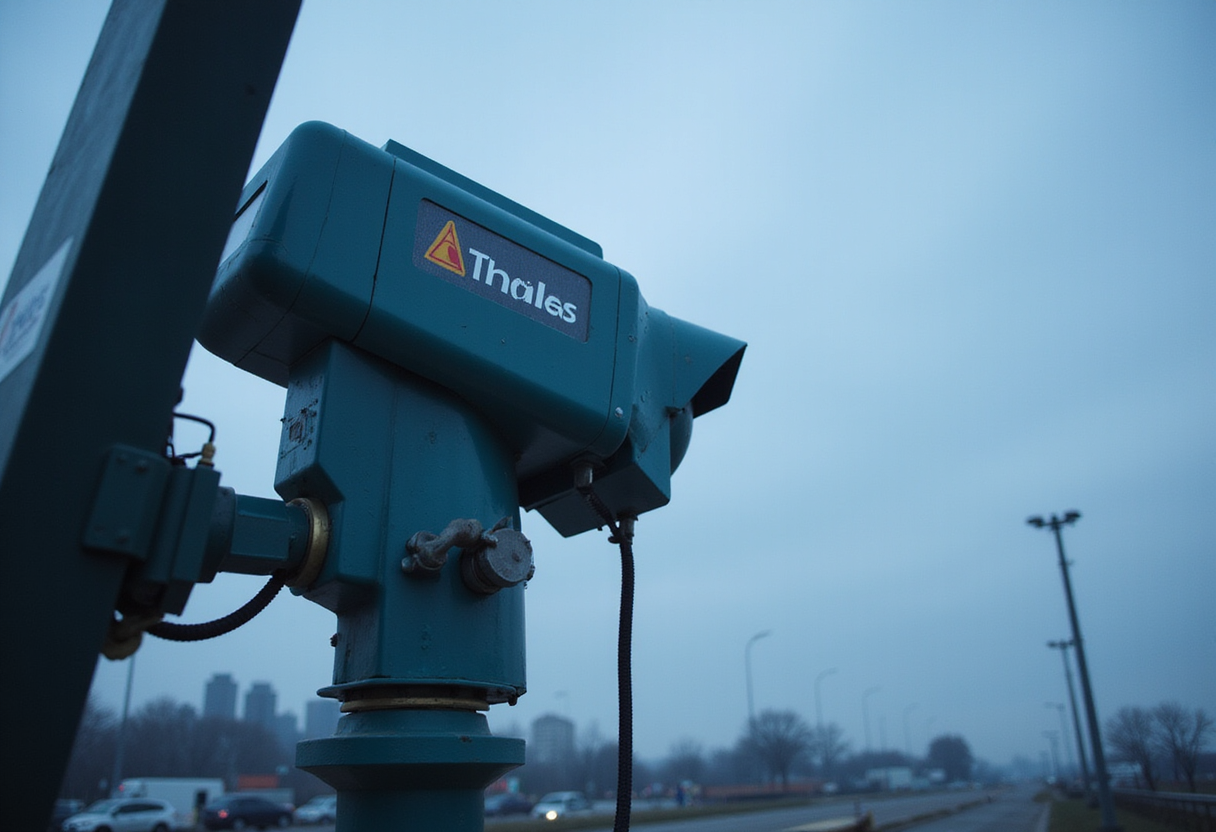
Thales will deploy an advanced air traffic control radar in the Faroe Islands, the French electronics and aerospace group confirmed, extending the company's surveillance footprint into a remote North Atlantic territory that today relies on ageing infrastructure.
Where the radar sits
The autonomous Danish territory, sitting roughly halfway between Scotland and Iceland, routes transiting North Atlantic traffic through a single controlled airspace block centred on Vágar Airport. The airport serves the 18-island archipelago's 54,000 residents and an annual passenger flow that runs above 400,000 travellers on scheduled service to Copenhagen, Billund, Aalborg, Edinburgh, Reykjavík and seasonal charter points.
Coverage at the archipelago's edge of the Reykjavík, Scottish and Shannon FIR boundaries has long been constrained by mountainous terrain and a maritime climate. A new primary surveillance radar, supplemented by Mode S secondary capability, would shorten update intervals for controllers handling mixed IFR and VFR traffic through one of the more weather-disrupted approach corridors in Europe.
What Thales brings to the site
Thales's ground-based civil ATC portfolio spans the RSM970 family of primary radars and the co-mounted secondary units that pair with them, alongside Mode S multilateration and ADS-B ground stations. The company supplies surveillance infrastructure to NATS in the United Kingdom, NAVIAIR in Denmark and Avinor in Norway, giving it operational interfaces across three of the four FIRs bordering the Faroe Islands block. A Faroe deployment would logically be engineered to interoperate with the same data formats and tracker handoffs already used by those adjacent providers.
For the Danish Defence Command, which retains responsibility for military airspace in the territory, and for civil controllers handling the Suðuroy and Kalsoy sectors, an upgraded plot would feed a single source of correlated track data rather than the layered legacy feeds that operators currently reconcile manually.
What changes for operators
Reduced minimum separation between transiting aircraft and a more reliable picture of general aviation movements around Tórshavn's heliport are the operational levers the new radar is expected to deliver. Weather-related diversions, which the islands' civil aviation authority has logged at a rate roughly double the Nordic average, should fall once controllers can vector with continuous position updates rather than procedurally mandated spacing.
Fuel burn on the North Atlantic tracks serving Vágar should benefit more modestly: a tighter approach corridor reduces the stack-holding time that drags block fuel on high-altitude crossings.
What to watch next
The near-term questions are certification under the Danish civil aviation regulator's oversight, the commissioning timeline for integration with the Reykjavík and Scottish FIRs, and whether the deployment extends to a redundant sensor on one of the northern islands to close the terrain-shadow gaps that single-site radar cannot address.
No contract value or commissioning date has been disclosed. Thearne Poulsen, director of civil aviation for the Faroe Islands, has previously told regional press that any radar upgrade would be sized to "ten or more years" of traffic growth, a horizon that places the next replacement decision in the mid-2030s.
via Google News: Air traffic control and airspace (Source)
More from James Calloway
Show full bio
Staff writer covering industry trends and analytics at Flightdeck Report.
320 articles
Same bay
- FDR433Thales to install ATC radar in Faroe Islands for Danish military · October 9, 2026
- FDR269Thales wins Faroe Islands ATC radar contract from Danish Ministry of Defence · October 9, 2026
- FDR628Thales GM400 Alpha to Anchor Ireland's First Military Radar Network · October 2, 2026
- FDR661Guyana and Caribbean Partners to Launch Air and Sea Monitoring System · September 29, 2026
- FDR223Greenland Dispute Traced Back to Airport Construction Concerns · September 30, 2026