Clearance CLR-6842 · AIR675
AIRTHE
Aircraft & EnginesClearance sheet
The 747's 40% transatlantic fare cut still shapes widebody economics
Pan Am’s 335-passenger Boeing 747 debut on January 22, 1970 cut transatlantic fares by about 40%, forced airport rebuilds and established the seat-cost test still used.
Read-back
- Pan Am's first 747 revenue flight carried 335 passengers and 20 crew on 22 January 1970.
- The airline's April 1966 order covered 25 747-100s at $20 million each, totalling $550 million.
- The FAA certified the 747 for commercial passenger service on 30 December 1969.
- Transatlantic fares fell by around 40% in the years after the 747 entered service.
- Boeing built 1,574 747s over 54 years, with the final aircraft delivered to Atlas Air in January 2023.
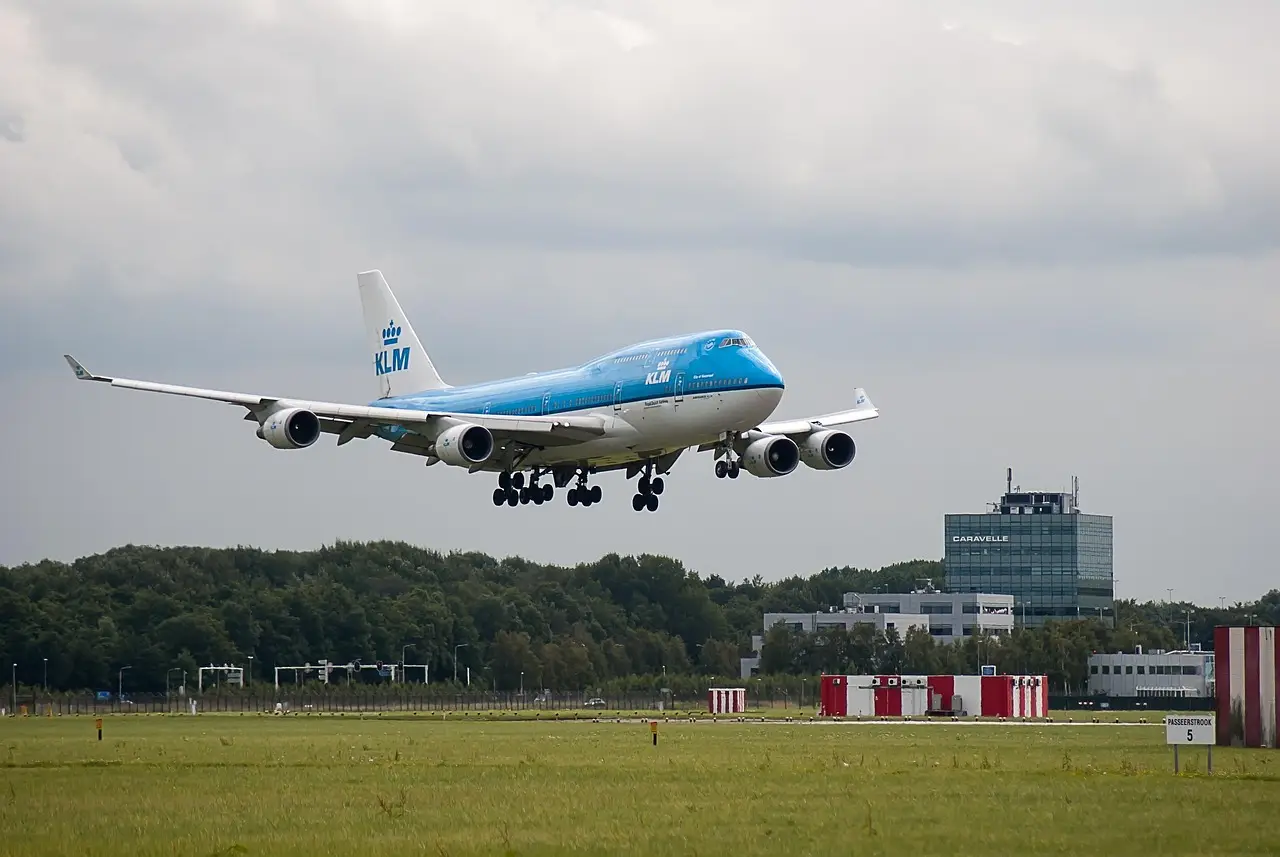
Pan Am's Boeing 747 Clipper Young America lifted off from New York JFK for London Heathrow on 22 January 1970 with 335 passengers and 20 crew. The inaugural revenue flight made mass transatlantic travel an economic proposition rather than a privilege reserved for a narrow market.
That departure was the product of a $550 million bet. In April 1966, Pan Am ordered 25 Boeing 747-100s for $20 million apiece. It asked Boeing for a jet roughly 2.5 times the size of the 707 and set an explicit target: reduce per-seat costs by 30%. That was the airline's design objective, not a measured result from completed service.
Pan Am's balance sheet gave it little room. The airline reported a $65.7 million profit on $950 million of revenue in 1967, but profits had already fallen 21.5% year on year. By the first half of 1969, Pan Am had swung to a $12.7 million loss. Even so, it expanded its commitment from 25 aircraft to 33.
Juan Trippe, the architect of the order, stepped down as Pan Am's chief executive and chairman on 7 May 1968, before the 747 had flown. The sequence captures the risk: an airline betting on higher volume to absorb a capital commitment its near-term earnings could not support.
How did Boeing build the 747?
Joe Sutter took charge of the 747 design team after leaving Boeing's 737 programme in 1965. Pratt & Whitney agreed in late 1966 to develop the JT9D high-bypass turbofan specifically for the new aircraft because nothing sufficiently powerful yet existed. About 20,000 Boeing employees worked on the programme at its 1968 peak.
The aircraft moved through four dated milestones before it became a revenue tool:
- 30 September 1968: The first 747 rolled out of Boeing's Everett plant.
- 9 February 1969: The maiden flight took place.
- 30 December 1969: The FAA certified the 747 for commercial passenger service.
- 22 January 1970: Pan Am began revenue service, just over three weeks after certification.
That distinction matters. The aircraft was certified and carrying passengers before the broader fare effects accumulated during the years that followed.
What did the 747 do to fares?
Pan Am's 30% seat-cost target and the roughly 40% decline in transatlantic fares were not interchangeable figures. One was a design objective per seat; the other was the reported movement in market prices after the aircraft entered service.
The economic mechanism was cabin size. The Hawaii Department of Transportation records a passenger capacity of 397 to 490. At a load factor comparable to a 707, spreading the aircraft's costs across more seats lowered the cost per passenger and allowed an operator to reduce the ticket price. Transatlantic fares subsequently fell by around 40%, opening routes to passengers whom earlier pricing had excluded.
What did airports have to change?
The same scale that reduced airline costs forced airports to spend. Honolulu International opened its Diamond Head Gull Wing Terminal on 3 March 1970 specifically for 747 operations. Pan Am started serving Honolulu with one daily 747 flight that same day.
Airports seeking 747 traffic had to provide gates, jetbridges, baggage systems and taxiways for a fuselage wider than many terminals could accommodate. The aircraft therefore changed network economics beyond the airline: it made a new type of service a system-wide capital commitment, a pressure that accompanies each new widebody generation.
A 747 launch pamphlet cited by Northwestern University captured United Airlines' pitch: “For all its size, it’s intimate.” The wide twin-aisle cabin and split upper deck gave passengers a scale unlike anything they had flown before.
What did 54 years of production show?
Boeing and FAA records put the final total at 1,574 aircraft across a 54-year production run. Atlas Air received the last aircraft in January 2023. The 747-400, introduced in 1989 with a two-crew glass cockpit, became the most common variant and remained the benchmark long-haul widebody for two decades.
The production record is evidence that the underlying proposition survived changes in operators, engine technology and route networks. A very large twin-aisle aircraft could undercut smaller types on a per-seat basis, provided airlines filled enough of that capacity and airports could handle it.
Does the logic still shape aircraft purchases?
Every widebody serving transatlantic routes now answers the case Pan Am put to Boeing in the mid-1960s: build it larger, fill it and reduce the seat cost enough to clear the market. The Airbus A380 tested whether a double-deck configuration could extend that logic. The Boeing 787 and Airbus A350 tested whether two engines could achieve what four had previously required.
The procurement test remains the same: whether a new aircraft improves seat economics against the type it replaces. Its capacity can support lower fares, but only if demand fills enough seats; its infrastructure demands can also enlarge the capital commitment required across the network.
The next widebody business case will still have to clear the bar the 747 set: carry enough passengers, fill enough seats and spread enough fixed cost to lower the fare without leaving aircraft or airports underused.
via theaviationhub.co.uk (Source)
More from Nathan Brooks
Show full bio
Correspondent covering technology and product news in Commercial aviation industry coverage at Flightdeck Report.
621 articles
Same bay
- FDR848Boeing posts $745 billion record backlog as 737-7 and 737-10 certified · October 27, 2026
- FDR873Emirates SkyCargo revenue rose 52% as Group pretax profit fell 66% · November 5, 2026
- FDR454Fuel outpaces yields as cargo growth tests freighter economics · October 30, 2026
- FDR430Embraer backlog hits record $35.7 billion on E2 orders and defense surge · October 23, 2026
- FDR832Boeing to Cut 5% of Commercial Airplanes Workforce as 737 MAX Rate Slips · November 10, 2026