Clearance CLR-4490 · AIR789
AIRTUR
Airlines & NetworksClearance sheet
Turkey ranks seventh-largest aviation market globally, IATA reports
Turkey has moved into seventh place in global aviation market rankings, according to IATA, reflecting a decade of investment centred on Istanbul Airport and Turkish Airlines' growth into a global hub carrier.
Read-back
- Turkey ranks seventh-largest aviation market globally according to IATA, per Yeni Şafak English
- Istanbul Airport opened in October 2019 with initial capacity for 90 million annual passengers
- Turkish Airlines operates a hub-and-spoke network with significant transfer flows via Istanbul
- IATA country rankings rely on Revenue Passenger Kilometres or scheduled passenger departures
- Top-tier market status typically correlates with expanded fifth-freedom traffic rights and stronger manufacturer negotiating leverage
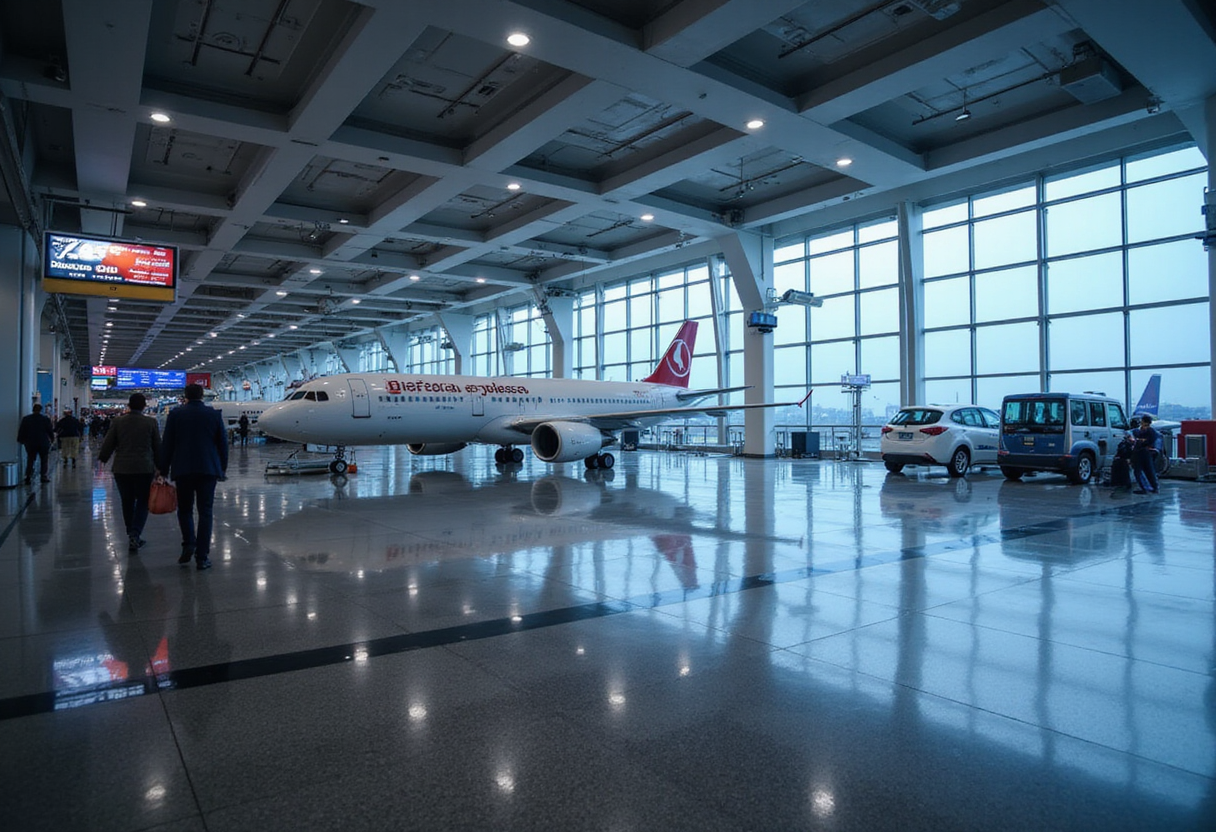
Turkey has moved into seventh place in the global aviation market rankings, according to the International Air Transport Association (IATA), as reported by Yeni Şafak English.
The placement reflects a decade of infrastructure investment centred on Istanbul Airport and the parallel transformation of Turkish Airlines from a regional operator into a global hub carrier. It also captures the broader capacity contribution of Pegasus Airlines and joint-venture leisure operator SunExpress.
How does IATA rank markets?
IATA's country-level rankings rely on two standard indicators: Revenue Passenger Kilometres (RPKs), which weight flown passengers by distance, and scheduled passenger departures. Both metrics reward countries with sizeable domestic networks and substantial international transfer flows — the combination Turkey has built.
The specific indicator used for the seventh-place determination was not published in the available IATA summary. IATA has historically alternated between the two metrics in its annual market assessments.
Why has Turkey climbed?
Istanbul Airport opened in October 2019 with capacity for 90 million annual passengers, replacing Atatürk Airport as the country's primary international gateway. The hub has enabled Turkish Airlines to consolidate transfer traffic and extend its destination network.
Pegasus, separately listed on Borsa Istanbul, operates a substantial Airbus A320-family fleet that anchors domestic connectivity and serves more than 100 routes across Europe and the Middle East. SunExpress — a joint venture between Turkish Airlines and Lufthansa — adds point-to-point leisure capacity into Mediterranean destinations.
Geographic structure reinforces the hub model. Istanbul sits roughly equidistant between Western Europe and the Middle East, with shorter routings to South Asia and East Africa than Gulf-based competitors. The advantage translates into shorter block times and, for transfer passengers, tighter connections.
What does seventh place mean operationally?
The top three positions — the United States, China and India — have remained stable across recent IATA assessments. Major European markets including the United Kingdom, Germany, Spain, France and Italy fill out the leading slots.
Seventh place positions Turkey within the upper tier of aviation economies, alongside markets of comparable size such as Indonesia, Brazil and Japan, depending on the measurement period. The standing carries practical consequences:
- Expanded fifth-freedom traffic rights in bilateral negotiations
- Greater leverage with Airbus and Boeing on delivery slot timing
- Stronger position in air services discussions with non-EU trading partners
How is the fleet tracking?
Turkish Airlines holds a substantial multi-type backlog spanning Airbus A321neo, A350 and Boeing 787 families. The pace of those deliveries — particularly the A350-900s, the largest widebody commitment in the airline's history — will determine how capacity translates into market share through 2026.
Pegasus continues to take A321neos from its existing order book, while the LCC subsidiary AJet operates a smaller narrowbody fleet under a brand reintroduced after AnadoluJet was wound down.
Will the ranking hold?
Whether Turkey maintains its seventh-place standing will depend on demand resilience, the lira's trajectory against the dollar and euro, and the timely arrival of new aircraft. IATA publishes updated market standings annually using full-year data, with the next major update expected later this year.
via Google News: Aviation safety (Source)
More from Grace Kim
Show full bio
News editor covering consumer brands and retail at Flightdeck Report.
298 articles
Same bay
- FDR347Türkiye's Airline Fleet Reaches 800 Aircraft · September 30, 2026
- FDR247IATA Data Show Air Cargo Demand Up 4.4% in August · September 30, 2026
- FDR859Turkic Investment Fund to Finance Almaty Airport Expansion · September 28, 2026
- FDR936Turkish Airlines to host IATA World Safety and Operations Conference · October 9, 2026
- FDR570Air Arabia and Uzbekistan Open Talks on New Tourist Routes · October 9, 2026