Clearance CLR-1753 · SUS464
SUSUNI
SustainabilityClearance sheet
Uniper signs offtake deal for synthetic green jet fuels in Germany
Germany's state-owned energy company Uniper has signed a synthetic green jet fuel offtake agreement, Reuters reports, joining a small group of European utilities linked to aviation decarbonization supply chains.
Read-back
- Uniper, Germany's state-owned energy company, signed an offtake deal for synthetic green jet fuels.
- Reuters first reported the agreement; counterparty, volume, and price were not disclosed.
- EU ReFuelEU Aviation regulation mandates a 1.2% synthetic fuel sub-quota starting in 2030, rising to 35% by 2050.
- The German government nationalized Uniper in 2022 following disruption to Russian gas supplies.
- Lufthansa operated the first commercial PtL-powered transatlantic flight on the Frankfurt–Washington route in 2021.
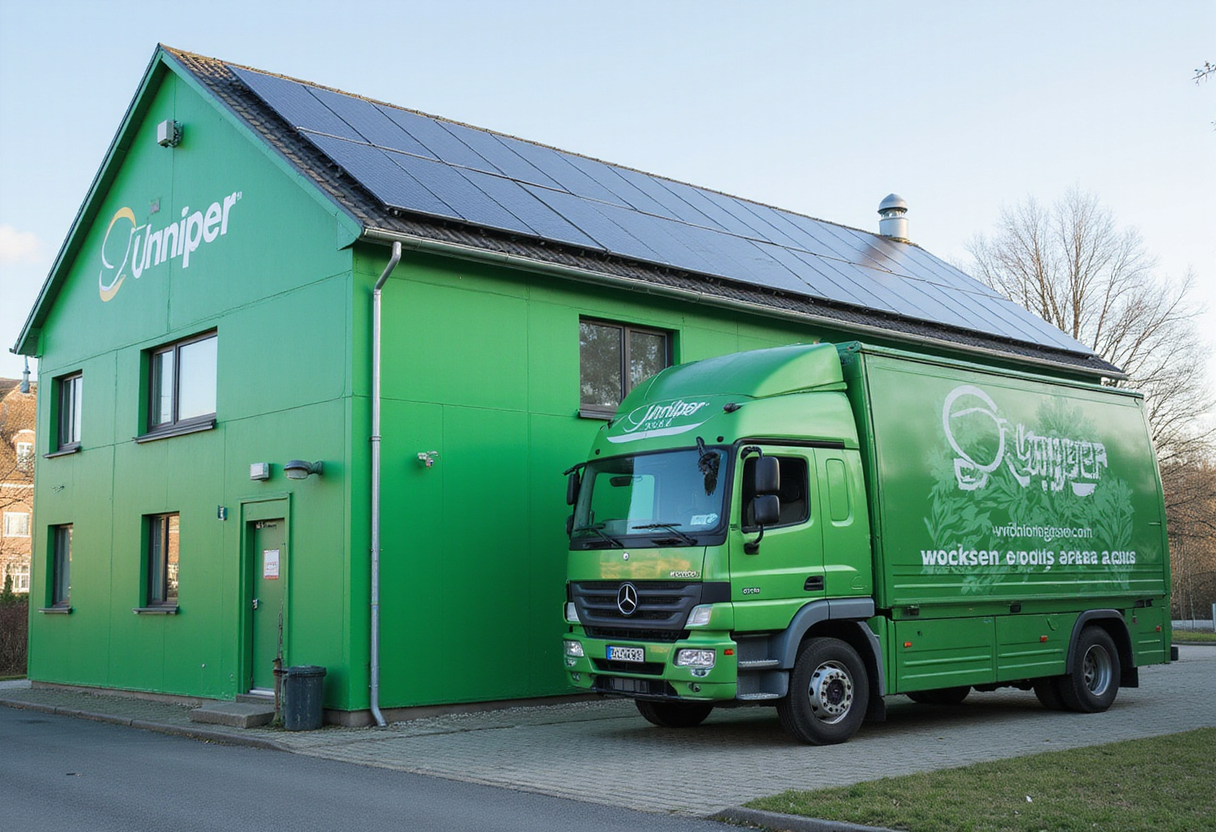
Uniper, the German state-owned energy company, has signed an offtake agreement for synthetic green jet fuels, Reuters reported, extending a small roster of European utilities into aviation's emerging decarbonization supply chain.
What did Uniper actually buy?
The Düsseldorf-based group did not disclose the counterparty, the contracted volume, the delivery window, or the price formula in the announcement summarized by Reuters. The deal nonetheless adds Uniper to a short list of European energy companies that have committed to purchase synthetic kerosene — fuel produced from renewable hydrogen and captured carbon dioxide — for commercial aviation use.
What is synthetic green jet fuel?
Synthetic jet fuel, also called e-kerosene or power-to-liquid (PtL) fuel, differs from conventional SAF. Refiners typically produce SAF from waste oils, fats, or agricultural residues. Synthetic fuel combines green hydrogen, generated by electrolysis powered by renewables, with CO₂ captured from industrial flue gases or direct air capture. The result is a drop-in kerosene blend that aircraft burn without modification.
The European Union's ReFuelEU Aviation regulation, which entered into force in 2024, requires jet fuel suppliers to blend an increasing share of SAF into fuel uplifted at EU airports. From 2030, the regulation imposes a sub-quota specifically for synthetic fuels, beginning at 1.2% and rising to 35% by 2050.
Why is Uniper involved?
Uniper operates as one of Europe's largest power generators and gas traders. The German government nationalized the company in 2022 after disruption to Russian gas supplies. Since then, Uniper has repositioned its portfolio around hydrogen, renewables, and grid services. Synthetic kerosene procurement fits that repositioning.
European airlines and refiners have already signed synthetic fuel offtakes. Carriers including Lufthansa and KLM, alongside producers such as HIF Global and Norsk e-Fuel, have publicized similar arrangements. Refiners including TotalEnergies and Shell have likewise signed purchase commitments.
What terms were disclosed?
Reuters did not publish financial terms, contracted volumes, or the identity of the counterparty. Neither Uniper nor the unnamed seller has issued a fuller statement. Contracted parties typically file summaries through regulatory channels after closing.
Synthetic jet fuel currently trades at a premium to fossil kerosene and to first-generation SAF. Industry estimates place production cost at several multiples of conventional jet fuel, depending on hydrogen feedstock and CO₂ source. German federal hydrogen subsidies and EU Innovation Fund grants have so far narrowed part of the gap.
What changes for airline operators?
For carriers operating from German airports, the Uniper agreement is another proof point that synthetic kerosene supply is moving from pilot scale toward contracted offtake. Lufthansa, the largest operator at Frankfurt and Munich, ran the first commercial PtL-powered transatlantic flight on the Frankfurt-Washington route in 2021.
Commercial availability remains thin. Global synthetic kerosene output in 2024 amounted to a small fraction of jet fuel demand, which exceeds 60 million tonnes a year in Europe alone. Closing the gap requires utility-scale electrolyzer capacity and large CO₂ capture installations, both on multi-year permitting timelines.
What to watch next
The headline terms of the Uniper agreement — volume, counterparty, and delivery profile — will set a benchmark for the next round of European synthetic fuel offtakes. Airlines are expected to conclude further contracts through 2026 to meet 2030 blending obligations.
via Google News: Sustainable aviation fuel (Source)
More from Nathan Brooks
Show full bio
Correspondent covering media and advertising at Flightdeck Report.
355 articles
Same bay
- FDR919Uniper Signs Offtake Deal for Synthetic Green Jet Fuel · September 30, 2026
- FDR461ETFuels Signs Early-Stage e-SAF Agreement with Kuwaiti Fuel Supplier · October 9, 2026
- FDR169Washington opens first US facility producing SAF from CO2 · October 10, 2026
- FDR222Hydrogen Utopia Files for UK Grant Backing Waste-to-SAF Project · October 10, 2026
- FDR566Q8Aviation Selects ETFuels for E-SAF Supply Collaboration · October 9, 2026