Clearance CLR-3695 · SAF308
SAFUSO
Safety & OperationsClearance sheet
US Officials Tout $425M for Alaska Aviation Safety as NTSB Presses for Action
Federal officials have discussed $425 million committed to Alaska aviation safety as the NTSB demands action on recommendations it has issued repeatedly without implementation.
Read-back
- Federal officials discussed $425 million committed for Alaska aviation safety
- The NTSB is demanding action on recommendations it has issued repeatedly
- NTSB recommendations on Alaska safety remain unimplemented despite renewed funding discussion
- The safety board cannot compel implementation; authority rests with the FAA and operators
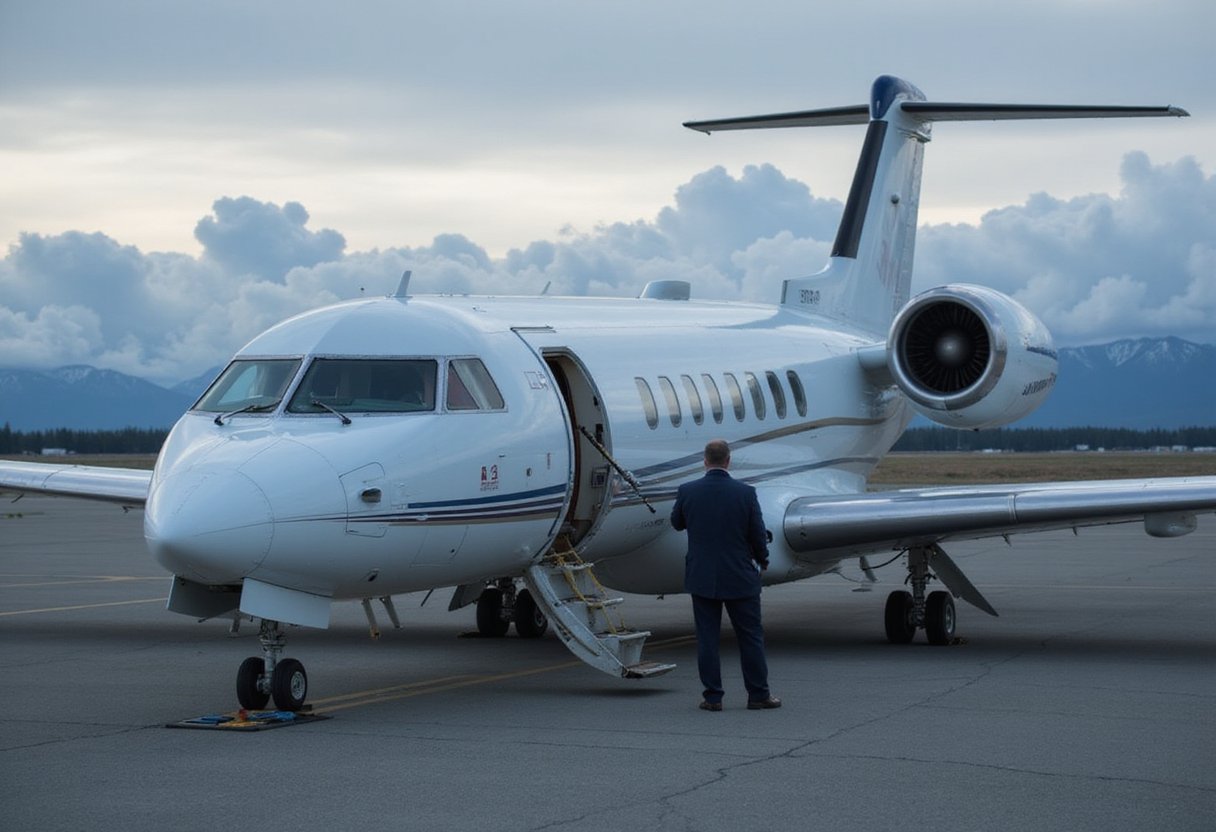
Federal officials have discussed $425 million committed toward aviation safety in Alaska, a figure that now anchors the state's case for closing one of the most persistent safety gaps in US civil aviation.
The announcement came as the National Transportation Safety Board (NTSB) publicly pressed for action on recommendations it has issued repeatedly — a sign that funding pledges and regulatory follow-through remain on separate tracks in a state where flying is often the only form of transport.
What does the $425 million cover?
The federal commitment, discussed by officials with jurisdiction over Alaska's aviation infrastructure, represents one of the largest dedicated safety funding streams for the state in recent memory. Alaska depends on general aviation and small commercial carriers far more heavily than the lower 48 states, with communities that lack road access relying on air service for medical transport, cargo and passenger movement.
The $425 million discussion signals that Washington recognizes the structural problem: Alaska's accident rate has historically run well above the national average, and the NTSB has spent years issuing recommendations aimed at the conditions that produce those outcomes.
Why is the NTSB demanding action now?
The safety board's frustration centers on repetition. NTSB recommendations that have been issued before — and left unimplemented — remain on the board's open docket, and the agency has called publicly for agencies and operators to act rather than restudy.
The dynamic is a familiar one in US aviation oversight. The NTSB can investigate, recommend and advocate, but it cannot compel implementation. That authority sits with the Federal Aviation Administration, operators and state bodies. When recommendations age without action, the board's recourse is public pressure — which is what the current demand represents.
The timing, paired with the $425 million federal figure, frames the question that will determine whether the money changes outcomes: will the funding attach to the specific fixes the NTSB has already identified, or will it fund a parallel set of improvements that leaves the board's repeated recommendations still open?
What is at stake for Alaska operators?
For carriers, communities and pilots in Alaska, the practical consequences run in both directions. Safety investment — in infrastructure, weather reporting, navigation aids and training — directly affects operational capability across a network where diversions, weather minimums and unreliable surface access carry real economic cost.
Conversely, continued inaction on NTSB recommendations keeps exposure to the accident types the board has already documented. Each repeat recommendation on the board's list represents a known risk that has already produced findings, in some cases from accidents with fatalities.
The $425 million figure gives state and federal officials a concrete answer to the NTSB's challenge. Whether it satisfies the board will depend on how quickly the money translates into implemented changes the safety board can verify — and on whether the recommendations that have been issued more than once finally leave the open list.
Federal officials and the NTSB are expected to keep Alaska aviation safety on the public agenda in the coming months as the committed funds move from discussion to deployment.
via Google News: Aviation safety (Source)
More from Grace Kim
Show full bio
News editor covering consumer brands and retail at Flightdeck Report.
354 articles
Same bay
- FDR385NTSB Calls on Congress to Advance Aviation Safety Reforms · September 30, 2026
- FDR550NTSB Chair Joins Lawmakers to Present Aviation Safety Recommendations · September 30, 2026
- FDR829NTSB chair presses Congress to enact aviation safety legislation · October 10, 2026
- FDR214NTSB Chair and DCA Crash Families Urge Congress to Act on Safety · October 10, 2026
- FDR304Congress Weighs Aviation Safety Upgrades After Close-Call Surge · October 9, 2026