Clearance CLR-5800 · SUS457
SUSUZB
SustainabilityClearance sheet
Uzbekistan's $6.1 Billion SAF Project Moves Into Design Phase
Uzbekistan has shifted its $6.1 billion sustainable aviation fuel project into the design phase, moving one of Central Asia's largest energy transition programs toward engineering definition.
Read-back
- Uzbekistan's sustainable aviation fuel project carries a $6.1 billion price tag.
- The project has entered the design phase, moving from planning to engineering.
- No production capacity, output date or partners have been disclosed so far.
- The project is among the largest SAF commitments announced in Central Asia.
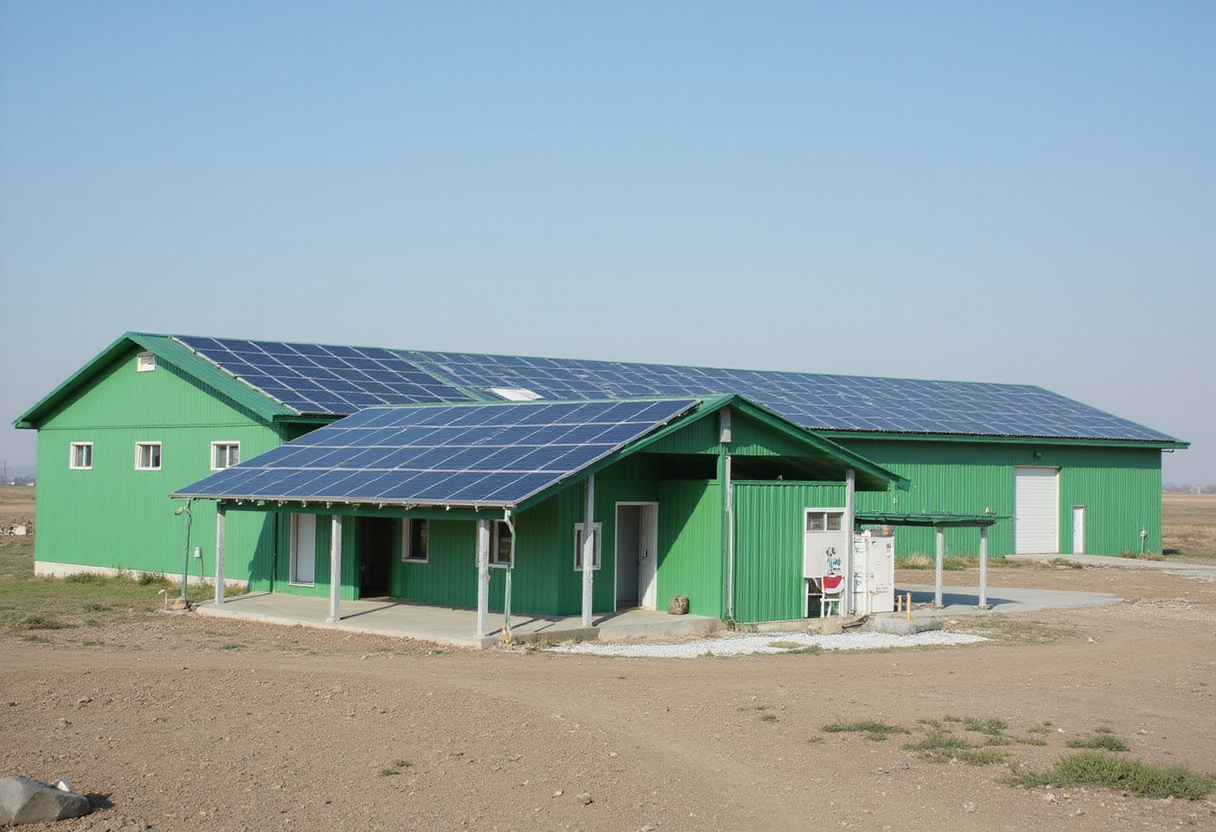
Uzbekistan has moved its $6.1 billion sustainable aviation fuel project into the design phase, a milestone that signals Tashkent's intent to build domestic production capacity for a fuel type the global airline industry still sources almost entirely from a small number of suppliers.
The Times of Central Asia reported the phase transition, which shifts the program from planning paperwork toward engineering and facility definition. At $6.1 billion, the project ranks among the largest single-country SAF commitments announced in the Central Asian region, where refining infrastructure has historically served conventional jet fuel demand rather than biofuel or synthetic alternatives.
What does the design phase actually change?
Entering design moves the project from concept to engineering. The phase typically settles plant configuration, feedstock selection, site layout and offtake structures — the decisions that determine whether a announced capital figure becomes shovel-ready capacity or remains a headline number.
For now, the $6.1 billion figure stands as a program-level commitment. The source material does not specify:
- a production capacity target in tonnes or gallons per year;
- a target start date for construction or first fuel output;
- the identity of technology licensors, engineering contractors or financial partners;
- the feedstock pathway — HEFA, alcohol-to-jet, gasification or power-to-liquids.
Those details will determine the project's credibility with airlines and lessors. SAF offtake agreements globally hinge on certified pathways and delivered cost per gallon, not headline investment totals.
Why does Uzbekistan want SAF capacity?
A domestic SAF plant would give Uzbekistan's carriers a local supply of fuel that counts toward emissions-reduction obligations under international schemes. Airlines flying into and out of Tashkent currently depend on imported conventional jet fuel and, for SAF claims, on certificates or cargo sourced from distant producers.
The $6.1 billion scale also positions Uzbekistan as a potential regional exporter rather than a purely domestic supplier. Neighboring Central Asian states lack comparable announced projects, and European demand for SAF will keep rising as the EU's blending mandates phase in through the end of the decade — creating an import pull that landlocked producers with cheap renewable energy and available feedstock could serve.
What remains unverified?
Industry practice treats announcements of this size cautiously. Until Uzbekistan publishes an engineering partner, a finalized site and a financing structure, the project's timeline exists only as intent. Design phases for fuel plants of this magnitude commonly run one to two years before a final investment decision, and cost figures frequently move between announcement and construction.
The decisive tests will come with a final investment decision, groundbreaking and a signed offtake agreement with a named airline — the markers that separate committed capacity from aspirational planning.
Next steps for the program include completing facility design and releasing details on capacity, timeline and partners, disclosures that will allow airlines, regulators and investors to judge whether the $6.1 billion translates into fuel on the ramp.
via Google News: Sustainable aviation fuel (Source)
More from Nathan Brooks
Show full bio
Correspondent covering media and advertising at Flightdeck Report.
353 articles
Same bay
- FDR365Kazakhstan Targets Sustainable Aviation Fuel With Alatau Pilot · September 26, 2026
- FDR759India's SAF readiness exceeds 50 percent, report finds · September 29, 2026
- FDR222US firm claims 800 bpd SAF throughput from new reactor design · October 10, 2026
- FDR973Philippine energy department targets 1% SAF blend by 2030 · October 10, 2026
- FDR773Airbus, ASEAN Centre for Energy begin three-year SAF programme · October 10, 2026