Clearance CLR-1604 · AIR969
AIRWON
AirportsClearance sheet
Wong Hon Wai, MAHB Align on Penang International Expansion and Route Push
Penang's Wong Hon Wai met MAHB in Kuala Lumpur to align on Penang International Airport expansion and route development, covering terminal capacity upgrades and new airline recruitment at Malaysia's second-busiest gateway.
Read-back
- Wong Hon Wai met MAHB executives in Kuala Lumpur to plan Penang International Airport expansion and route development
- MAHB operates 39 Malaysian airports under a federal concession and controls capex at PEN
- Penang International is Malaysia's second-busiest airport by passenger traffic
- No construction timeline, capital figure, capacity target or specific route was disclosed from the meeting
- Final capex approval for expansion at PEN will require sign-off from the federal Ministry of Transport
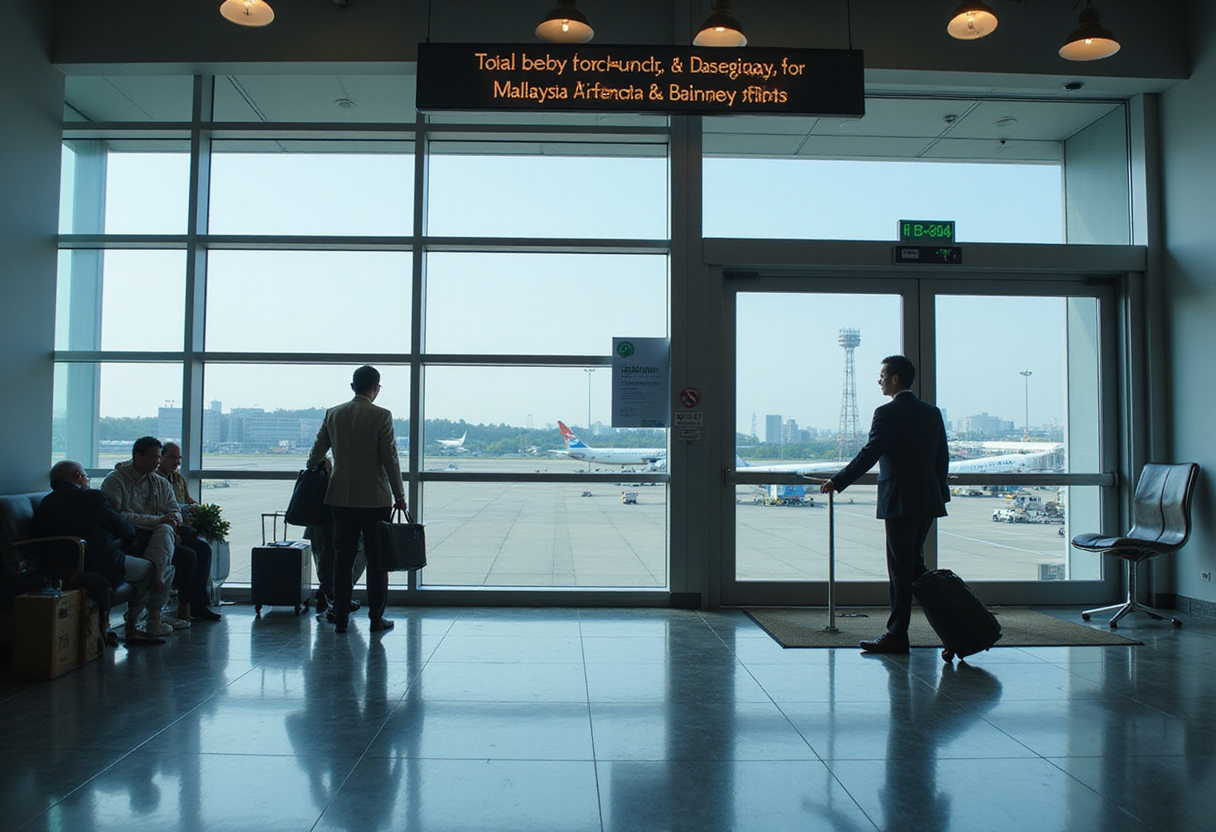
Penang state councillor Wong Hon Wai met Malaysia Airports Holdings Berhad (MAHB) executives in Kuala Lumpur this week to coordinate the next phase of expansion and route development at Penang International Airport (PEN), the country's second-busiest gateway by passenger traffic.
The session, which Wong disclosed publicly, brought together two of the airport's most consequential stakeholders ahead of decisions on terminal capacity, airfield upgrades and the recruitment of new airline services. Penang International sits at the heart of the state's tourism and high-value manufacturing economy on the northwest coast of peninsular Malaysia, and the state has framed further international connectivity as central to its plan to grow medical tourism, MICE travel and inbound visitor numbers.
Why does the meeting matter?
MAHB holds the federal concession to operate 39 Malaysian airports and controls the capex envelope for terminal expansion and apron upgrades at PEN. The Penang state government, by contrast, leads the commercial effort to recruit new carriers and open new city pairs, and provides political cover for infrastructure spending through the state economic planning machinery. Aligning those two tracks has been a recurring theme in the airport's planning cycle, with airlines repeatedly flagging peak-hour congestion in the terminal and on the apron.
Wong said the discussions touched on both upgrading existing facilities and attracting new services to the airport, but he did not disclose specific construction timelines, capital figures, capacity targets or named airline prospects in his public post. The lack of headline numbers is consistent with how MAHB typically handles airport development — phased expansions are scoped against group-wide capital allocation rather than announced as single projects, and final sign-off on capex above certain thresholds sits with the federal Ministry of Transport and the Ministry of Finance.
What was on the table?
The meeting covered two parallel workstreams — physical expansion of airport facilities and route development — with the aim of producing a joint roadmap that can be presented to federal authorities. Wong indicated that the two sides would continue to engage as they work to firm up the scope of any expansion before approaching Putrajaya for approval and funding.
For Penang, the prize is twofold: a wider-bodied, longer-range route mix that supports higher-yield inbound tourism, and the ability to compete with Kuala Lumpur International for trans-Asian and selected long-haul point-to-point traffic. The airport already supports a mix of low-cost and full-service operations across regional and select long-haul routes, but its narrowbody-heavy schedule limits its reach into markets that the state has identified as priorities.
What comes next?
No deliverables — neither a memorandum of understanding, a construction start date nor a route target — emerged from the Kuala Lumpur session. What the meeting does establish is a working alignment between the state and the operator at a moment when federal aviation policy is being recalibrated around tourism-led growth and the integration of secondary gateways into the national network.
How that alignment translates into concrete capex and signed airline commitments at PEN will be one of the more visible tests of Malaysia's decentralised airport investment model, in which MAHB balances its 39-airport portfolio against the commercial ambitions of individual state governments.
via Google News: Airport expansion (Source)
More from Nathan Brooks
Show full bio
Correspondent covering media and advertising at Flightdeck Report.
299 articles
Same bay
- FDR873Penang state escalates airport expansion, route plans with MAHB · October 9, 2026
- FDR768Malaysia Contingency-Plans AirAsia Route Transfers as Losses Deepen · September 30, 2026
- FDR131Malaysia Airlines and China Southern Extend Codeshare to Five More Routes · September 30, 2026
- FDR243Malaysia Airlines and China Southern extend codeshare to five more routes · September 29, 2026
- FDR872Hong Kong Charts Sustainable Aviation Fuel Course in Five-Year Plan · September 27, 2026