Clearance CLR-9025 · AIR164
AIRAIR
Air CargoClearance sheet
Air Cargo Rates Up 30% as AI Hardware Fills the Gap Left by E-Commerce
Air cargo rates rose 30% year over year on AI equipment demand, while Wing and Zipline pour capital into drone factories ahead of expected FAA beyond-line-of-sight rules.
Read-back
- Air cargo rates are up 30% year over year, with volumes up roughly 6%.
- Zipline raised $1.5 billion; Wing plans a $125 million Texas drone factory targeting tens of thousands of aircraft.
- Walmart is deploying Wing and Zipline drones across nearly 300 U.S. stores.
- AI equipment shipments are offsetting declines in de minimis e-commerce parcels into the U.S. and Europe.
- FAA beyond-line-of-sight rulemaking is expected to accelerate commercial drone rollout; individual waivers are currently required.
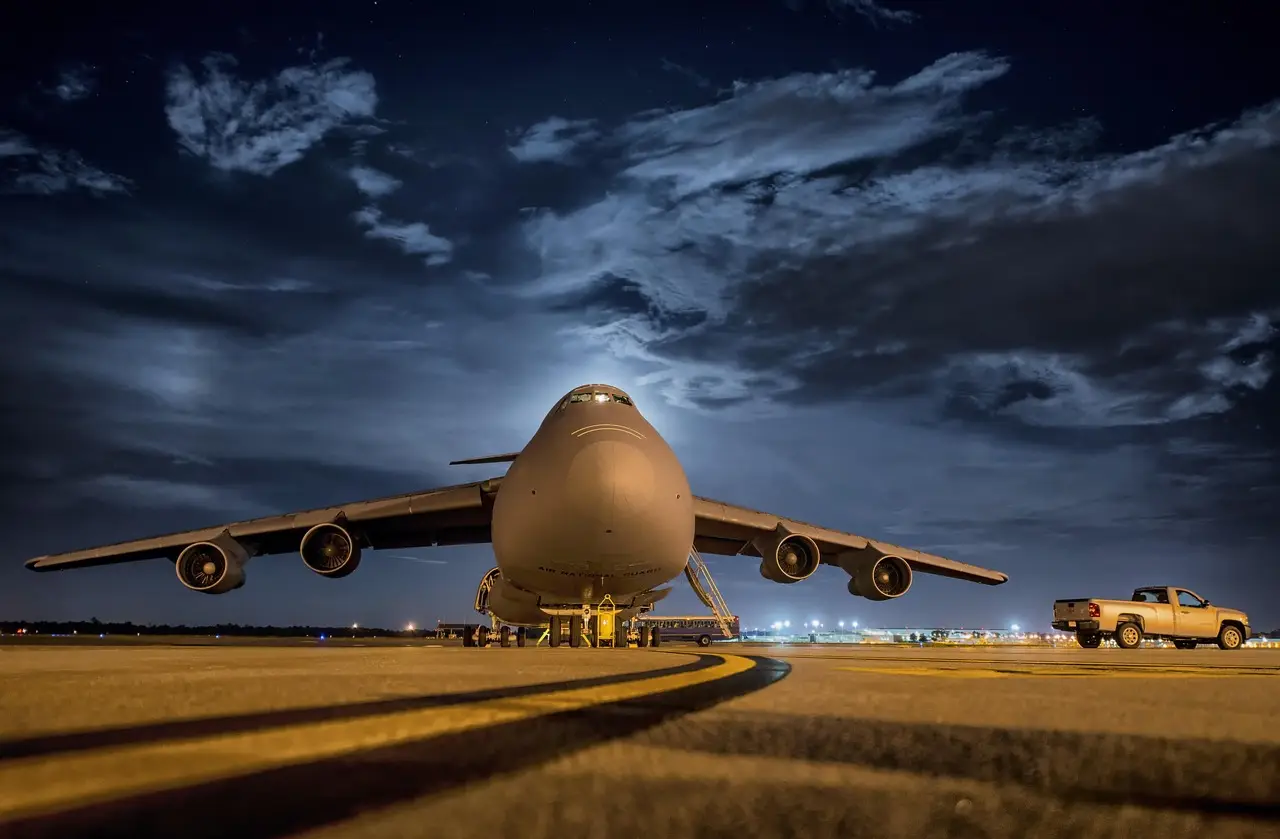
Air cargo rates have climbed 30% year over year, with volumes up roughly 6%, according to FreightWaves — a result nobody in the bearish class of 2024 forecast. Eric Kulisch, reporting for the outlet, attributes the strength to three forces: ocean shipping disruptions, reduced Middle East carrier capacity, and surging demand for AI-related equipment. The market has simply refused to soften.
"We thought this year would be a lot softer, but it hasn't — growth has been quite robust," Kulisch said. That is the polite version. Analysts had expected a significant contraction in 2025, following what they assumed would be a prolonged post-COVID hangover after 2024's down year.
What replaced e-commerce in the hold?
The structural story is AI hardware. As customs authorities in the U.S. and Europe tightened regulatory treatment of de minimis imports, business-to-consumer parcel flows contracted — and AI equipment shipments stepped into the capacity that parcels vacated. Freight forwarder Kuehne+Nagel has also flagged slower automotive exports out of Europe as a headwind, one that AI cargo is helping to offset.
Two years ago, the de minimis crackdown was widely predicted to crater air freight and parcel volumes. The crater never arrived. The market rebounded sharply at the end of 2024 and has continued rising through 2025, defying forecasts that now look, in retrospect, like consensus error.
Who is betting on drones?
Walmart is pursuing a deliberately hybrid strategy, deploying both Wing — an Alphabet subsidiary — and Zipline across nearly 300 stores nationally. The two suppliers are now in a manufacturing race:
- Zipline announced a $1.5 billion funding raise last week, earmarked in part for manufacturing scale-up.
- Wing will invest $125 million in a Texas factory to build delivery drones, with plans to eventually produce tens of thousands of aircraft.
For context, Wing's $125 million facility is roughly one-twelfth the size of Zipline's raise — the two companies are scaling at very different capital intensities.
What does the FAA have to do with it?
All of this manufacturing capacity is being built ahead of anticipated FAA rulemaking that would establish clearer operating standards for beyond-line-of-sight drone flights. Under current rules, operators must obtain individual waivers to fly drones outside a direct operator's line of sight — a requirement that limits both deployment scale and geography, one waiver at a time.
New rules, when they arrive, are expected to significantly accelerate commercial rollout. The manufacturers, one notices, are not waiting for the paperwork to settle before committing capital.
Is 30-minute delivery the endgame?
The competitive landscape for last-mile drone delivery is sharpening around three names: Walmart, Amazon, and DoorDash. Each is racing to operationalize so-called quick commerce — delivery in 30 minutes or faster — on the belief, shared by carriers and retailers, that speed drives higher consumer engagement and loyalty.
The aircraft mix reflects physics rather than ambition. Lightweight drones carrying approximately 5 pounds remain the near-term tool for doorstep delivery in suburban markets. For heavier payloads between cities, autonomous aircraft capable of carrying several hundred pounds are seen as the more viable middle-mile solution.
The pattern across both stories is the same: capital is moving ahead of regulation, and cargo demand is outrunning the forecasts. Whether the FAA's beyond-line-of-sight rules arrive before or after the drone factories open will determine how quickly the quick-commerce bet pays off.
via freightwaves.com (Source)
More from Grace Kim
Show full bio
News editor covering companies, deals and strategy in Commercial aviation industry coverage at Flightdeck Report.
640 articles
Same bay
- FDR181AI Cargo Is Displacing E-commerce as Freight's Growth Story · October 14, 2026
- FDR196K+N airfreight ebit up 84% as share gains outrun a 3-4% market · October 30, 2026
- FDR484AI demand emerges as a driver of global trade and air cargo · October 10, 2026
- FDR789Air Cargo Carried $157 Billion in Frontloaded Trade in 2025, IATA Says · October 14, 2026
- FDR535Transpacific air cargo demand runs 17% above last year into peak season · October 10, 2026